# Lions and Tigers: More Than Stripes
Lions and tigers differ in far more than their coats. The big cats evolved on separate continents and developed distinct survival strategies that shaped their entire bodies and behavior.
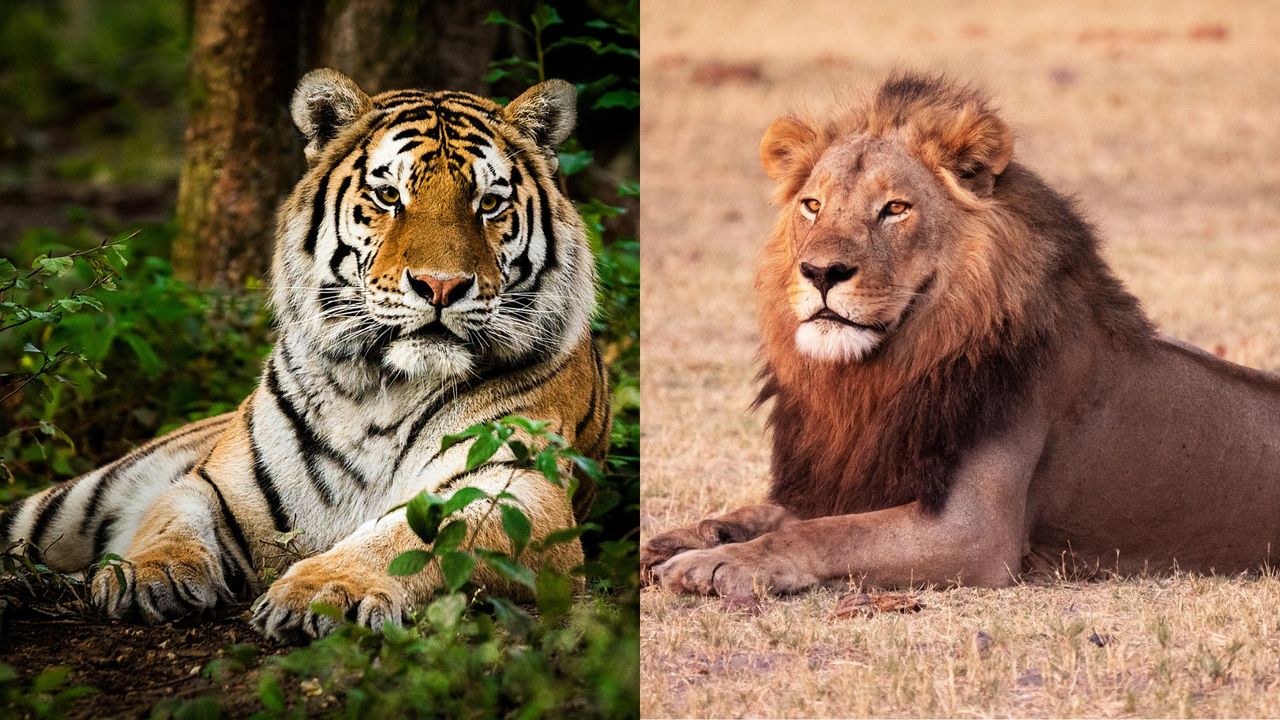
Lions live in grasslands and savannas where they hunt in groups. Their social structure, unique among big cats, allowed them to develop shorter, stockier builds optimized for cooperative hunting. Tigers inhabit forests and hunt alone, evolving longer, more flexible bodies suited to stalking prey through dense vegetation.
Their physical differences reflect these ecological niches. Tigers grow larger and possess longer legs for covering ground silently. Lions developed thicker manes, which signal dominance to rivals and protect the neck during fights. Their teeth, claws, and digestive systems all adapted to different prey and hunting methods.
Genetic analysis reveals lions and tigers split from a common ancestor roughly 4 million years ago. Their DNA accumulated separate mutations that lock each species into its specialized hunting lifestyle. A tiger's build would waste energy in open grasslands. A lion's frame lacks the flexibility tigers need in forests.
Researchers continue examining how environment shapes evolution in apex predators. Understanding these adaptations informs conservation efforts, as habitat loss threatens both species at alarming rates.