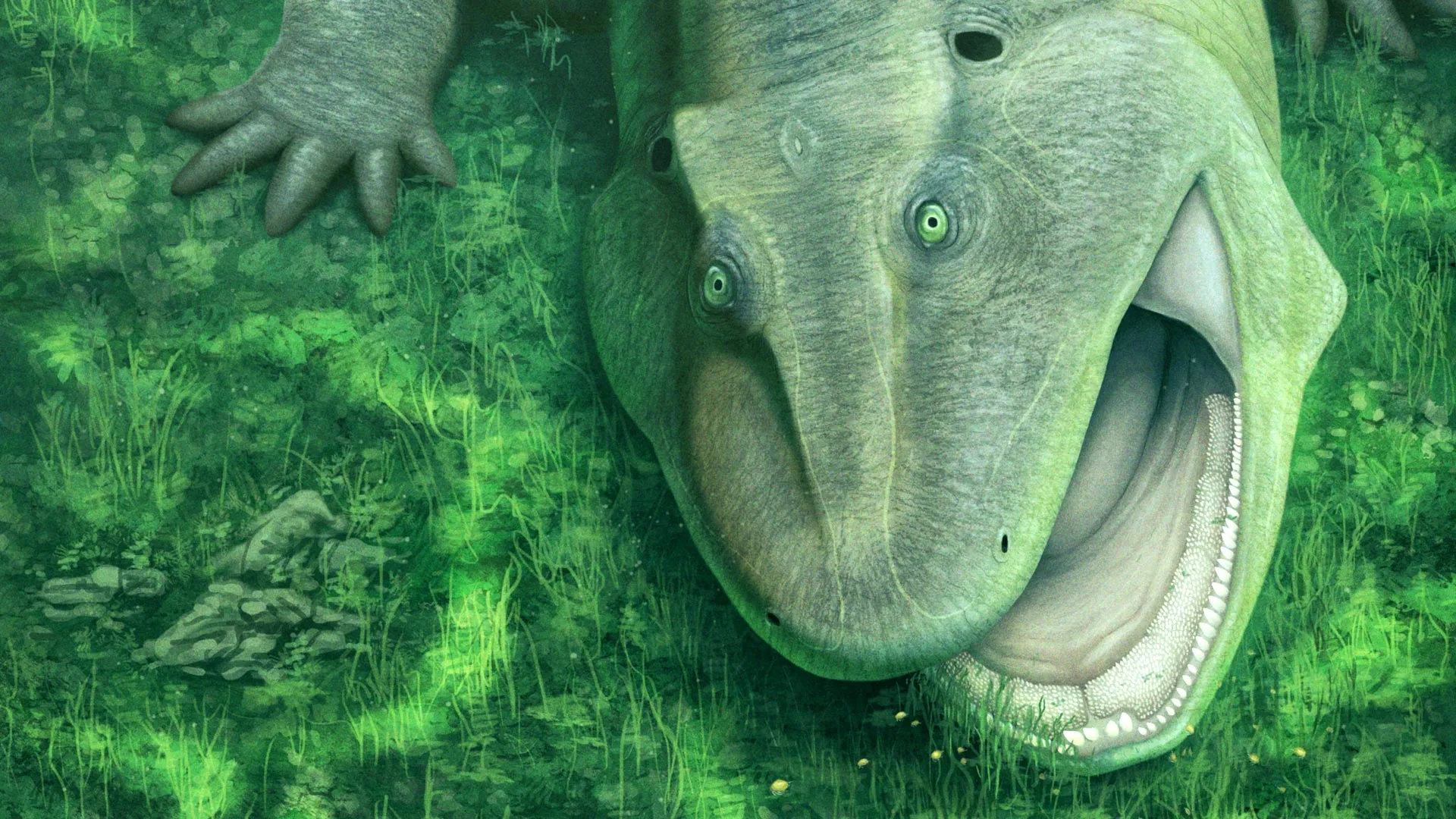
Scientists in Brazil discovered fossilized jawbones from a 275-million-year-old animal with a twisted structure never seen in modern species. The creature, named Tanyka amnicola, belonged to an ancient lineage that researchers expected to have disappeared long before this specimen lived. The twisted jaw represents a remarkable anatomical feature that sets this animal apart from all known living organisms today.
The find comes from a dried-up riverbed in Brazil, where paleontologists uncovered the remains. Tanyka amnicola functioned as a "living fossil" of its time, surviving in a lineage thought to be extinct. This discovery expands our understanding of prehistoric animal diversity and suggests that unusual evolutionary paths persisted longer than previously believed.
The twisted jawbones offer researchers new data about how extinct animals adapted and survived. Scientists will likely study how this jaw structure functioned during feeding and movement. The specimen helps fill gaps in the evolutionary record and demonstrates that strange anatomical features can persist across millions of years when environmental conditions support them.