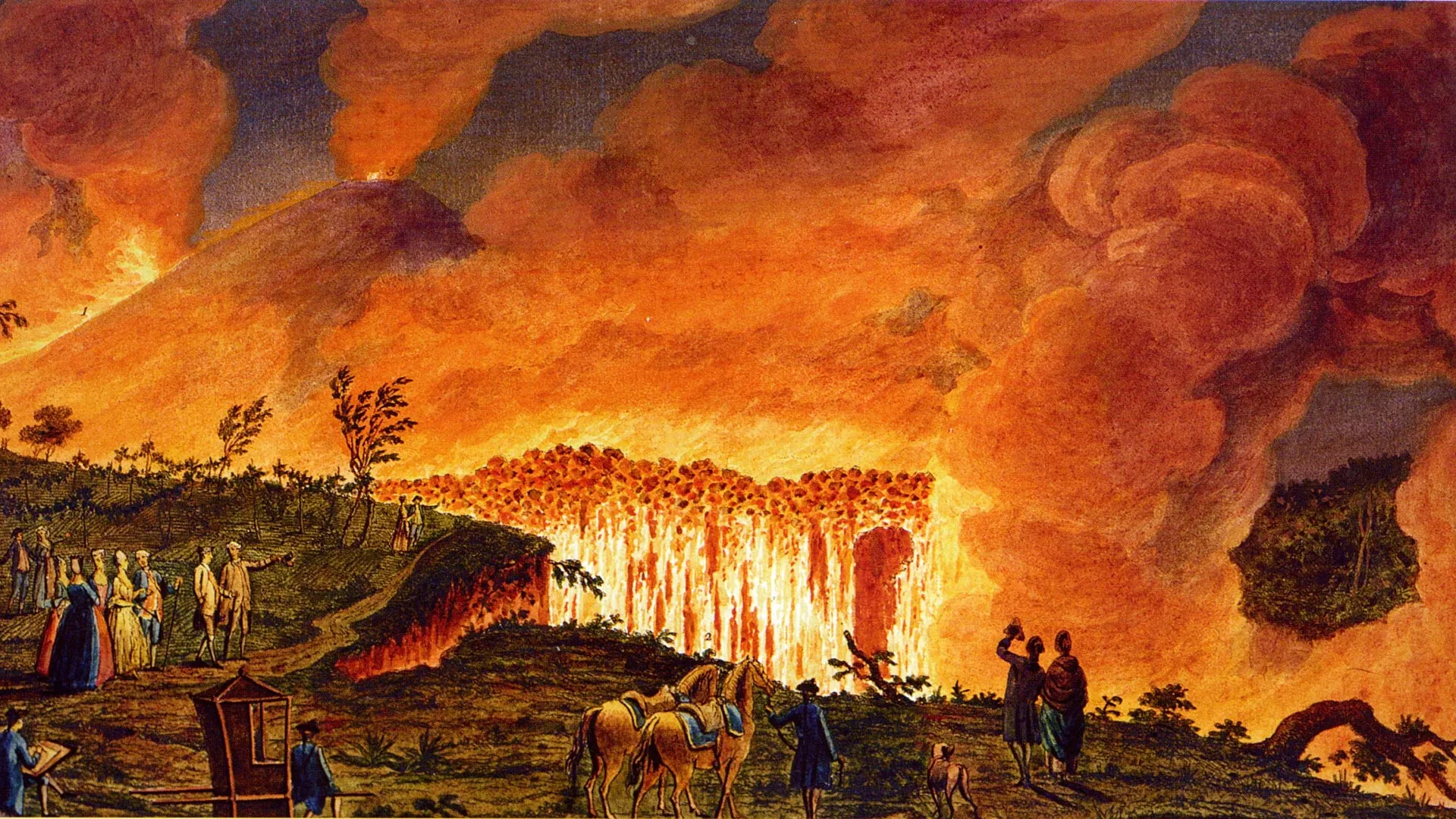
Two University of Melbourne engineering students have reconstructed an 18th-century mechanical volcano designed by volcanology enthusiast Sir William Hamilton in 1775. Using an original watercolor and preserved sketch as blueprints, the students combined historical inspiration with modern technology. LED lighting and electronic systems now simulate the glowing lava flows and explosive eruptions of Mount Vesuvius.
Hamilton's vision predates modern volcanology by decades. He obsessively studied Vesuvius and other volcanic systems, sketching detailed observations that informed his mechanical design. The original concept remained theoretical for 250 years until these engineers decided to bring it to life.
The recreation demonstrates how historical scientific thinking intersects with contemporary engineering. It shows Hamilton's sophisticated understanding of volcanic behavior, translated through his mechanical interpretation. The project also highlights how modern tools can resurrect centuries-old ideas, making them tangible and observable.
This work matters beyond novelty. It reveals how early scientists approached observation and modeling before digital technology existed. Hamilton's mechanical approach influenced later volcanology and geological study. The reconstruction serves as both a historical artifact and a functional model of 18th-century scientific ingenuity.
The students plan to exhibit their working volcano, making it accessible to educators and researchers studying the history of geology.