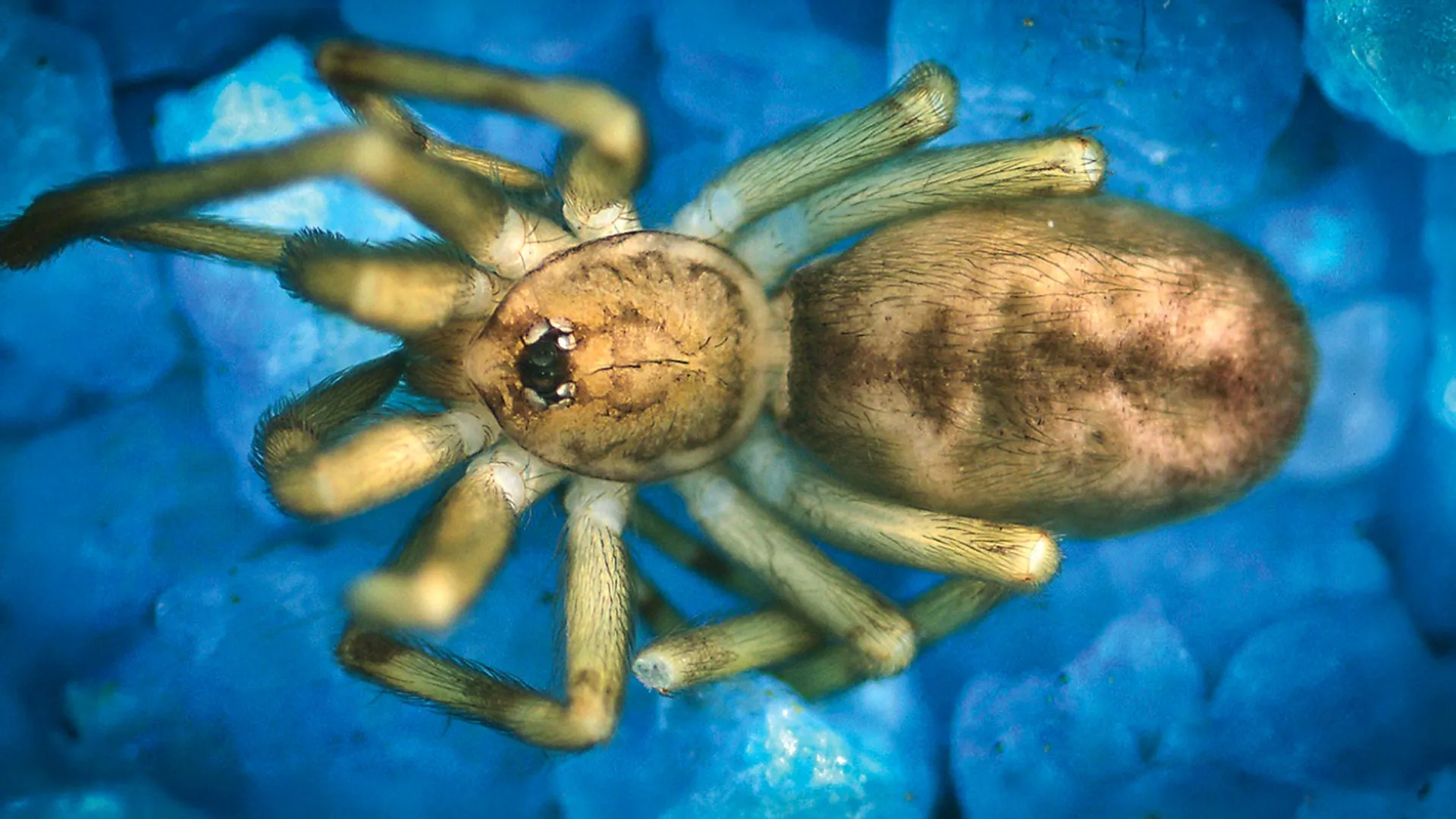
Scientists have identified a new spider species called Pikelinia floydmuraria, named after the band Pink Floyd. This tiny wall-dwelling predator hunts ants up to six times its own size, making it a formidable hunter despite its diminutive frame.
The spider employs a clever strategy by building its webs near artificial lights, which attracts prey insects. This positioning makes it especially effective at catching mosquitoes and flies, common urban pests that plague homes and buildings. Researchers believe the spider plays an important role in natural pest control within urban environments.
The discovery raises intriguing questions about the spider's evolutionary history. Scientists found mysterious connections linking Pikelinia floydmuraria to similar spider species living in the Galápagos Islands, thousands of miles away. Understanding how these spiders became geographically separated and evolved independently could reveal insights into spider dispersal and adaptation patterns across isolated island ecosystems.
The findings highlight how much remains unknown about urban arthropods. Even in human-dominated landscapes, researchers continue discovering species that have adapted to coexist with us, often providing ecological benefits we barely recognize.