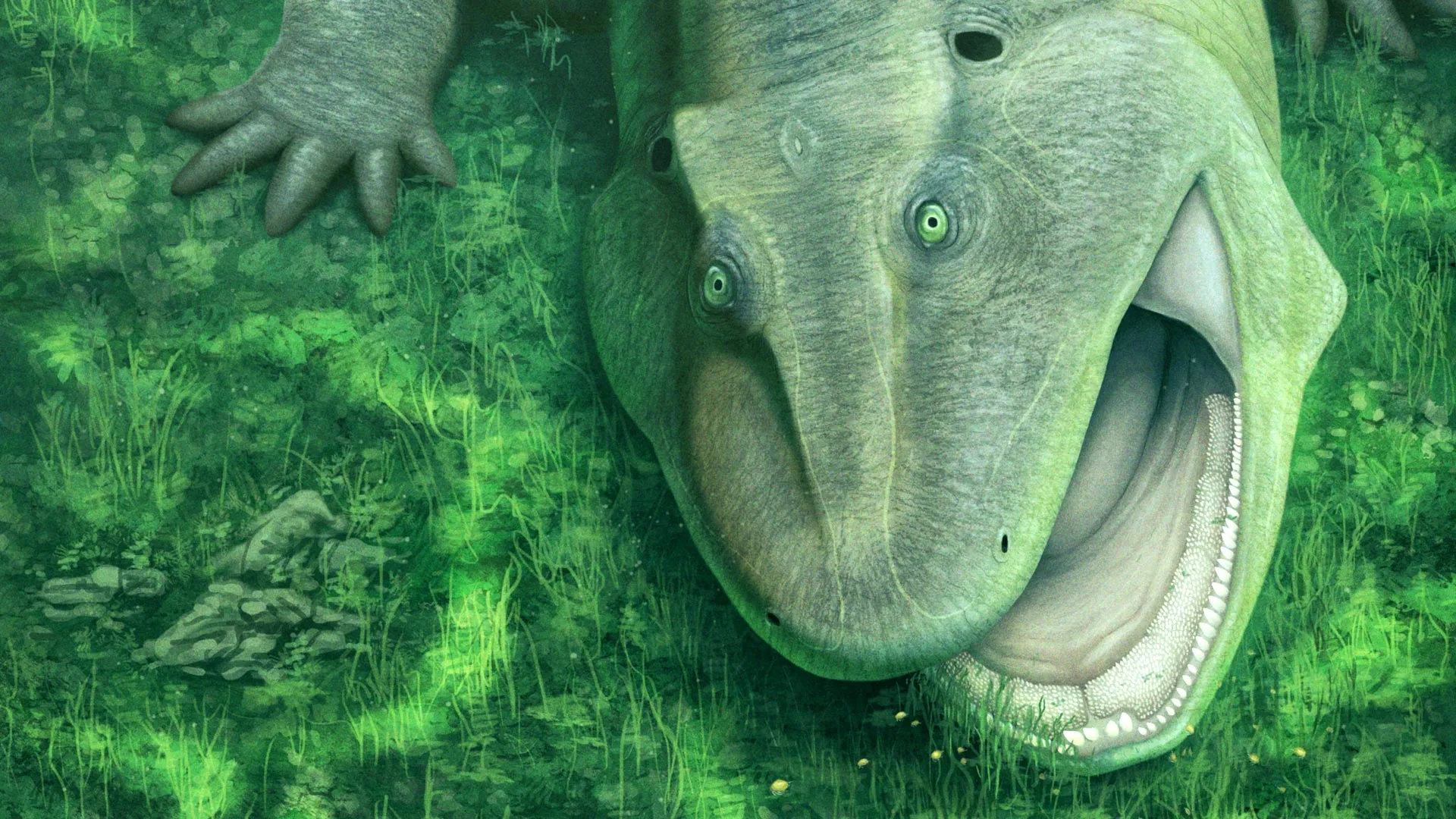
Scientists discovered fossilized jawbones in a Brazilian riverbed belonging to Tanyka amnicola, a 275-million-year-old animal with a twisted jaw structure never seen in modern organisms. The twisted configuration sets this creature apart from all known living species today.
Tanyka amnicola belonged to an ancient lineage that researchers expected to have died out long before this specimen lived. Instead, the animal survived as a kind of "living fossil" of its time, representing a prolonged evolutionary path for an otherwise obsolete group.
The find matters because it expands our understanding of prehistoric animal diversity and survival strategies. Organisms sometimes persist far longer than predicted, occupying ecological niches that allow them to escape extinction. This discovery raises questions about which ancient lineages survived longer than expected and why.
Researchers will likely examine the twisted jaw structure more closely to determine how the animal fed and functioned. The specimen could reveal how unusual anatomical features provided advantages in specific environments. Future excavations in the same riverbed may uncover additional fossils that clarify the broader ecosystem of this period.