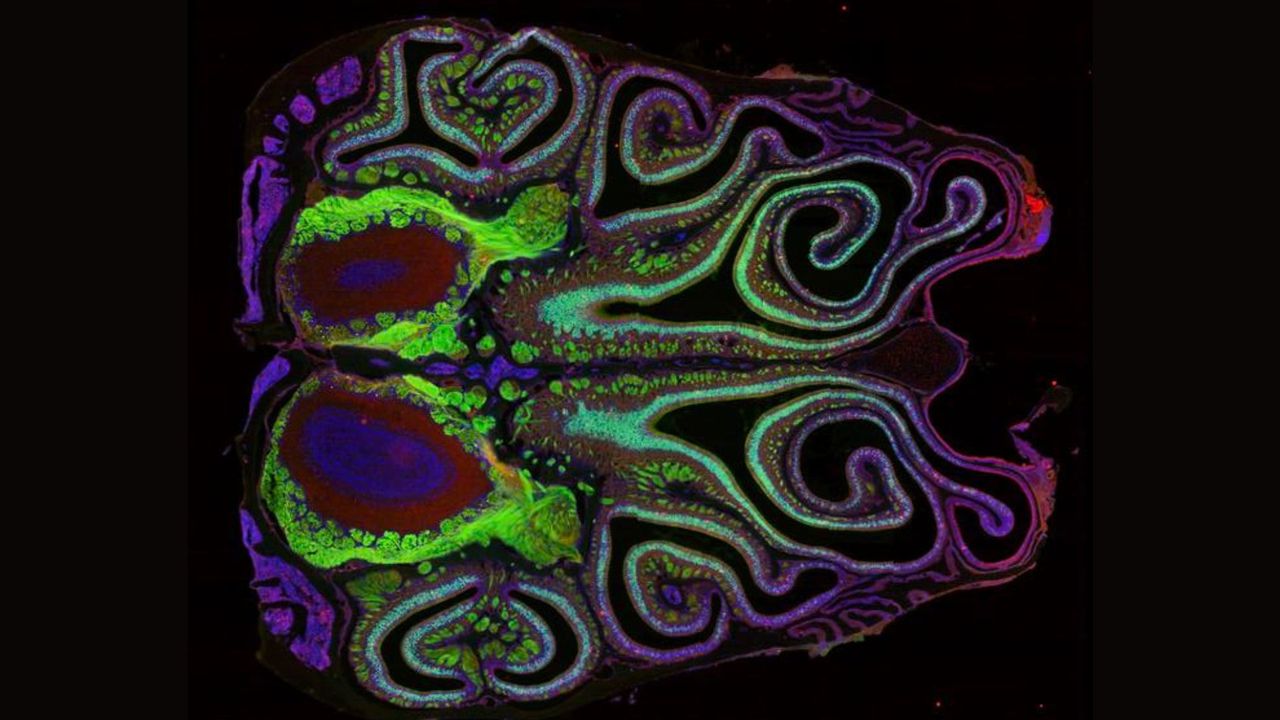
Neuroscientists created the first detailed map of smell receptors in the mouse nose and discovered they organize into distinct bands, each housing receptors of the same type. This arrangement differs sharply from the long-held belief that smell receptors scattered randomly throughout the nasal tissue.
Researchers used advanced imaging and genetic sequencing to identify where 1,000 different types of olfactory receptors cluster in the nose. They found receptors grouped into horizontal bands that run from the front to the back of the nasal cavity. Each band contains only one or two receptor types, creating an unexpectedly orderly system.
This discovery reshapes our understanding of how the brain processes smell. The organized layout suggests the brain receives smell information sorted by receptor type, not jumbled together as scientists previously thought. This could explain how animals distinguish between thousands of different odors.
The research opens questions about how this organization develops during fetal growth and whether the same pattern appears in other mammals, including humans. Neuroscientists now plan to trace how signals from these organized receptors travel through the brain's smell processing centers.
Understanding this basic architecture could eventually help researchers develop treatments for smell disorders and improve artificial smell-detection technology.