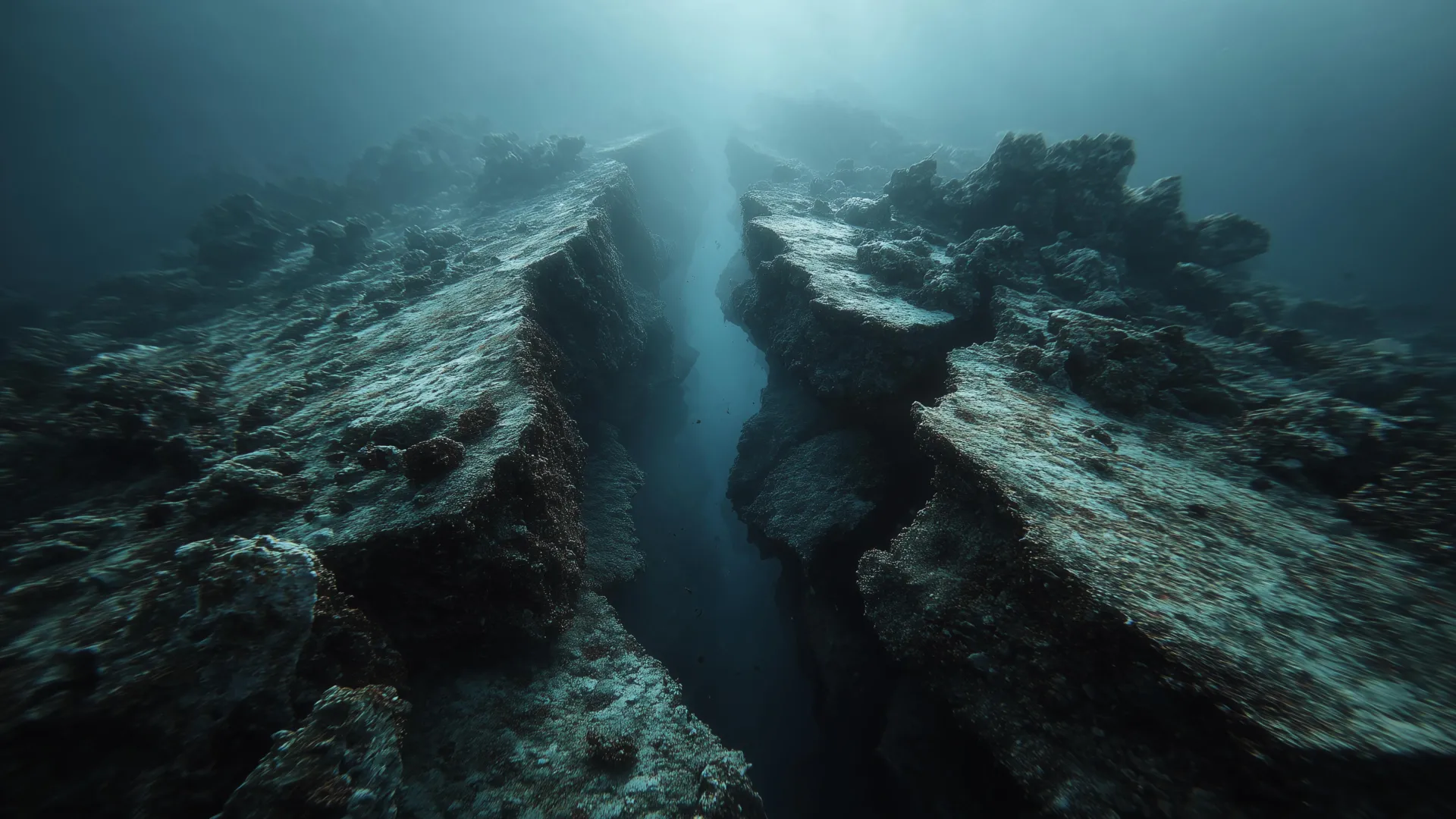
Scientists have directly observed a subduction zone breaking apart for the first time. Researchers used seismic imaging to capture the Juan de Fuca plate fragmenting as it descends beneath North America. The plate does not collapse suddenly. Instead, it splits gradually, piece by piece, like a derailing train moving along the ocean floor.
This discovery explains the existence of ancient plate fragments that geologists have puzzled over for decades. The observation reshapes how scientists understand the mechanics of subduction zones and their role in generating earthquakes. When one tectonic plate slides beneath another, the interaction typically causes seismic activity. Understanding how plates break apart during this process refines predictions about where earthquakes occur and how powerful they become.
The Juan de Fuca plate, located beneath the Pacific Northwest, presents an ideal natural laboratory for this research. Its slow descent provides clear signals for seismic instruments to detect. The findings emerge from advanced imaging technology that reveals previously invisible processes happening kilometers below the seafloor.
Researchers plan to apply these insights to other subduction zones worldwide. Better understanding plate fracture mechanics could eventually improve earthquake forecasting in regions like Japan, Chile, and Indonesia, where subduction zones pose significant hazards to densely populated areas.