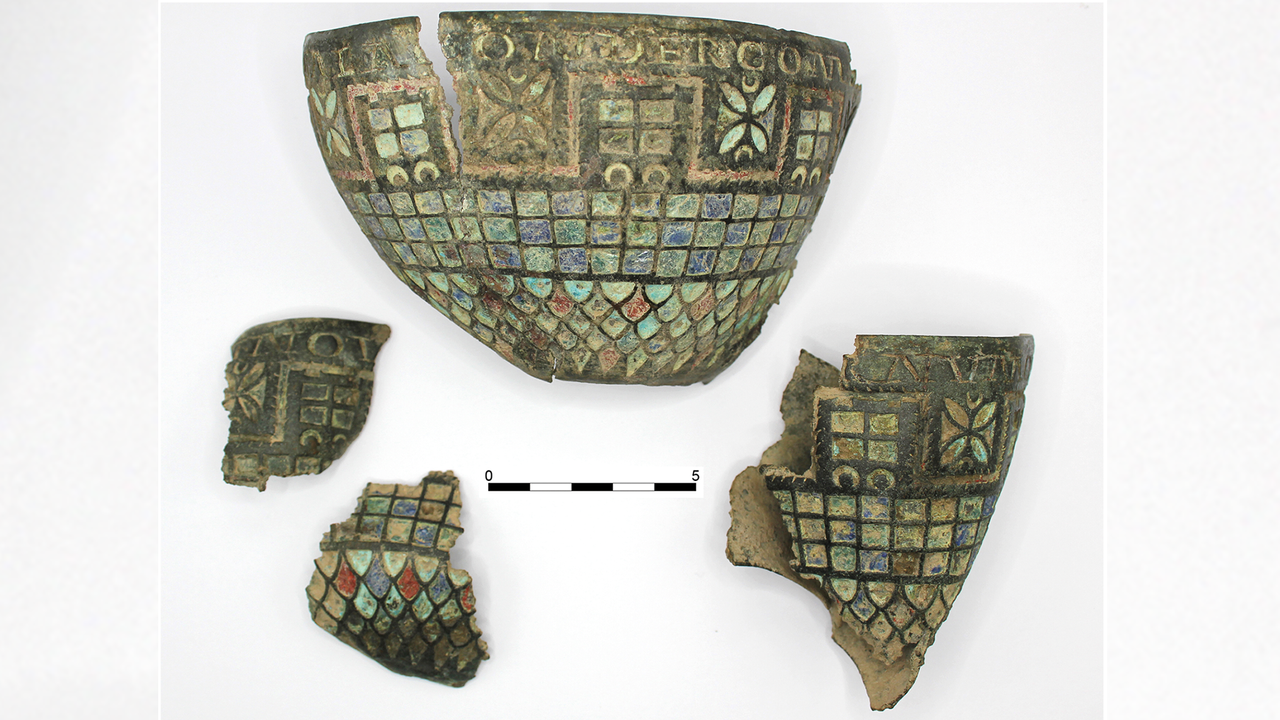
A bronze cup discovered in Spain offers rare evidence of soldier mobility within the Roman Empire. Archaeologists believe a Roman soldier stationed at Hadrian's Wall in northern England commissioned the vessel as a souvenir, then carried it with him when transferred to a Spanish garrison around 1,900 years ago.
The broken cup depicts detailed engravings of Hadrian's Wall and nearby Roman forts. Such personalized military memorabilia is extremely uncommon in the archaeological record, making this find particularly valuable for understanding soldier life and movement across the empire.
The discovery reveals how soldiers maintained connections to their previous postings and suggests the Roman military operated with significant personnel rotation. Rather than remaining in one location for their entire service, troops moved between distant garrisons, establishing a network across thousands of miles.
The cup's journey from England to Spain mirrors the broader logistical operations of the Roman Army. Its survival provides a tangible link between two distant frontiers and shows how individual soldiers experienced the vast empire firsthand.
Researchers plan to conduct further analysis on the bronze composition and engravings to confirm the cup's origins and narrow its date of manufacture. The find could inform broader studies about Roman military supply chains and soldier mobility patterns.