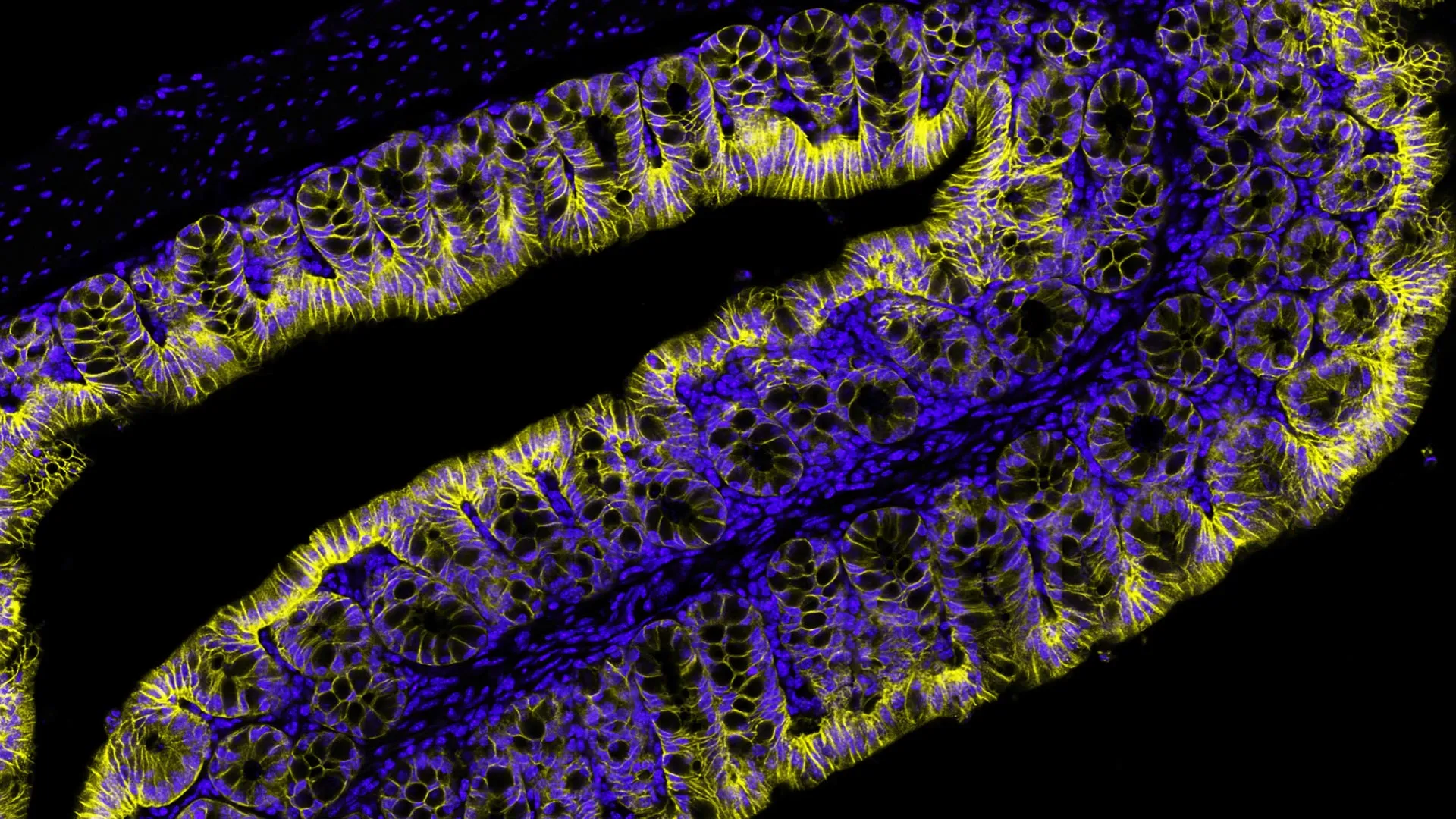
Researchers at Rockefeller University found that immunoglobulin A (IgA), an antibody abundant in the digestive tract, helps prevent colon cancer by regulating intestinal cell growth. The study, published in Nature, showed that mice without IgA developed more than twice as many colon tumors as mice with normal antibody levels.
The team identified the mechanism behind this protection. IgA binds to a receptor called DMBT1 on intestinal cells and restrains signals that promote cell division. Without IgA, these signals continue unchecked, allowing cells to multiply excessively and increasing tumor risk.
When researchers administered IgA orally to mice lacking the antibody, the animals no longer showed elevated tumor susceptibility. "One intriguing aspect of this work is that it shows how a natural defense in the gut restrains the cell division that can lead to cancer," says senior author Daniel Mucida, who leads Rockefeller's Laboratory of Mucosal Immunology.
The findings may explain why people with IgA deficiency, which affects about 1 in 500 people in the U.S., face greater colorectal cancer risk. Gregory Donaldson, a former postdoctoral researcher at Rockefeller now at UCLA, led the investigation into how IgA interacts with intestinal bacteria and influences colon cancer development.
The intestinal lining constantly renews itself through controlled cell division. The research revealed that in mice without IgA, gene activity associated with cell proliferation changed before tumors became visible, suggesting the antibody regulates an early step in cancer development. Gabriella Lima dos Reis, a graduate student in Gabriel Victora's laboratory, identified DMBT1's dual role depending on IgA presence.