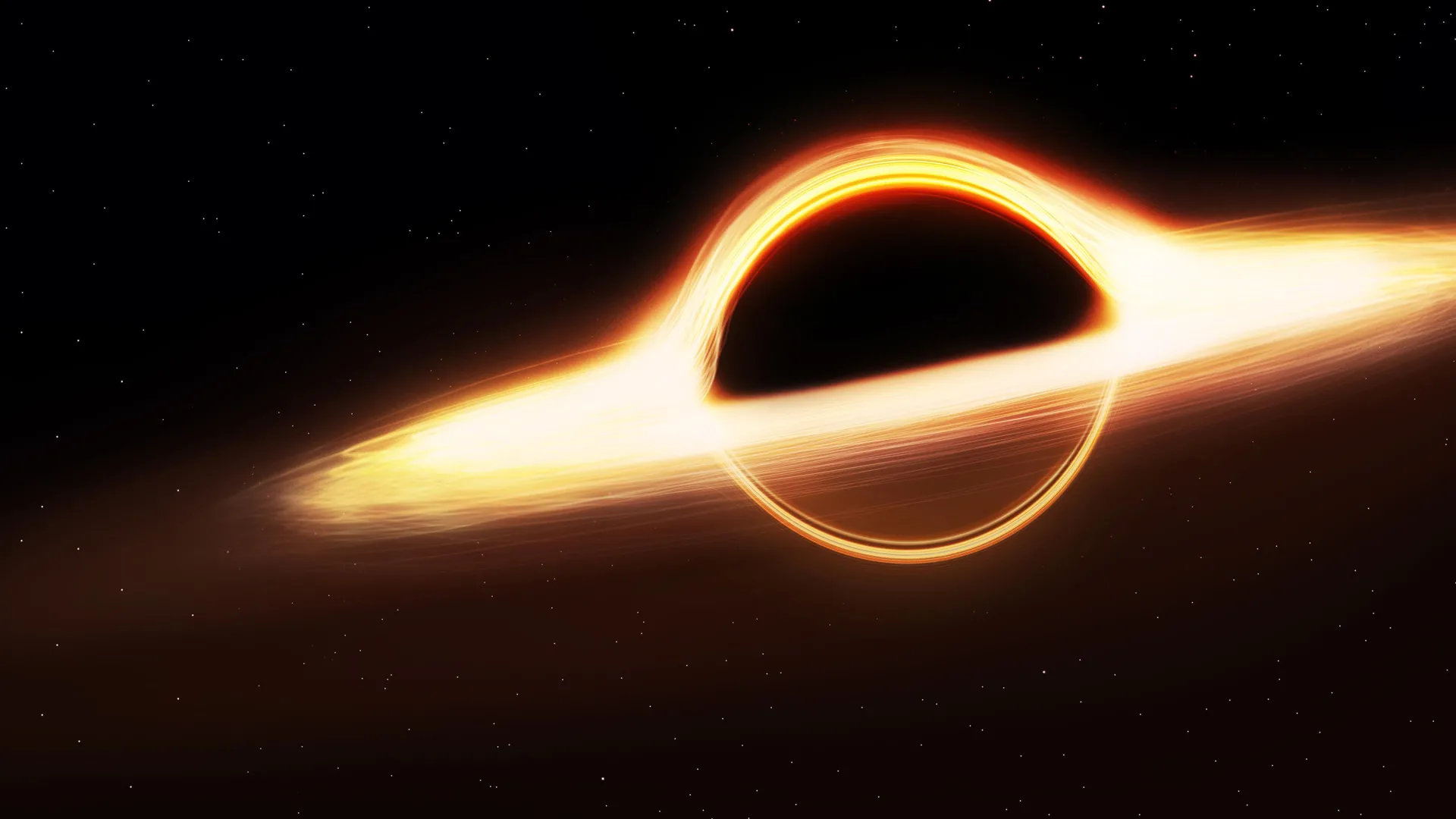
Caltech researchers analyzing gravitational wave data have found patterns suggesting a distinct population of black holes formed from massive stars that collapsed directly into black holes without exploding, a process called failed supernovae.
The team, led by Caltech physics professor Katerina Chatziioannou, examined 257 black hole mergers detected over the past decade by the LIGO, Virgo, and KAGRA detector network. They discovered that black holes weighing roughly 10 times the mass of the Sun appeared exceptionally common, present in about three-quarters of the merger sample. The researchers also identified a striking gap, finding very few black holes weighing between 12 and 16 solar masses.
"A vast majority of the merging black holes in the universe are about 10 times the mass of our Sun," Chatziioannou says. "Our data are showing that this group of black holes may have a common origin -- they may be a distinct subpopulation that failed to go supernova."
Isaac Legred, now a postdoctoral researcher at the University of Illinois Urbana-Champaign and lead author of the study, noted that the gap raises questions about black hole formation. "We see 10 solar-mass black holes merging all the time," Legred says. "But why are, say, 14 solar-mass black holes so rare?"
The study also found that black holes near 10 solar masses had spin rates concentrated within a narrower range than the broader black hole population. These patterns together suggest a shared formation history, though the findings do not directly confirm failed supernovae exist. The research was published in Physical Review D and was funded by the National Science Foundation, the U.S. Department of Energy, and the Simons Foundation.