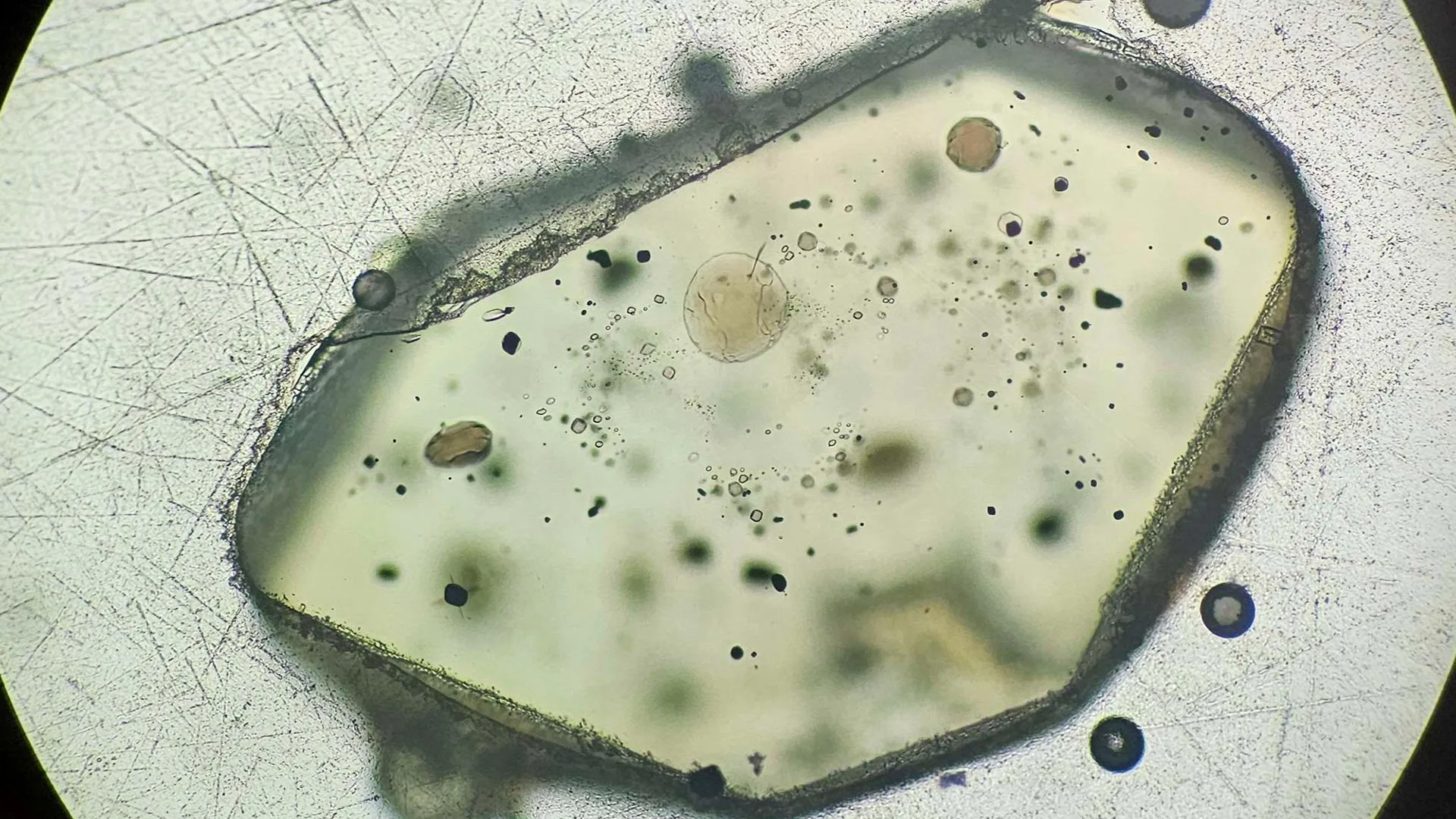
Researchers at Columbia University's Lamont-Doherty Earth Observatory examined volcanic rocks from Hawaii and found chemical evidence suggesting that Earth's carbon may have originated in ancient meteorites and later leaked from the planet's core to the surface.
Lead author Yves Moussallam and colleagues measured carbon isotopes in undegassed melt inclusions, tiny droplets of molten material trapped inside crystals from eruptions at Kīlauea and the Tantalus Rift. The Kīlauea samples showed an unusual carbon isotopic signature of approximately -1 per mil, substantially different from the typical mantle signature of -5 to -7 per mil. The Tantalus Rift samples matched the expected mantle range.
"This signature is very, very distinct from the normal mantle," Moussallam says. "This means it must have been contaminated by another carbon source and that source is probably carbon from the core."
The team compared these measurements with carbon signatures in ancient meteorites called carbonaceous chondrites, which formed more than 4.5 billion years ago in the outer regions of the solar system. The similarities suggest that carbon-rich meteorites may have delivered much of Earth's carbon during the planet's later formation stages, with some accumulating in the core. Over billions of years, this carbon could have migrated upward through mantle plumes toward the surface.
Moussallam notes that the evidence remains preliminary. "We don't really know. We need more measurements," he says. The researchers have not conclusively demonstrated that the unusual carbon came from Earth's core or determined how much of Earth's total carbon was delivered by carbonaceous meteorites.
The findings appeared in the Proceedings of the National Academy of Sciences.