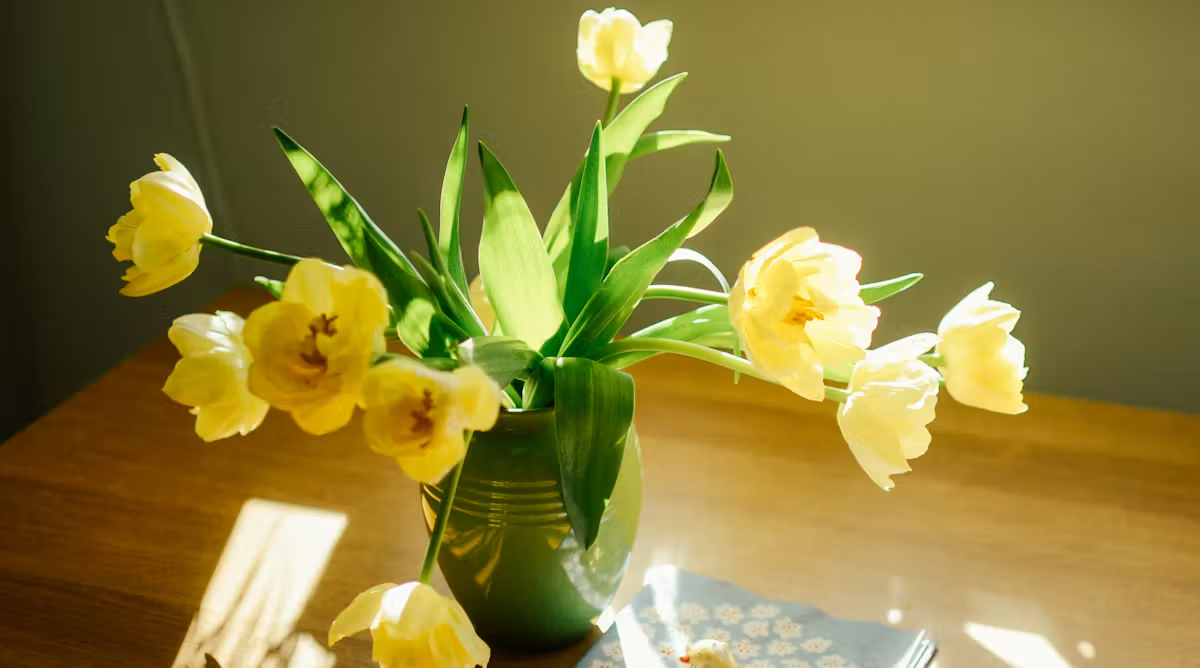
Gregory Moore, a senior research associate at the School of Agriculture, Food and Ecosystem Sciences at the University of Melbourne, shares practical methods to extend the vase life of cut flowers.
When flowers are cut, water no longer flows through their stems. Cells in stems and flowers rely on this water to stay inflated like balloons, giving the structures strength. Without water, the cells lose their firmness and the flower wilts. Air entering the stem also blocks water movement and hastens wilting.
Moore recommends selecting flowers at their peak, just before placing them in a vase. Open flowers should look full in bloom and color and stand upright. Buds should be plump and ready to open.
Cut at least the bottom two to three centimeters of stem with sharp, clean secateurs before placing flowers in the vase. If possible, cut under water to prevent air from entering the water-conducting vessels. A 45-degree angle cut increases surface area for water uptake, particularly for broad-stemmed flowers like dahlias, some roses, and larger lilies.
Remove any wilting or rotting flowers and lower leaves that might rot in water. Keep the vase clean and change the water regularly. Moore recommends replacing about 80 percent of the water daily or every couple of days. This provides fresh water, prevents cloudiness and odors, and reduces bacterial and fungal growth.
For additives, adding one teaspoon of sugar per vase supplies carbohydrates to help flowers function longer, though it increases contamination risk. A simple floral food formula mixes five milliliters of vinegar, five milliliters of sugar, and one liter of water. Lemon juice can replace vinegar. Adding two milliliters of bleach as an antibacterial agent is optional. Water should still be changed every two to three days when using sugar.