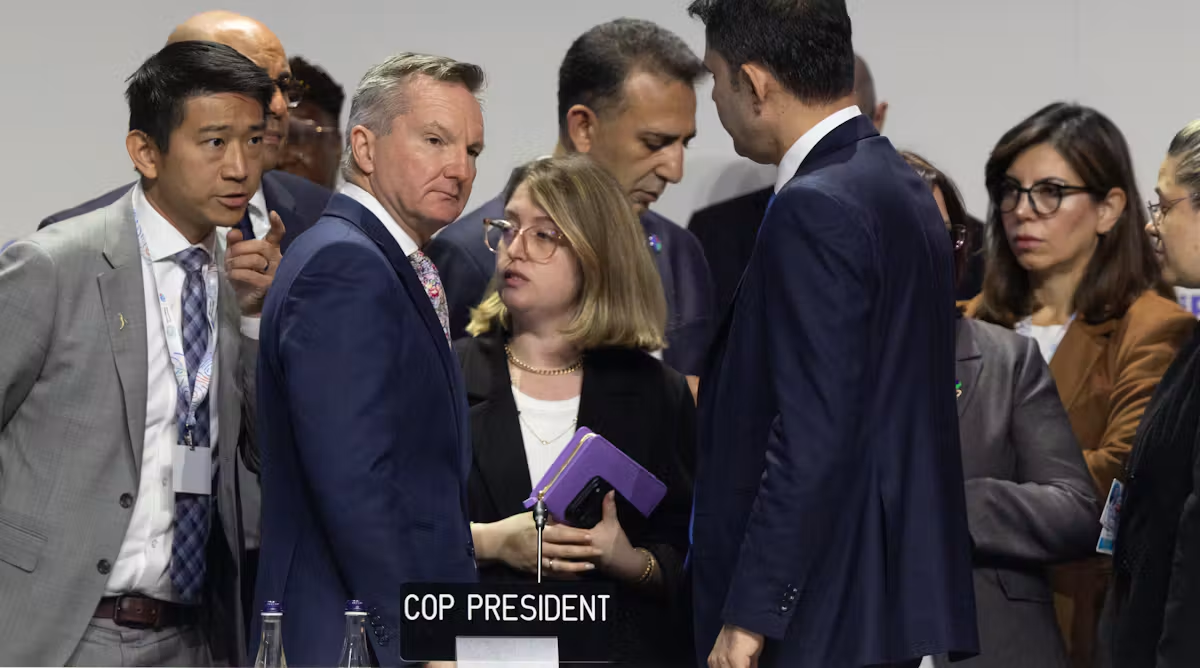
COP31 climate talks in Antalya, Turkey ended without agreement on a cover text after the European Union, Panama, the Marshall Islands, Vanuatu, and Belize rejected a compromise proposal. The sticking point was the absence of fossil fuel language in the draft text. Saudi Arabia and Russia blocked any fossil fuel references in negotiating outcomes, prompting Australia and Turkey to propose a compromise that excluded fossil fuels in exchange for support for electrification "with the greatest possible use of clean energy". The EU rejected this proposal, saying the international process did not meet the moment in a year of unprecedented climate disasters and as the world heads past 1.5 degrees Celsius of warming.
The failure to adopt a cover text does not signal the end of the COP process or the breakdown of the Paris Agreement, as these texts serve as add-ons to formal negotiations rather than requirements. However, the rejection may reshape how international climate cooperation functions going forward.
Three years after COP28 in Dubai established the first explicit mention of fossil fuels in decades of negotiations, progress stalled at COP31. Nations agreed to advance a just transition through a "phased approach" and to improve climate adaptation alignment. The summit failed to reach any agreement on cutting emissions after Saudi Arabia and Russia blocked a proposed decision, leaving the world without a dedicated negotiating process on emissions cuts under the Paris Agreement.
Climate finance discussions produced limited results. No concrete progress occurred on tripling adaptation funds pledged at COP30 in Brazil. Rich nations, including Australia, merely re-announced existing pledges, leaving the Pacific climate fund A$450 million short of its 2026 target of $749 million. Solomon Islands Prime Minister Matthew Wale pledged $600,000 to the global Green Climate Fund.
Over 75 countries and 180 businesses supported an electrification pledge outside official negotiations, aiming to boost electricity's share of global final energy use from around 23% to 35% by 2035. Brazil's separate roadmap on phasing out fossil fuels attracted support from India, Germany, and Nigeria. Frustration over fossil fuels is likely to push more nations to pursue phase-out efforts outside formal talks, with another conference on transitioning away from fossil fuels planned for next year, co-hosted by Tuvalu and Ireland.