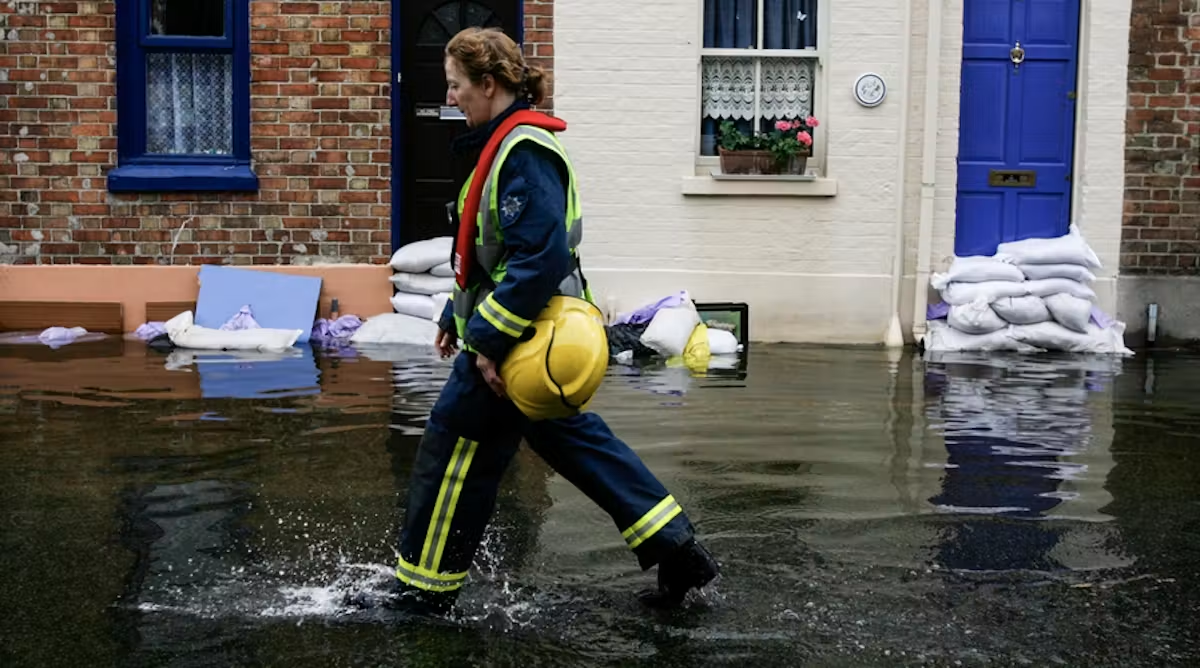
People wade through floodwater to reach destinations like work or school, to photograph flood scenes, or to help others, according to a review of research on flood behavior. Yet this behavior causes deaths. The US National Weather Service warns that six inches of fast-moving water can knock over an adult. In the UK, flooding ranks among the leading causes of death during climate disasters, with some recent fatalities during floods in 2023.
People underestimate water dangers for several reasons. Watching someone else cross successfully can create false reassurance, even though their height, strength and route differ. Previous success crossing a flooded road encourages repeat attempts, but past experience reveals little about current conditions. Media images sometimes depict people wading through floods casually, which may normalize risky behavior.
Physics makes water hazards harder to assess. Refraction bends light passing from water to air, making flooded ground appear closer to the surface than it is. In murky floodwater, the bottom remains invisible. A submerged pavement may end at a kerb, ditch or uncovered drain. Depth alone does not capture the danger. Research shows water depth and flow speed combine with body size to affect balance. Moving water pushes against legs and body, and buoyancy reduces weight pressing feet to the ground. Drag force increases roughly with the square of water speed, so doubling speed creates about four times the pushing force. The Environment Agency warns that water around 15 centimeters deep can knock someone over or hide hazards.
Katie Parsons, a Research Fellow at Loughborough University's School of Social Sciences and Humanities, developed a game called Flooding Mucky Dip with Girlguiding, Global Link Education and the Environment Agency. Participants retrieve cards from tubs of deliberately clouded water representing flood risks and discuss actions. The game is being trialled with schoolchildren in Leicestershire and Rutland but can be used by people of any age. Parsons also works with colleagues on stories and activities to help families discuss disrupted journeys and safer alternatives during floods.
Government advice is to avoid walking through floodwater and find alternative routes. Floodwater across a route is itself reason to stop. Rising levels, debris, forceful flow, heavy rain and flood warnings call for moving away from danger, not investigating it.