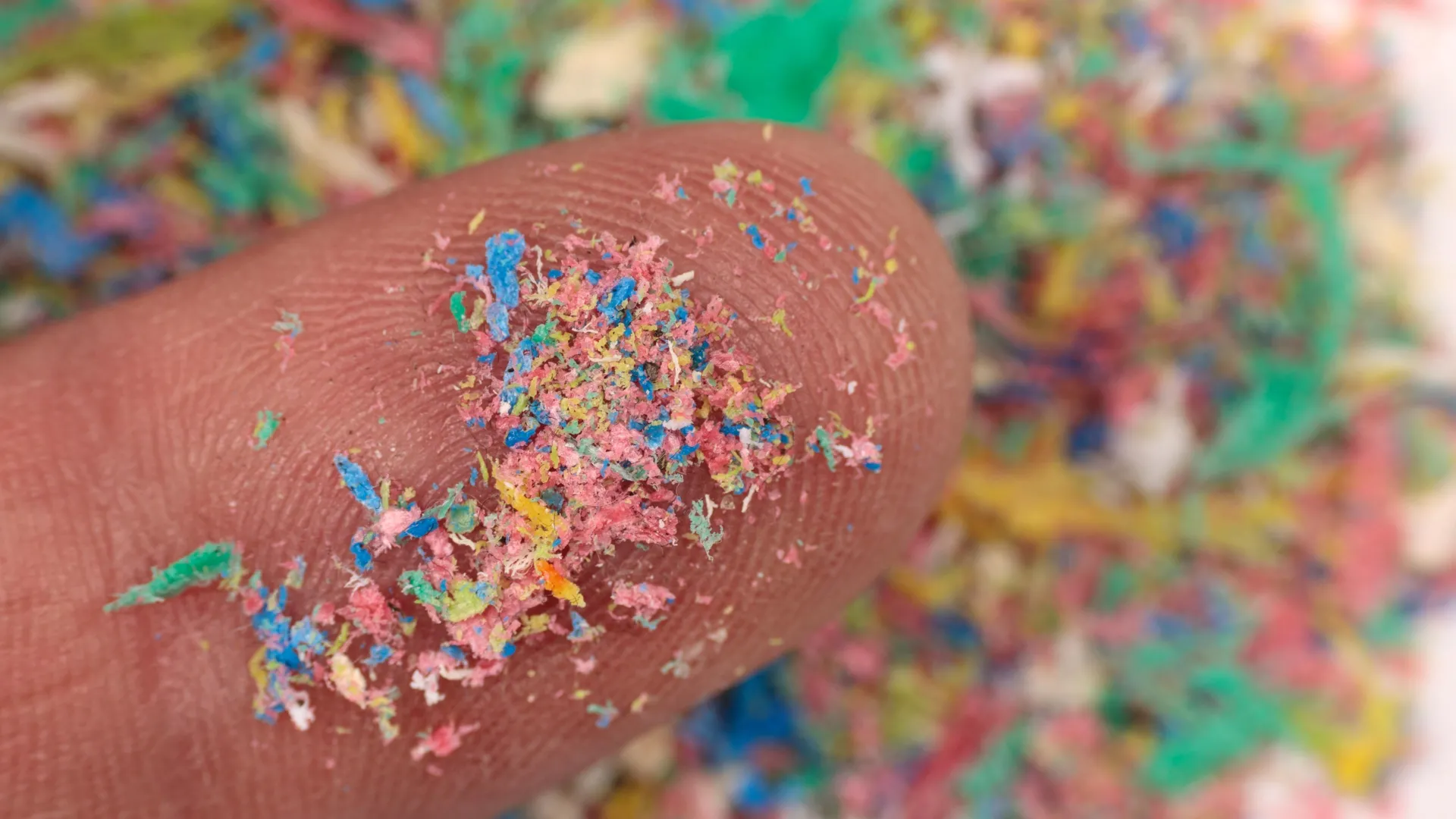
Researchers at Columbia University and UC Berkeley discovered a chemical process that makes microplastics dangerous when they break down in water. The study, published in Nature, found that as plastic fragments into smaller particles, their increased surface area interacts with water to produce reactive oxygen species (ROS), highly reactive molecules that can damage cells and tissues.
Wei Min, a Columbia professor of chemistry and biomedical engineering, explained the mechanism. "As plastic fragments into smaller and smaller particles, its surface area increases enormously. Then microplastics change the water that surrounds them, generating high-energy, reactive radicals (reactive oxygen species, ROS) that very likely contribute to biological damage that we see in animals and potentially in humans as a result of microplastic exposure," Min said.
The research builds on earlier work by Min's lab. In 2024, the team developed a laser-based microscopy technique that detected an average of approximately 240,000 plastic fragments in a single liter of bottled water, 10 to 100 times more than previous estimates suggested.
Naixin Qian, a postdoctoral researcher in Min's lab, described the chemical pathway. "When microplastics interact with water, as they do when they're in bottled water, or when they're absorbed into our bloodstream, they spontaneously generate what we call reactive oxygen species (ROS)," Qian said. "ROS are textbook examples of the kinds of molecules that can damage animal and human tissue."
Collaborators at UC Berkeley, including Professor Teresa Head-Gordon, used theoretical calculations to examine the chemistry at the molecular level. They found that hydroxide ions become concentrated at the boundary between water-repelling plastic surfaces and water, allowing electrons to transfer more readily and form hydroxyl radicals, which are particularly reactive.
This discovery may help explain associations reported between microplastic exposure and serious conditions including heart attacks, strokes, dementia, and brain tumors, though the research does not establish causation in humans. Understanding these chemical reactions could eventually lead to redesigned plastics that generate fewer harmful molecules when exposed to water.
The implications extend beyond human health. Beizhan Yan of Columbia's Lamont-Doherty Earth Observatory noted that microplastics can enter aquatic environments from plastic manufacturing facilities, laundromats, and everyday activities such as heating materials in a microwave or leaving bottled water exposed to sunlight.