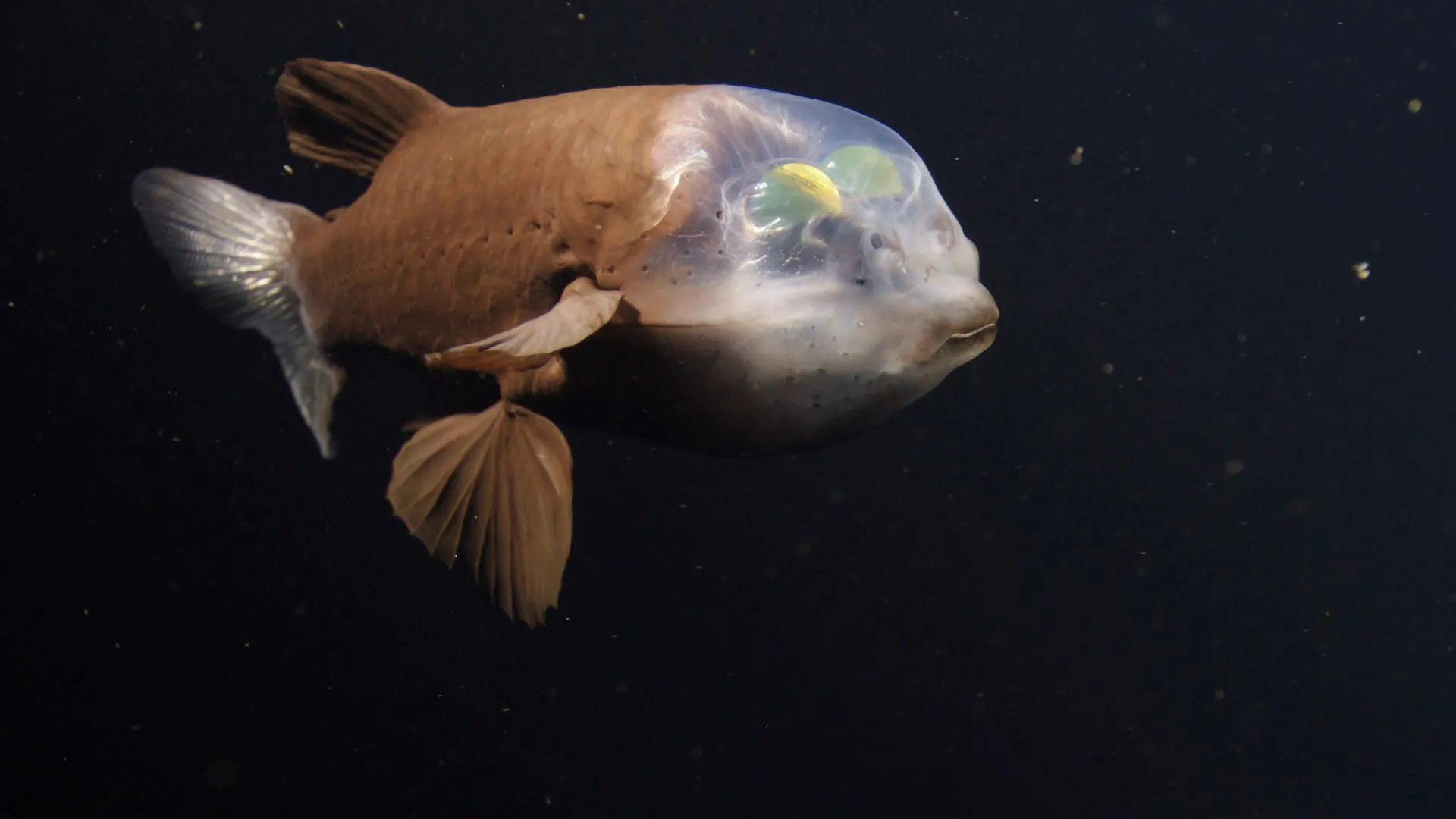
Researchers from the Monterey Bay Aquarium Research Institute spotted a barreleye fish (Macropinia microstoma) about 600 meters below the ocean surface during an expedition aboard the research vessel David Packard. The sighting marked only the eleventh time MBARI scientists have encountered this elusive deep-sea species in nearly four decades of ocean exploration.
The encounter occurred approximately 90 kilometers offshore as the Biodiversity and Biooptics Team investigated marine life using the remotely operated vehicle Doc Ricketts. Research Specialist Shannon Johnson noticed the fish as pilots were returning the ROV to the surface and asked them to stop. Scientists spent approximately 20 minutes observing the fish and recorded it in 4K resolution.
The barreleye's transparent head is not merely unusual. Its tubular eyes normally point upward to watch for prey silhouettes overhead, then rotate within the transparent dome to maintain visual contact once prey is detected. The clear gelatinous covering also protects the fish's eyes when it feeds on small crustaceans trapped among the tentacles of deep-sea siphonophores.
Senior Scientist Steven Haddock noted that the fish typically remains nearly motionless in the water, supported by large fins that provide stability and precise control. The encounter marked the first 4K footage of this species for MBARI and the first observation from the David Packard. The institute has conducted approximately 7,000 remotely operated vehicle dives and accumulated more than 41,000 hours of deep-sea video over nearly 40 years, yet recorded only 11 encounters with Macropinna microstoma.