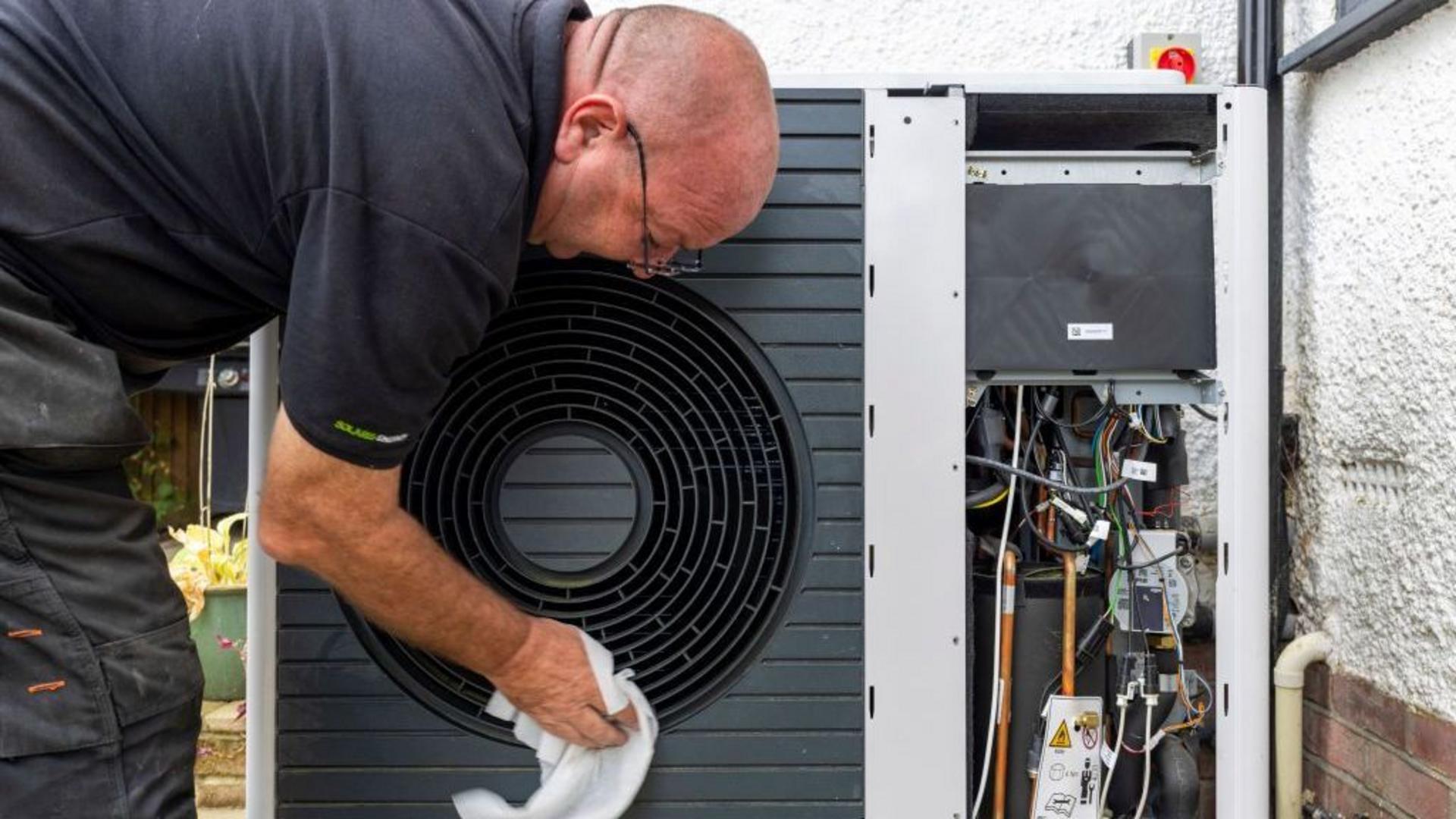
Heat pumps run on electricity and absorb warmth from air, ground, or water to heat buildings more efficiently than traditional gas boilers. They consist of an outdoor unit about 1 meter by 1 meter by 0.4 meters, plus an indoor heat pump unit and hot water cylinder.
The UK government announced in March that developers must install heat pumps and solar panels in all new homes in England, estimated to add £10,000 to home prices. The Boiler Upgrade Scheme provides a £7,500 grant toward heat pump installation for homeowners in England and Wales, though households typically spend an additional £5,000 on top of this grant.
Heat pumps use around three to four times less energy than gas boilers, but electricity currently costs more than gas. The Climate Change Committee estimates that homes with heat pumps and solar panels could cut annual energy bills by nearly £1,000. The government expects electricity costs to fall as renewable energy expands.
Air source heat pumps are the most common type. Ground source models are more efficient but typically more expensive and less common because they require deep boreholes or large underground systems.
Heat pump installations currently have a 0% VAT rate, rising to 5% in April 2027. The government promised to keep Boiler Upgrade Scheme funding at £400m in 2027-28 before increasing it with inflation, though this represents a cut from previous announcements.
Planning permission requirements for installing heat pumps near neighbors have been dropped. Newer devices produce noise below 42 decibels, similar to a refrigerator.
Heat pumps remain in fewer than 2% of UK homes. Double the number were installed in the first half of 2026 compared to the same period in 2021, but this is 22% fewer than installed in the first half of 2025. The Climate Change Committee says sales need to reach nearly 450,000 annually by 2030 and 1.5 million by 2035 to meet climate targets, with around half of UK homes requiring heat pumps by 2040.