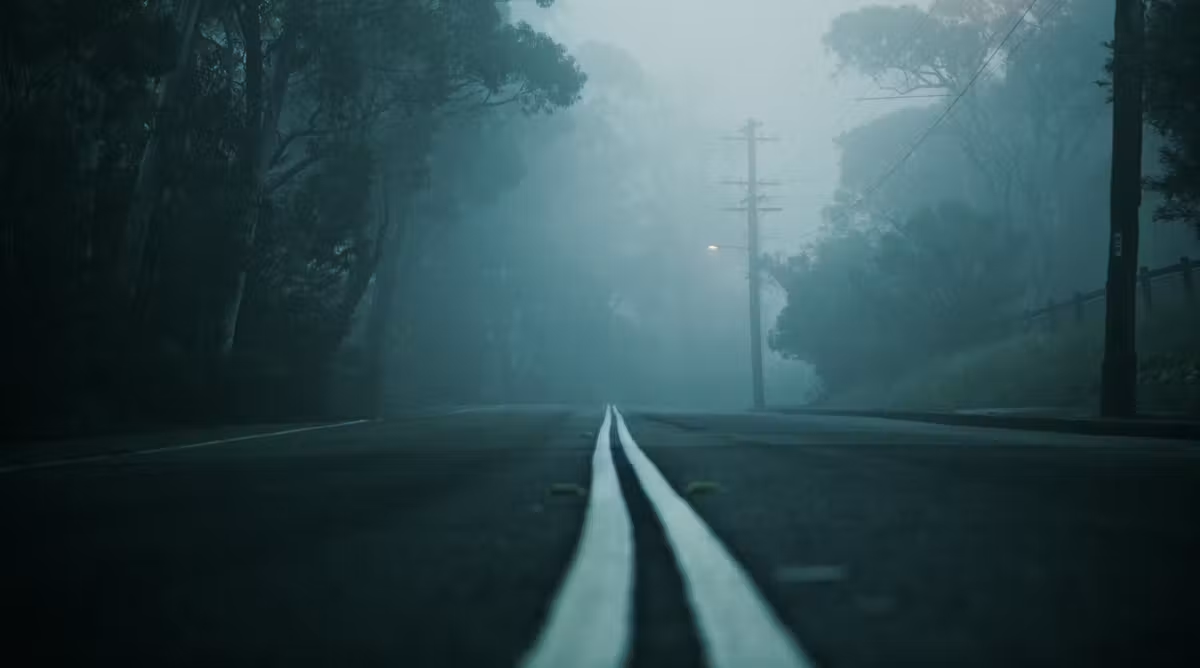
Researchers in Australia conducted the country's first nationwide fog study and found that winter fog is becoming more common across southern Australia, contrary to global trends. Kimberley Reid and Andrew King at the University of Melbourne used the Bureau of Meteorology's high-resolution reanalysis tool to model fog presence from 1980 to 2024 by combining weather observations with advanced models.
The study found that between 1980 and 2024, parts of southern Australia experienced an extra 30 minutes to one hour of fog each winter year, particularly in western Victoria, South Australia's Eyre Peninsula, and southeast Western Australia. This contrasts with many other regions worldwide, which are experiencing less fog due to global warming and reduced air pollution.
Radiation fog, the most common type in Australia, typically forms during calm winter mornings when land releases heat to space on clear nights. As the land cools, moisture near the surface condenses into fog that usually dissipates after sunrise.
The researchers suspect the increasing fog trend in southern Australia is linked to scarcer rainfall and more frequent high-pressure systems during winter. These systems produce clear winter nights that often lead to foggy mornings. Canberra emerged as Australia's foggiest city, likely because it sits in a valley.
Reid and King note that fog prediction is important for aviation and cite a December 2023 incident in Victoria when thick fog contributed to a multi-car crash that sent 20 people to hospital. To understand whether the increasing fog trend will continue, the researchers call for more research and improved investment in Australia's weather and climate modelling sectors.