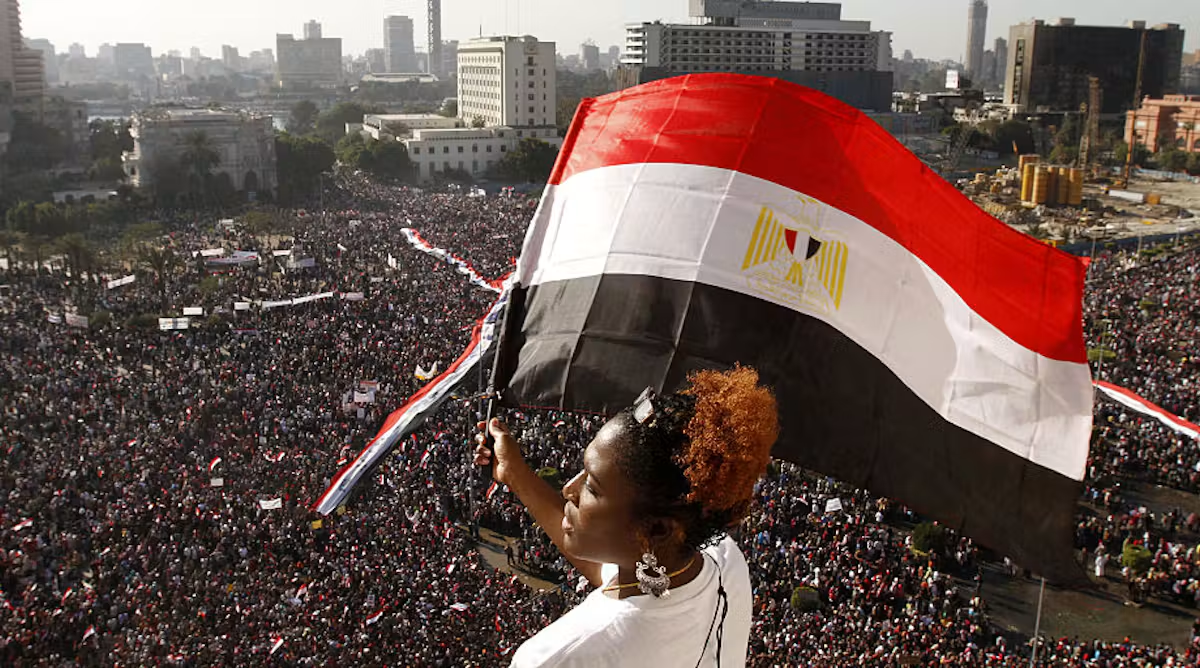
Researchers examining mass mobilisation and democratic change over more than a century found that large-scale protests achieved their greatest success at toppling authoritarian regimes between 1980 and 2011. This period, which researchers call a "golden age," coincided with the end of the Cold War and strong international pressure for democratic reform.
Ida Rudolfsen and colleagues at the Peace Research Institute Oslo, along with Kristian Skrede Gleditsch at the University of Essex and Gudmund Hermansen at the University of Oslo, analyzed protest campaigns between 1900 and 2019. They combined data on protests demanding democratic change with classifications of which countries were democracies or autocracies each year.
The pattern shifted dramatically before and after this golden age. Before 1980, mass mobilisation could topple regimes but did not reliably lead to democratic replacement. Ethiopia's 1974 revolution exemplifies this: popular protests overthrew Emperor Haile Selassie, but a military dictatorship replaced the monarchy rather than a democracy.
Since the Arab Spring around 2011, the relationship between mass mobilisation and regime change has weakened. Authoritarian regimes in Belarus, Iran and Togo have survived extensive protests. Mass mobilisation no longer shows a systematic connection to regime collapse or democratisation.
The researchers tested several explanations for this decline but found limited support. Campaign size, participant diversity, coordinated leadership, state repression levels, and protest locations did not align with the rise and fall in effectiveness. However, their measurements were crude enough that these factors may still play some role.
Authoritarian regimes appear better equipped to respond to street challenges through new technologies that enable monitoring and targeted repression. Western countries have prioritized stability over democratic reform since the Arab Spring. Contemporary autocracies access international support networks providing money, technology, propaganda and diplomatic backing.
The analysis ends at 2019. Recent events in Bangladesh, Serbia, South Korea, Poland, Hungary, Senegal and Malawi suggest mass mobilisation continues achieving victories, though the researchers cannot confirm whether the weak relationship observed at their study's end has persisted or reversed.