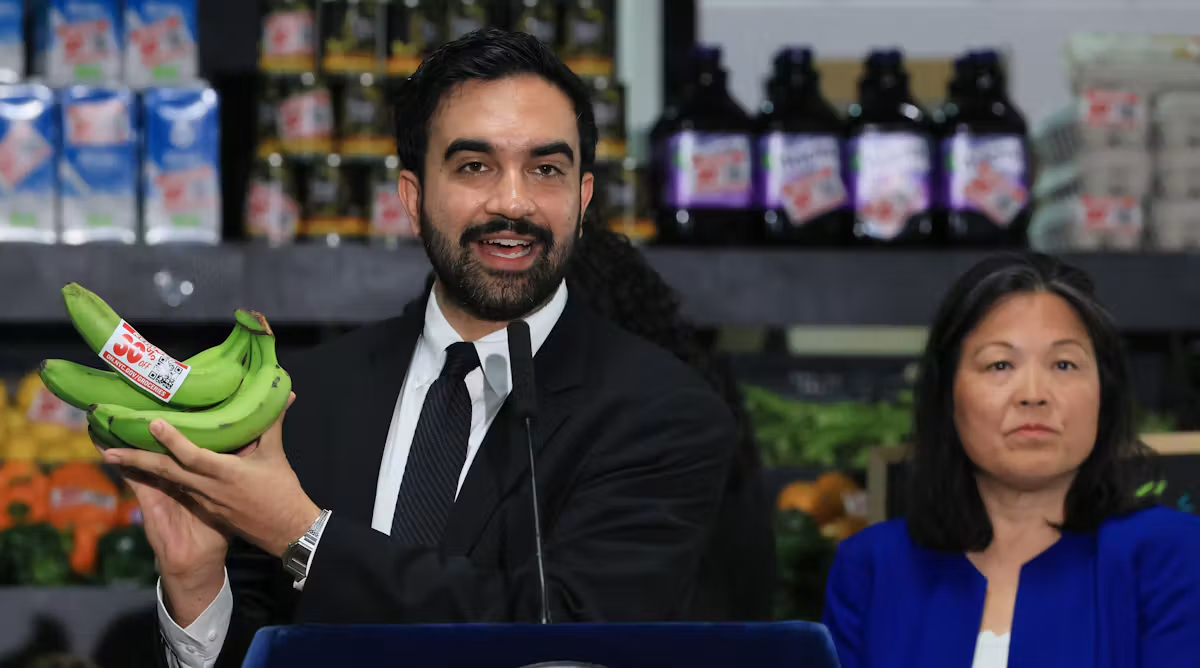
New York City is moving forward with plans to open five city-run grocery stores, with the first opening in the South Bronx in 2027 and another in East Harlem to follow, Mayor Zohran Mamdani announced in May 2026. The city has committed $70 million to develop these stores, which will be managed by private operators but will offer essential foods priced 30% below typical retail prices on rent-free, publicly owned sites and be open to all.
The stores have drawn fierce opposition from independent grocers, supermarket trade associations, and a coalition representing immigrant-owned food businesses. Nevin Cohen, a professor at the Graduate School of Public Health and Health Policy at City University of New York, argues the opposition reflects deeper concerns about precedent. The initiative challenges the expectation that government should leave providing consumer goods to private enterprise.
Cohen notes that New York's food economy has long been shaped by government policy, though often invisibly. Tax breaks and zoning incentives through the city's Food Retail Expansion to Support Health program, known as FRESH, have subsidized supermarkets since 2009, but shoppers do not see this public support. The municipal stores differ by making affordability an explicit condition of public investment and making government's role visible through distinct branding.
When the Pathmark supermarket opened in East Harlem in the 1990s, independent merchants protested. Between 2000 and 2015, the number of small grocery stores and bodegas in that neighborhood increased from 100 to 126, while supermarkets rose from 10 to 18, though those figures do not establish Pathmark's effects on individual businesses.
Cohen acknowledges that many independent grocery stores are owned by immigrant entrepreneurs operating on thin margins and that some may lose business. The municipal stores' impact on nearby retailers remains uncertain. The city will need to ensure that private operators deliver excellent service and real savings, provide good working conditions, and track effects on nearby businesses.