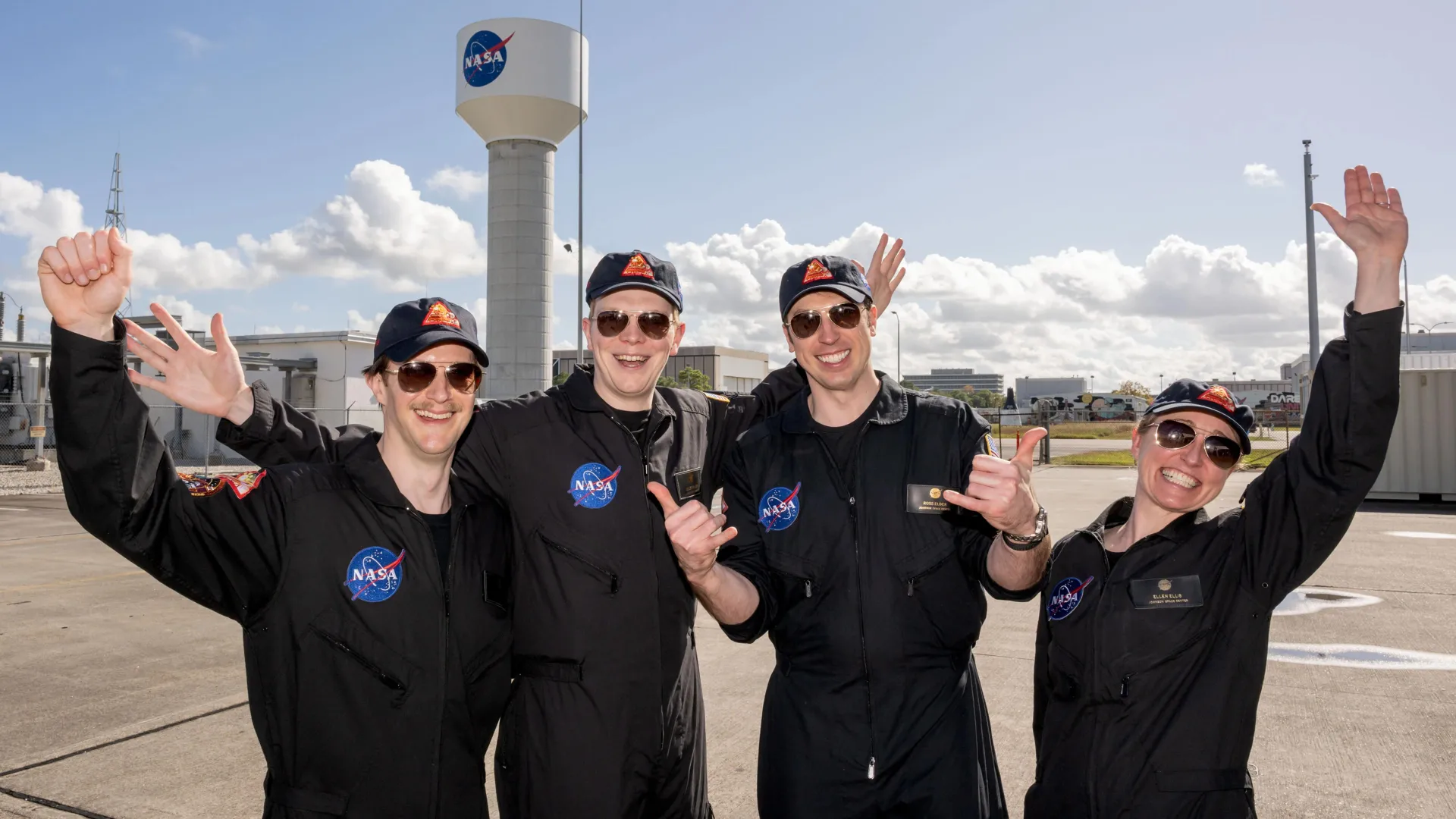
Four NASA volunteers emerged from a year-long Mars simulation experiment on October 31, 2026. Matthew Montgomery, James Spicer, Ross Elder, and Ellen Ellis completed the Crew Health and Performance Exploration Analog (CHAPEA) program, which investigated how people adapt to extended space exploration.
The crew performed tasks that future Mars explorers may need to complete, including operating systems, growing crops, managing supplies, and conducting simulated spacewalks outside their habitat. They also managed communication delays, a key challenge for Mars missions. Radio signals take time to travel between Earth and Mars, preventing the instant communication available to International Space Station astronauts. This means Mars crews must solve problems and make decisions independently rather than relying on immediate guidance from mission control.
NASA uses analog missions to study how people respond to the practical demands of extended isolation. The CHAPEA program examined how crews handle resource limitations, equipment maintenance, food production, and communication difficulties in a confined environment.
The lessons from this crew will inform NASA's development of the planned Moon Base and preparations for future crewed Mars expeditions.