Francis Halzen won the Nobel Prize in Physics for his leadership on the IceCube Neutrino Observatory, which studies neutrinos from deep space in Antarctica. The observatory can detect signals that light and gravitational waves cannot provide alone.
Neutrinos have three flavors and oscillate between these identities as they travel through space. This oscillation relates to their mass, but scientists still do not understand how neutrinos acquire mass in the first place.
Stars produce neutrinos as a byproduct of nuclear fusion, the same process that creates their light. Supernovae also generate neutrinos during stellar explosions.
On February 23, 1987, Supernova 1987A erupted 168,000 light years away. Three neutrino detectors on Earth detected an influx of neutrinos hours before the light from the explosion became visible. Neutrinos arrive first because they pass through matter without interacting, while light particles must escape through the plasma and atoms surrounding the star.
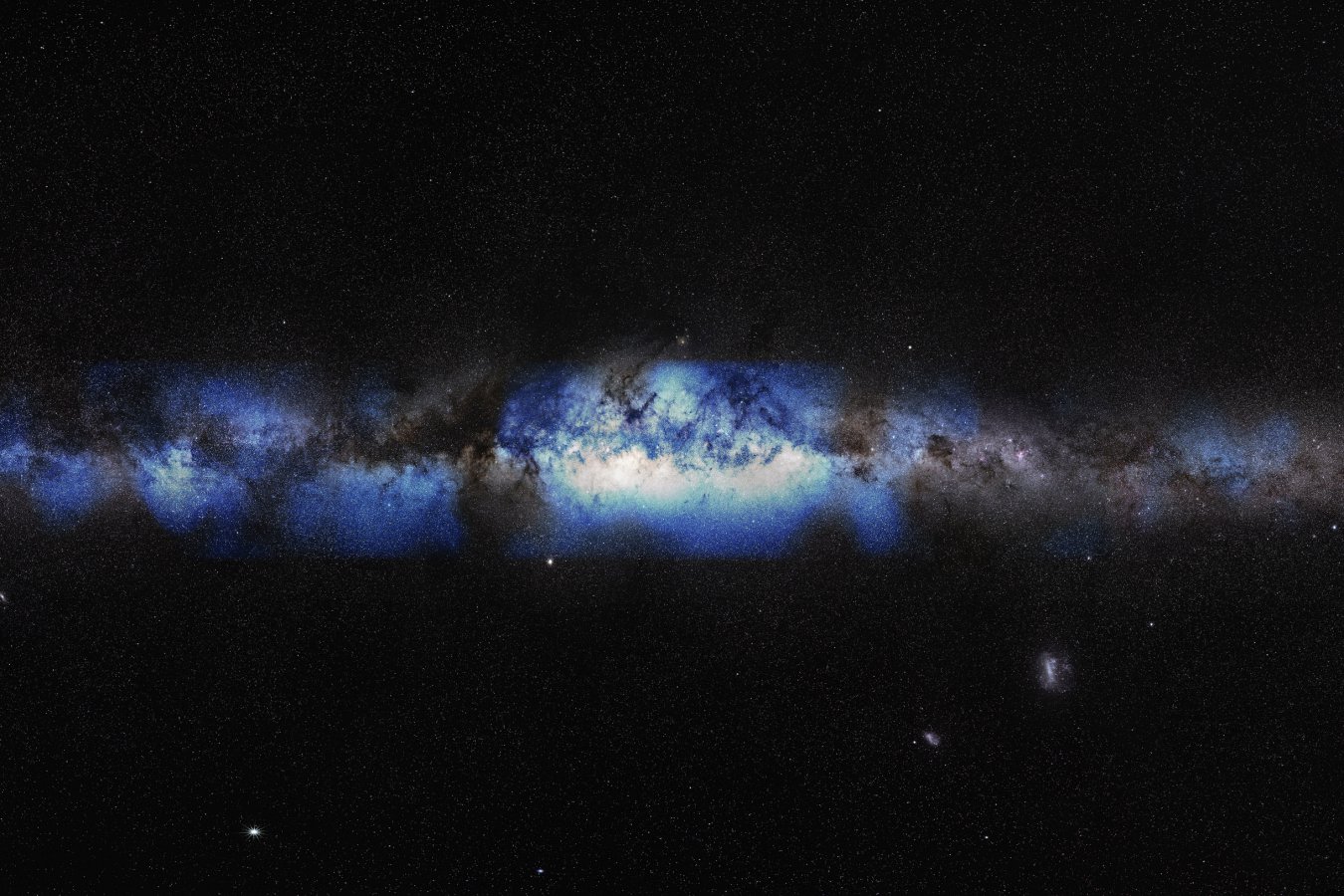
Naoko Kurahashi Neilson at Drexel University in Pennsylvania led a team that created the first complete map of the Milky Way using only neutrinos. In 2023, IceCube unveiled this atlas, which differs markedly from light-based images. The neutrino map shows asymmetry and concentrated "blobs" rather than symmetric features.
Neilson's group now investigates what neutrinos reveal about the galactic center, particularly how particles become accelerated to relativistic speeds. In September, the group shared research on matching neutrino sources with high-energy light sources, assuming both originate from the same location. The goal is to determine what accelerates these energetic particles outward.