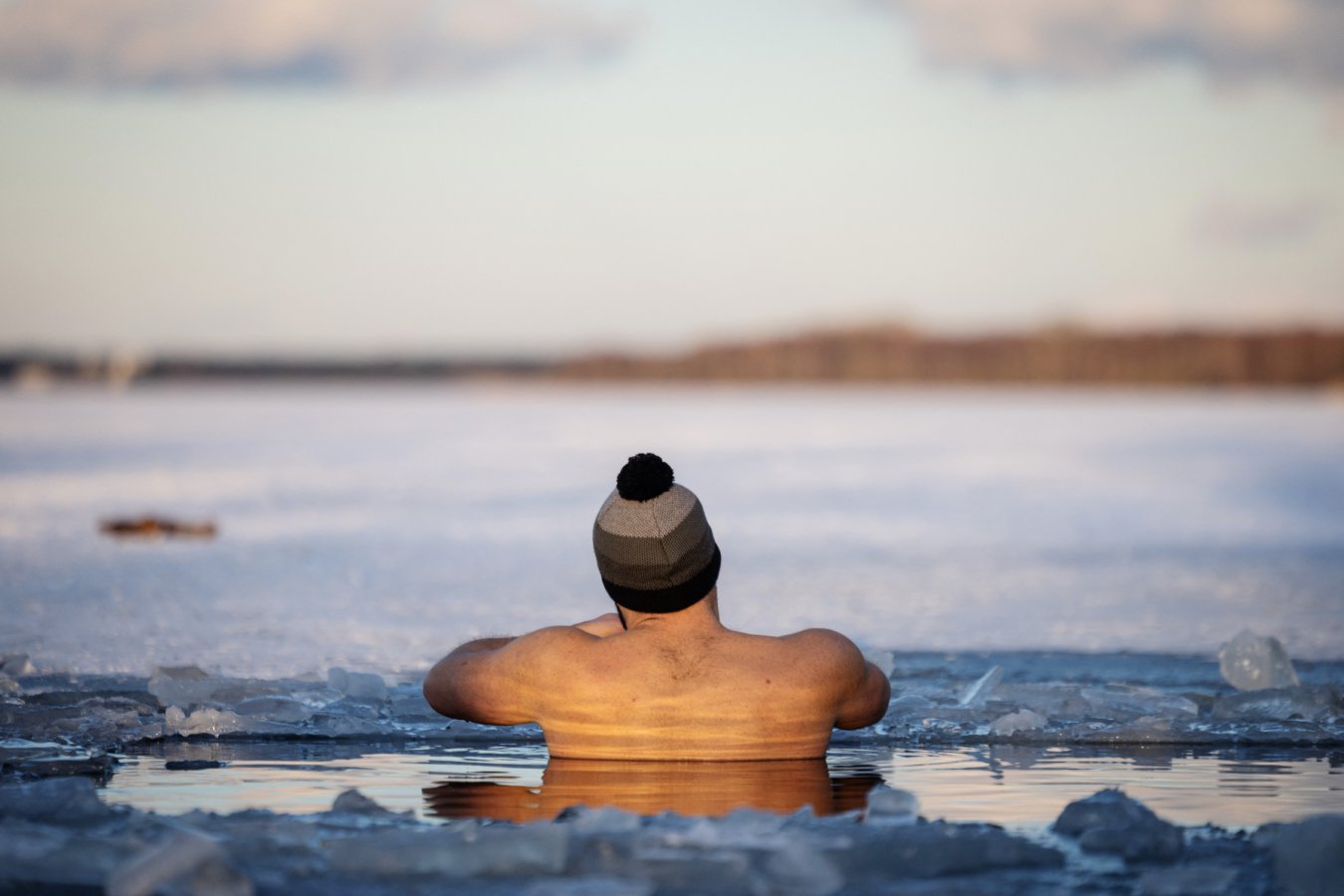
Freya Bayne and colleagues at the University of East London tested whether ice baths help muscle recovery after intense exercise. Forty adults who strength-train regularly performed high-intensity knee-extension exercises that caused muscle damage. Immediately after, researchers randomly assigned them to one of four recovery methods: cold-water immersion at 9°C for 15 minutes, hot-water immersion at 42°C for 30 minutes, hot-air exposure at 30°C for 30 minutes, or passive rest at room temperature for 30 minutes.
After 72 hours, the cold-water group recovered about 82 percent of their maximum muscle strength, while those who simply rested recovered around 89 percent, matching the hot-water and hot-air groups. Blood tests showed that creatine kinase-MM, an enzyme that indicates muscle damage, remained 25 percent above normal in the cold-water group after 72 hours. In contrast, levels returned to normal faster in the hot-water group.
The cold-water group reported less pain at 24 hours, but pain levels increased by 48 hours, suggesting the cold temporarily masked rather than treated soreness. All groups reported elevated pain and muscle soreness at 24 hours with no significant reduction by 72 hours.
"Ice baths have long been considered a go-to recovery strategy in sport, so many people might expect them to outperform doing nothing," Bayne says. She notes that emerging evidence suggests cold therapies may slow muscle-protein synthesis by restricting blood flow. The study was published in the Journal of Thermal Biology.
Ken Nosaka at Edith Cowan University in Western Australia acknowledged the findings but noted that much evidence supporting cold therapies comes from anecdotal reports. Mike Tipton at the University of Portsmouth says ice baths "may assist with repeated bouts of continuous activity in the heat" and might help during multi-day events requiring rapid recovery, and the findings should not stop athletes from using them entirely.