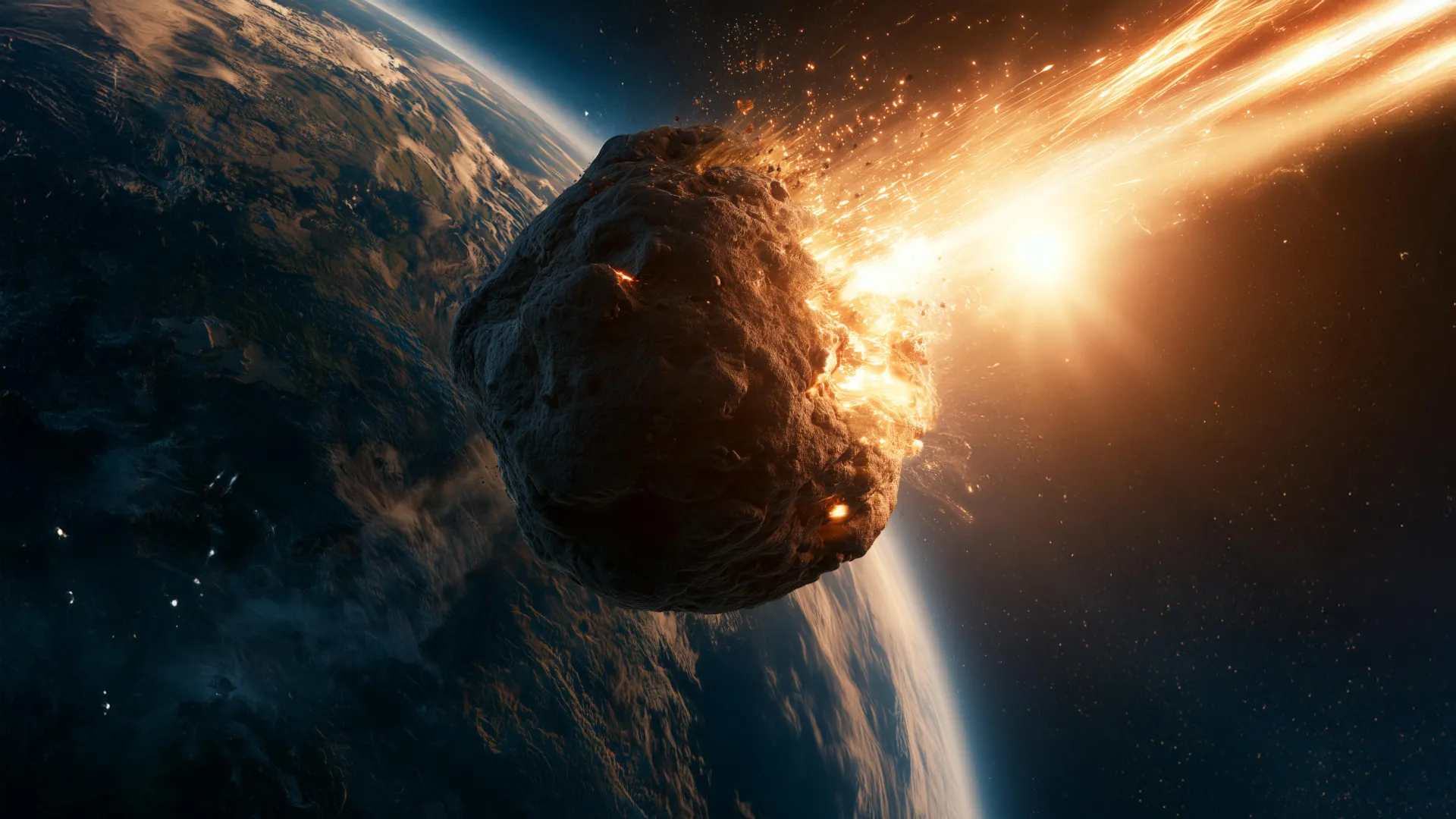
Nathan Moore and colleagues at Sandia National Laboratories developed a new computer model to simulate how nuclear X-ray blasts could deflect asteroids away from Earth. The research, published in Icarus, reveals that the direction from which radiation hits an asteroid dramatically affects the deflection outcome.
Real asteroids have irregular, lumpy shapes unlike the smooth spheres used in earlier simulations. When Moore's team modeled the same asteroid with X-rays coming from different directions, the change in the asteroid's speed varied nearly fivefold, from 0.8 millimeters per second to 3.9 millimeters per second. Effects on an asteroid's rotation were even more dramatic, varying by a factor of 17 depending on blast direction.
"We expected aim to matter," Moore said. "What surprised us was how much."
Moore's team overcame a major computational barrier by combining two existing simulation systems called ALEGRA and SPARTA. The new algorithm runs over 1,600 times faster than previous models, allowing researchers to study realistic asteroid shapes while performing precise calculations of physical forces.
The software reconstructs 3D asteroid models from spacecraft imagery and simulates nuclear blasts by adjusting explosion strength, distance, and direction. It calculates vaporized material, resulting trajectory changes, rotational effects, and surface damage. Moore emphasized that picking the right blast side matters greatly: "Pick the right side and you win. Guess wrong and it could be a bad day."
The model has limitations. It currently predicts breakup only of surface rocks, not the entire asteroid body. Predicting all physical effects from an intense X-ray burst remains exceptionally difficult. Additionally, a real deflection mission would require detailed shape information gathered quickly and precise positioning of a nuclear device in space, both extremely challenging tasks.