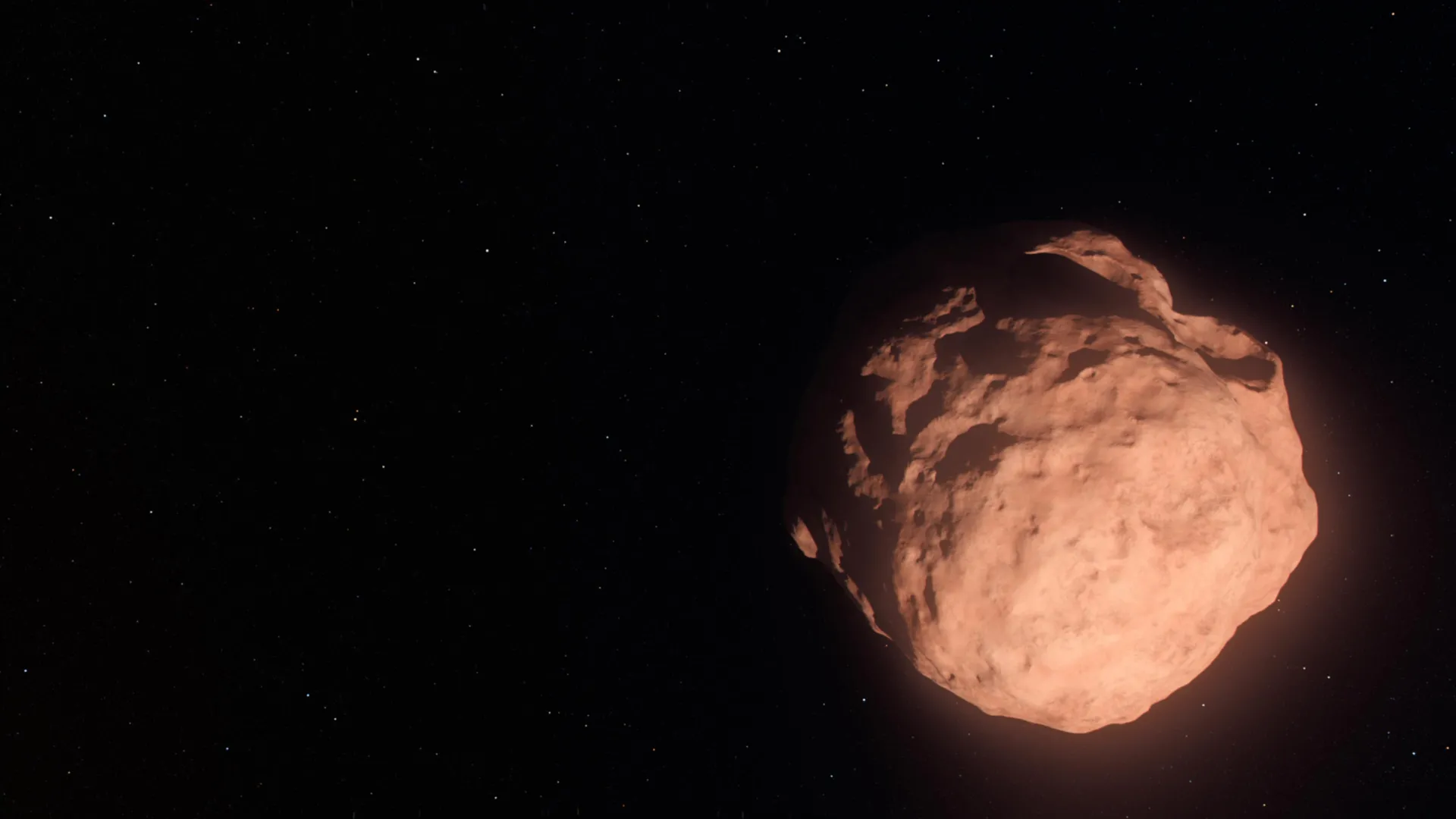
NASA's Hubble and James Webb Space Telescopes discovered 27 previously unknown trans-Neptunian objects, tiny bodies orbiting far beyond Neptune. The finding reveals an unexpected mismatch between predictions and observations. Fewer small objects exist than some planet formation theories predicted, yet their colors closely match those of larger distant objects.
Researchers from the University of Victoria, Northern Arizona University, and the National Research Council of Canada conducted the deepest survey of these trans-Neptunian objects to date. Both telescopes observed the same region simultaneously, with Hubble capturing visible light and Webb recording infrared light. This allowed scientists to examine the objects' colors, estimate their sizes, and determine their orbital paths.
The study focused on two populations of trans-Neptunian objects. Cold objects remain in their original formation regions with circular orbits. Hot objects were scattered outward as giant planets shifted early in the solar system's development, now following elongated paths.
Before this work, astronomers expected smaller objects to show signs of repeated collisions over billions of years. Impacts should have fractured surfaces and exposed fresh material, changing their colors. Instead, the newly discovered objects displayed the same color patterns as larger TNOs, suggesting fewer impacts than previously assumed or that surfaces somehow retain original compositions after collisions.
"You could imagine a scenario where getting knocked around and fragmented would change the surface composition, and then you would see a different surface color for tiny TNOs compared to their larger siblings. So it's really fascinating to see that the smallest objects are somehow 'remembering' and preserving the history of how they were made," said Anastasia Morgan, a Northern Arizona University PhD candidate who led the color and composition study.
Despite forming in different regions of the early solar system, hot and cold TNOs displayed remarkably similar size distributions. This suggests planetesimal formation processes operated consistently across different environments. Webb's infrared sensitivity detected objects as small as 3 miles across, with one so faint that spotting it would resemble seeing fireflies on the Moon from Earth.