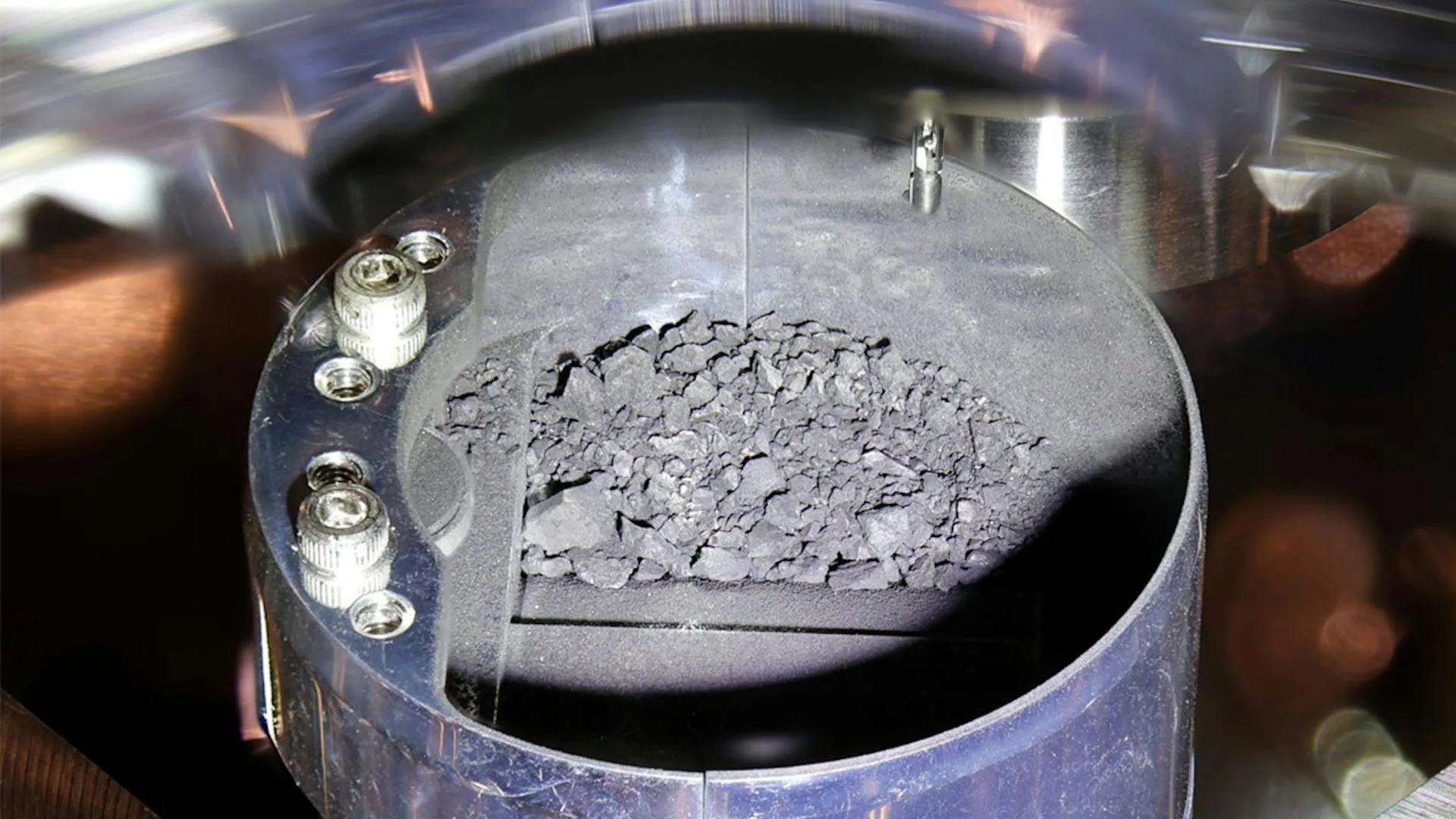
Researchers have detected all five nucleobases, the molecular building blocks of DNA and RNA, in samples from the asteroid Ryugu. A Japanese team published their findings in Nature Astronomy after analyzing material returned to Earth by Japan's Hayabusa2 mission in 2020.
The five nucleobases are adenine and guanine (purines) and cytosine, thymine, and uracil (pyrimidines). These molecules combine with sugars and phosphates to form nucleotides, the fundamental units of genetic material. In 2023, an international team had identified one of these bases, uracil, in Ryugu samples. The new study confirms all five are present in roughly similar amounts across two samples analyzed.
Researchers used ultra-clean lab conditions to avoid contaminating the 5.4 grams of pristine asteroid material. They extracted organic molecules using water and hydrochloric acid before purifying them for detection.
The Ryugu asteroid, roughly 4.5 billion years old, preserves materials largely unchanged since the early Solar System. Similar findings came from NASA's Bennu asteroid samples in 2025, which also contained all five nucleobases. Meteorites that fell to Earth, including the Murchison meteorite in Australia (1969) and the Orgueil meteorite in France (1864), have previously yielded nucleobases, though they risk contamination during their journey and landing.
The asteroids show chemical differences in their nucleobase composition. Murchison contains more purines, while Bennu and Orgueil contain more pyrimidines. Ammonia may influence which nucleobases form in different chemical environments.
The results suggest key components of genetic material may have formed in space and later reached early Earth, making life's origins part of a larger cosmic chemical story.