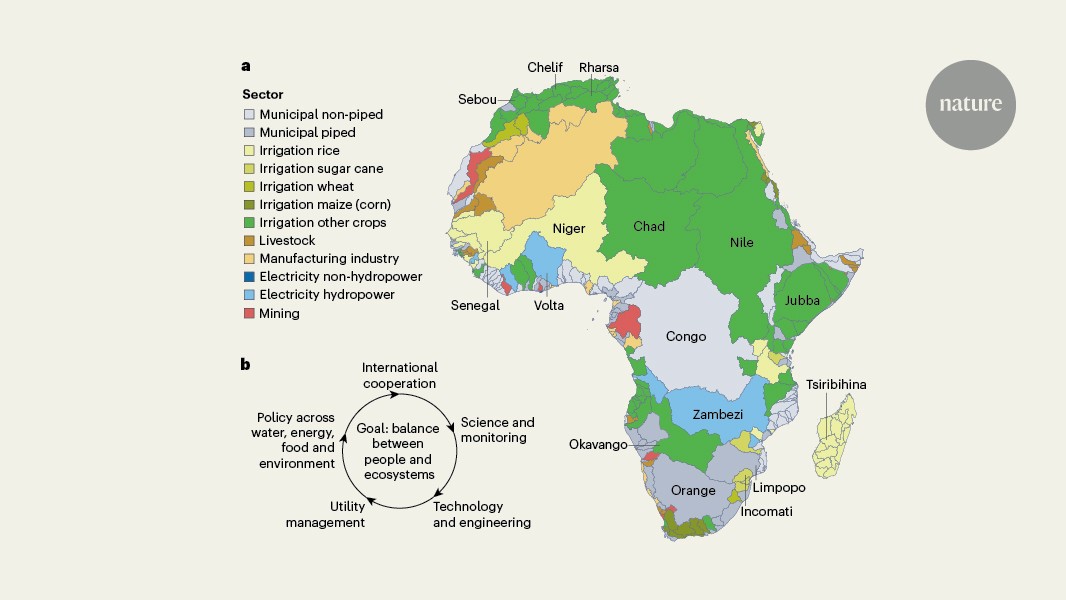
The water cycle knows no borders. Rain falls across continents, rivers cross nations, and underground aquifers stretch beneath political lines. Yet when it comes to measuring and managing this most essential resource, we treat water as if it belongs exclusively to whoever claims it first. This fundamental disconnect between water's global nature and our parochial accounting systems is nowhere more urgent than in Africa, where the inability to measure water usage has created what amounts to a measurement crisis masquerading as a management problem.
According to research highlighted in Nature, the global water budget is only as reliable as its weakest report. When a country cannot measure water usage, that water vanishes from global accounting. This is not merely a technical inconvenience—it is an injustice. Nations unable to document their water consumption lose their claim to a fair share of shared water resources, while those with better measurement infrastructure can dominate allocation discussions. For African countries already facing water stress, this accounting gap translates into a genuine loss of sovereignty over their own resources.
The problem runs deeper than simple negligence. Xu Wang and colleagues at the State Key Laboratory of Urban-rural Water Resources and Environment at Harbin Institute of Technology have documented how this measurement deficit undermines water security across the continent. Without reliable data on how much water is being used—by agriculture, industry, households, and ecosystems—African nations cannot negotiate effectively in regional water agreements or plan sustainably for future demand. They are negotiating blind.
What makes this situation particularly troubling is that the solution exists. We have the technology and methodologies to measure water usage. What we lack is the political will and financial investment to deploy these tools uniformly across Africa. The research community has produced the evidence; now governments and international organizations must act. This means dedicating resources to build monitoring infrastructure, training local experts, and establishing regional frameworks for water accounting that treat African data with the same rigor demanded of reports from wealthy nations.
Africa's water future cannot be secured through mysticism or hope. It requires concrete measurement, transparent reporting, and the recognition that a management gap rooted in measurement failure is a management failure we can actually fix. The time to act is now, before more water—and more opportunity—slips away unmeasured.