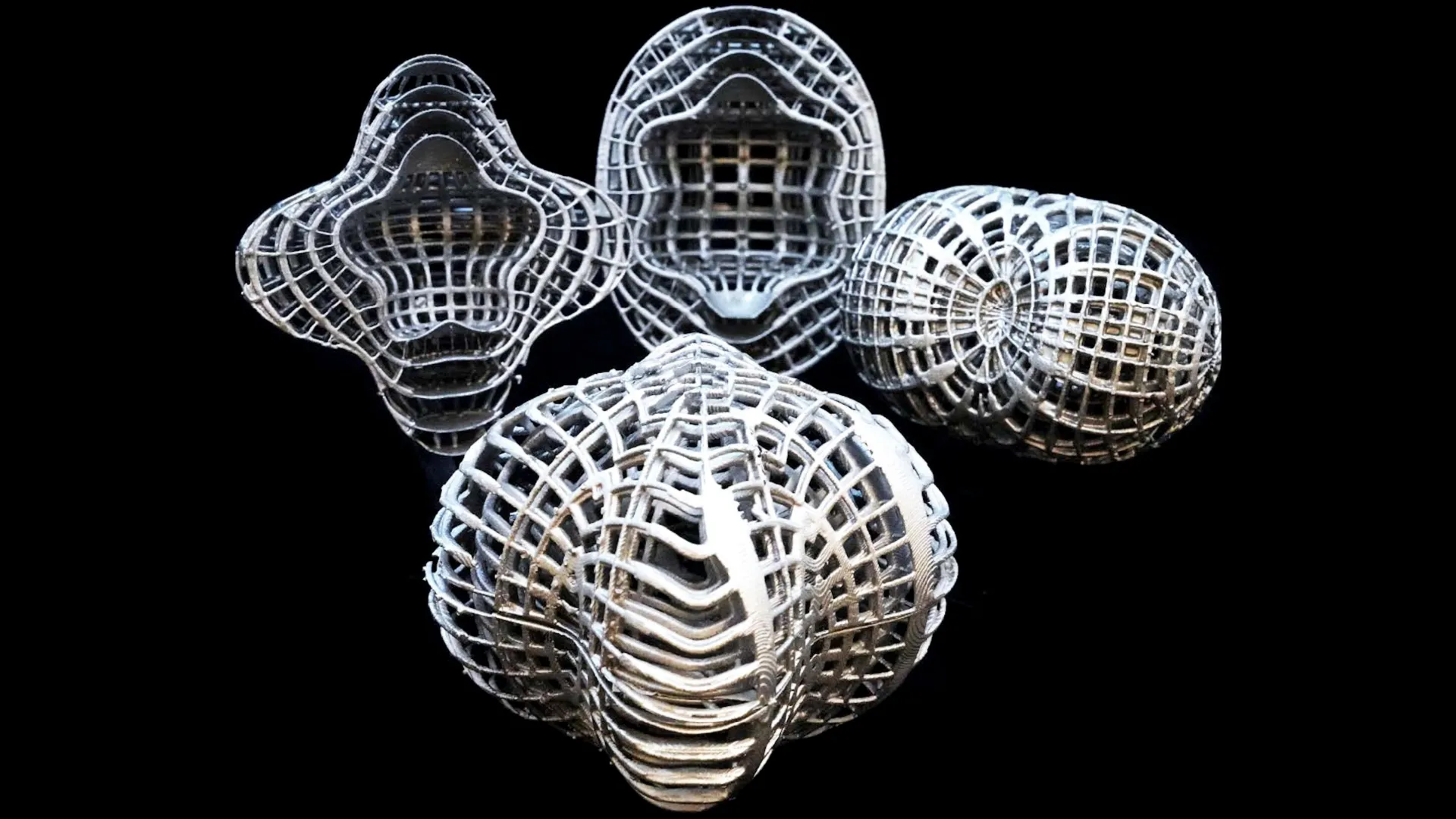
Researchers have created a three-dimensional thermal invisibility cloak that renders objects invisible to infrared cameras while simultaneously shielding them from extreme temperatures. The device works by redirecting heat around objects rather than blocking it, achieving invisibility from nearly all angles. The team has already built and tested a working prototype, opening pathways toward practical applications in electronics cooling, thermal management, and military stealth technology.
The cloak exploits principles of thermodynamic engineering to guide thermal radiation around an object's surface. Unlike conventional heat shields that absorb or reflect energy, this approach uses specially designed materials arranged in a geometric pattern that bends heat flow similarly to how metamaterials bend light. The result is an object that appears thermally "silent" to infrared detection systems, regardless of viewing direction.
Heat management represents a persistent engineering challenge across industries. Electronics generate waste heat that damages components and limits performance. Industrial systems lose substantial energy through thermal leakage. Military applications require stealth from infrared surveillance. Traditional solutions involve thick insulation, active cooling systems, or reflective coatings, each with drawbacks. Thermal invisibility cloaks address these limitations by creating a zone of thermal neutrality around protected objects.
The research builds on decades of metamaterial science. In 2006, physicist John Pendry proposed methods for bending light around objects using engineered materials. Teams subsequently demonstrated optical invisibility cloaks at various wavelengths. Thermal cloaking proved more difficult because heat transfer occurs through multiple mechanisms. radiation, conduction, and convection all require management. Previous thermal cloaks worked only at limited angles or with specific heat sources.
The new three-dimensional design overcomes these constraints. Researchers arranged materials in concentric layers or geometric lattices that guide thermal energy around the central object. Computer modeling optimized the structure to function across infrared wavelengths and from multiple viewing angles. The prototype successfully hid a heated object from thermal cameras positioned at various positions.
Testing revealed the cloak maintains thermal invisibility even when temperature differences between the object and environment exceed typical operational ranges. The device protected the enclosed object while remaining comparatively thin and lightweight. These characteristics suggest practical deployment in compact systems where traditional insulation proves impractical.
Applications span multiple sectors. Electronics manufacturers could incorporate thermal cloaks into processors or power systems to extend device lifespan and boost performance. Aerospace companies might use the technology to protect sensitive instruments from temperature extremes during atmospheric reentry or space operations. Military forces could equip vehicles or personnel with thermal stealth capabilities to evade infrared detection systems. Industrial facilities might reduce energy loss from heated pipes or equipment.
Challenges remain before widespread adoption. Manufacturing the required metamaterial structures at scale demands precision fabrication techniques. Cost currently exceeds conventional alternatives, though mass production could lower prices. Thermal invisibility brings ethical considerations regarding military applications that warrant public discussion.
The research demonstrates that thermodynamic engineering can achieve results previously limited to optical systems. As the technology matures, thermal cloaking may become as routine as conventional insulation. The breakthrough expands possibilities for protecting objects from environmental extremes while simultaneously hiding their thermal signatures.