# Irrigation's Climate Tradeoff: Preventing Massive Emissions by Growing More Food on Existing Land
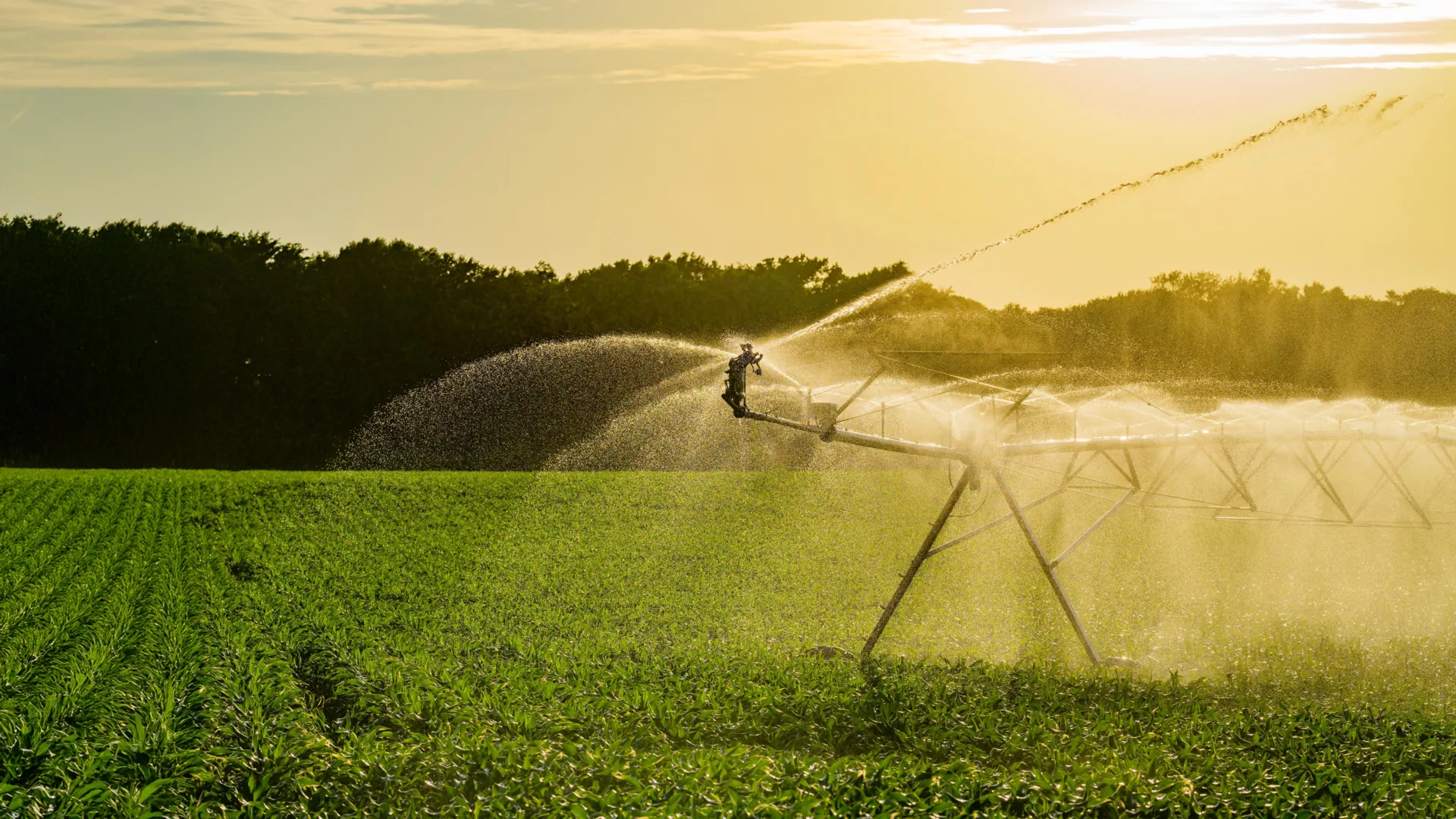
Irrigation in the United States produces greenhouse gas emissions from energy use and water management, yet new research shows the practice delivers a climate benefit far outweighing its costs. By enabling farmers to grow more food on existing agricultural land, irrigation prevents the conversion of natural ecosystems into farmland, a conversion that would release an estimated 6.86 gigatons of greenhouse gases into the atmosphere.
That prevented emissions burden equals roughly 363 years of current annual U.S. irrigation emissions, according to the findings. The research reframes irrigation from a purely environmental liability to a net climate benefit when accounting for land-use change dynamics.
The study examined a core agricultural reality. Irrigation increases crop productivity per unit of land. Without this technology, U.S. agriculture would need to expand geographically to maintain current food production levels. Replacing the yields lost from abandoning irrigation would require converting forests, grasslands, and other natural carbon-storing ecosystems into farmland. That conversion releases stored carbon and eliminates future carbon sequestration, creating a climate debt far larger than irrigation's operational emissions footprint.
The research quantifies a climate paradox often overlooked in environmental assessments. Technologies that consume energy and water can still reduce overall emissions when they displace more destructive land-use changes. Irrigation achieves this by decoupling crop production from land expansion. A farmer using irrigation produces more food from the same plot, reducing pressure to clear new land elsewhere.
This finding holds particular relevance as global food demand continues rising and climate pressures mount simultaneously. Agricultural systems must feed a growing population while reducing emissions. Irrigation represents one pathway to accomplish both goals, provided energy sources powering irrigation systems transition toward renewable sources.
The study's scope focused on U.S. irrigation, where the technology is widespread across major agricultural regions. Conditions differ globally, where irrigation's climate calculus varies based on water availability, energy grids, and ecosystem types. In water-scarce regions or where renewable energy remains limited, irrigation's benefits may differ substantially from U.S. outcomes.
Future research opportunities include tracking how irrigation's net climate benefit evolves as electricity grids shift toward renewables. Irrigated agriculture powered by solar or wind energy could amplify the climate advantage. Conversely, improved dryland farming techniques or drought-resistant crop varieties could reduce irrigation's necessity, though current evidence suggests irrigation will remain essential for feeding global populations.
The findings challenge simplistic environmental narratives that treat irrigation as merely extractive and damaging. Agricultural systems involve tradeoffs. Eliminating irrigation without developing alternative land-use strategies would push farming into pristine ecosystems, accelerating climate change despite reducing irrigation's direct emissions. Policymakers weighing agricultural water use now possess quantitative evidence that irrigation supports climate goals when examined holistically rather than in isolation.