# Volcano's Ash Cloud Unexpectedly Destroys Atmospheric Methane
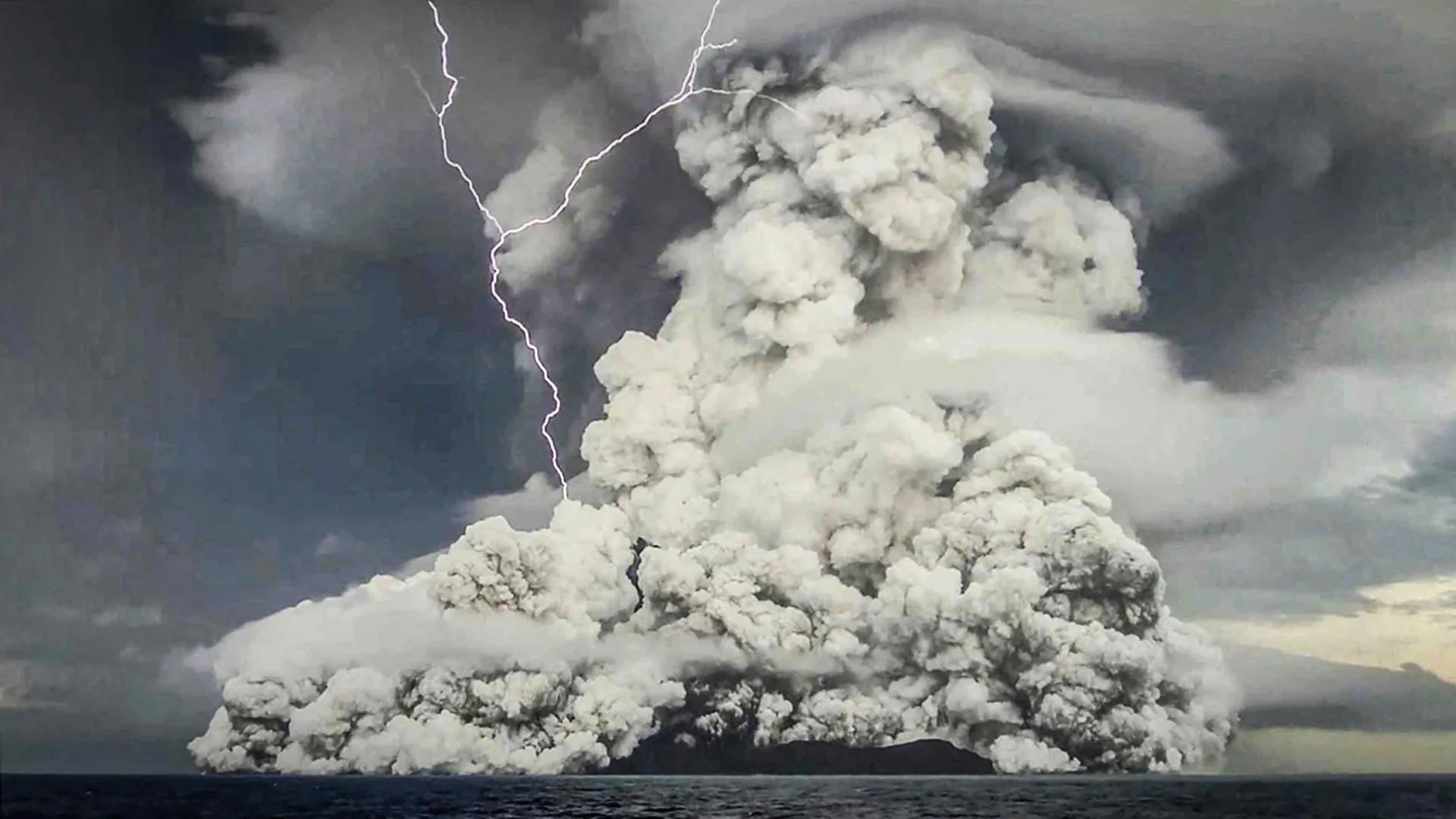
The January 2022 eruption of Hunga Tonga-Hunga Ha'apai in Tonga triggered a chain reaction that researchers did not anticipate: the volcano's ash and gases destroyed a measurable portion of methane already present in the atmosphere, according to recent analysis.
When the underwater volcano erupted with extraordinary force, it injected sulfur dioxide and other compounds into the stratosphere at altitudes exceeding 50 kilometers. Scientists observing the aftermath noticed something unusual. Atmospheric methane concentrations, which typically rise year over year, showed a temporary decline in the months following the eruption.
Researchers attributed this unexpected reduction to a chemical process occurring in the stratosphere. The volcanic sulfur dioxide reacted with hydroxyl radicals, which are the primary molecules responsible for breaking down methane in the upper atmosphere. The eruption essentially boosted the atmosphere's natural methane-scrubbing capacity.
The mechanism works as follows: volcanic aerosols interact with stratospheric chemistry to increase hydroxyl radical concentrations. With more hydroxyl radicals available, more methane molecules get oxidized and removed from the atmosphere. This process continued for several months after the eruption before returning to baseline conditions.
The implications extend beyond volcanic curiosity. Methane is a potent greenhouse gas that traps heat roughly 80 times more effectively than carbon dioxide over a 20-year timescale. Even modest reductions matter for near-term climate projections. The Hunga Tonga eruption's methane-destroying effect provided researchers with a natural experiment that challenged existing models of stratospheric chemistry.
"This is not about harnessing volcanic eruptions as a climate solution," clarified scientists analyzing the data. Rather, the discovery reveals gaps in how current climate models calculate methane removal rates. Previous estimates may have underestimated how efficiently the stratosphere destroys methane under certain conditions.
The research team examined satellite data from multiple sources, including measurements from the Atmospheric Chemistry and Dynamics Laboratory and international atmospheric monitoring networks. They cross-referenced observations to confirm that the methane reduction directly correlated with the volcanic eruption's chemical signature.
Understanding this mechanism opens theoretical pathways for future research. Scientists are exploring whether engineered aerosol injections into the stratosphere could replicate the methane-destroying effect on a controlled basis. Such approaches remain speculative and face substantial technical and ethical hurdles, but the Hunga Tonga case demonstrates that stratospheric chemistry offers untapped leverage for addressing methane specifically.
The discovery also highlights how volcanic eruptions, while destructive, occasionally produce unexpected planetary effects worth documenting. Climate scientists now factor this methane-reduction pathway into refined climate models. Updated projections incorporating this volcanic effect may yield slightly different estimates of methane's atmospheric lifetime and warming contribution.
Future large eruptions will provide additional data points. Researchers are monitoring atmospheric chemistry continuously, ready to detect similar patterns if another major stratospheric eruption occurs. The findings underscore that Earth's atmosphere contains interconnected chemical systems still incompletely understood, and that unusual events sometimes reveal overlooked processes with direct relevance to climate science.