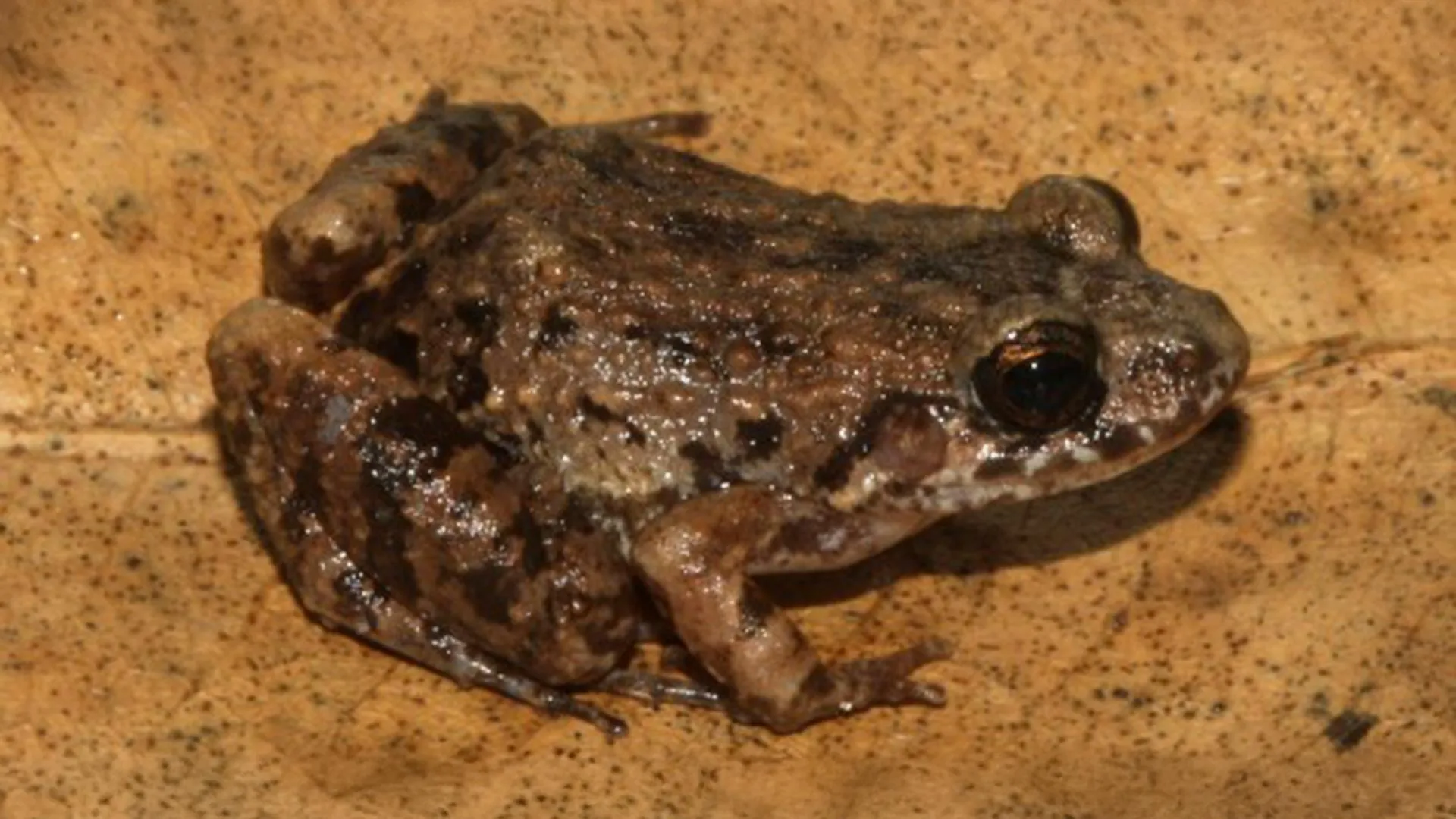
# New Frog Species Emerges From Amazon's Hidden Depths
Researchers have identified a previously unknown frog species in the western Amazon basin, a discovery that underscores how vast swaths of tropical biodiversity remain catalogued only in the most basic sense. The species, named Adenomera varcena, lives in flooded forest regions and resembles its closest relatives so closely that scientists needed molecular analysis to confirm its distinction.
The team relied on DNA sequencing to separate A. varcena from morphologically similar species within the Adenomera genus. This approach proved essential because the frogs share nearly identical physical features with their congeners. Beyond genetics, the researchers also documented that A. varcena produces a unique vocalization pattern, another key identifier for frog species recognition.
The discovery came from fieldwork in the flooded forests of the western Amazon, ecosystems that experience seasonal inundation and support their own suite of adapted species. These flooded forests, called várzea and igapó depending on water chemistry, represent some of the least-studied habitats in the Amazon basin despite their ecological importance and species diversity.
The timing of this discovery carries sobering implications. Habitat loss in the Amazon accelerates annually as deforestation expands for cattle ranching, agriculture, and infrastructure development. Climate change compounds the pressure through altered precipitation patterns and temperature shifts that threaten amphibians particularly acutely. Frogs depend on moisture and precise conditions for breeding, making them sensitive indicators of environmental degradation.
The Adenomera genus includes multiple species found across tropical South America, most of them poorly documented. These small frogs occupy leaf litter and shallow water environments, making them cryptic and difficult to survey systematically. The fact that A. varcena evaded scientific notice until now suggests that dozens, possibly hundreds of similar species may remain undescribed in neotropical forests.
This research demonstrates a persistent limitation in biodiversity science. Scientists estimate that roughly 80 percent of all species remain undescribed globally. For tropical regions like the Amazon, that figure climbs higher still. Describing species before they disappear through habitat loss represents a race against ecological time. Each new species description adds to our understanding of how evolution shaped tropical communities and reveals functional diversity that might hold ecological or pharmaceutical value.
The finding also highlights methodological advances in taxonomy. DNA barcoding and molecular phylogenetics have revolutionized species identification, allowing researchers to distinguish cryptic species that traditional morphological comparison would miss. This technology enables faster species discovery, though it requires access to genetic sequencing facilities and expertise often concentrated in wealthy institutions far from collection sites.
Future work on A. varcena should focus on determining its range, assessing population status, and understanding its ecological requirements. Such information becomes critical for conservation planning if protected areas must prioritize which species to save as habitat loss accelerates. The species joins hundreds of newly described Amazon species each year, each one representing both a scientific find and a potential conservation challenge as the region faces mounting pressures.