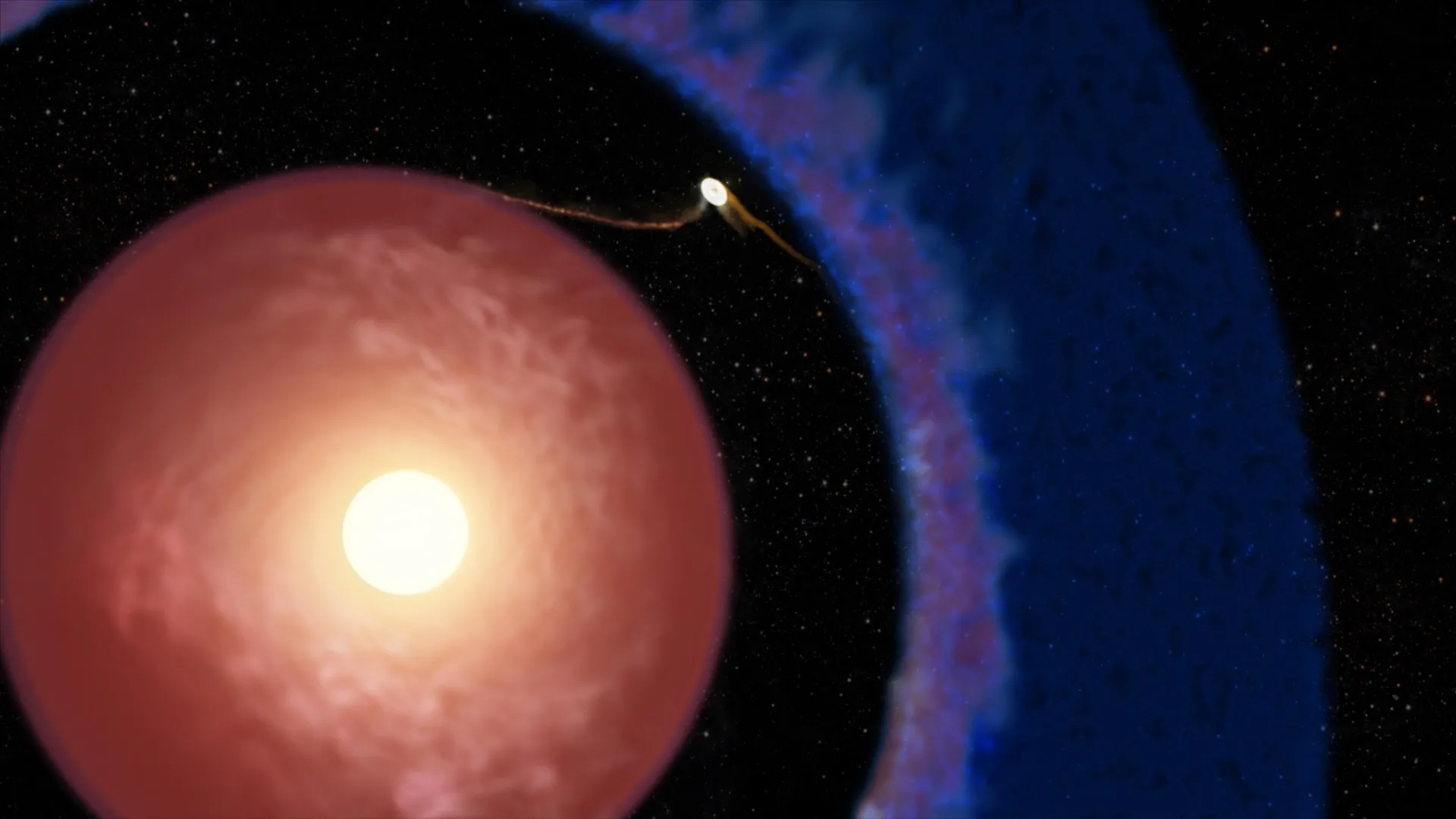
Astronomers have discovered Elias 2-24 b, a Jupiter-sized exoplanet that ranks as the youngest confirmed world ever found at less than one million years old. The planet orbits within the Elias 2-24 star system and offers researchers an unprecedented window into planetary formation during its earliest stages.
The discovery challenges existing models of giant planet assembly. Current theory predicts that Jupiter-mass planets require several million years to form through the gradual accumulation of material. Elias 2-24 b's rapid assembly in under one million years suggests planets can grow far faster than previously thought possible. The planet's location at a considerable distance from its host star compounds the puzzle, since material far from a star should accumulate more slowly than closer to the parent body.
The research team employed direct imaging techniques to observe the young planet. Direct imaging detects infrared heat radiation emitted by newly formed planets, which glow from gravitational compression and residual heat from their formation process. Older planets cool considerably and become invisible to this method, making young planets rare targets for direct observation. This approach proved essential because traditional detection methods like radial velocity and transit techniques struggle with very young systems still shrouded in dense dust and gas.
Elias 2-24 b resides within a protoplanetary disk, the swirling cloud of gas and dust surrounding young stars where planets assemble. The planet's discovery location in such an environment provides direct observational evidence of a world still embedded in its birth material. Scientists can study how the forming planet interacts with its surrounding disk, how it accumulates mass, and what physical processes govern its rapid growth.
The findings carry broad implications for understanding planetary diversity across the universe. If giant planets can form in less than one million years, astronomers may need to revise timescales for planetary system evolution. This acceleration could explain why astronomers observe mature planetary systems around relatively young stars. It also suggests that conditions favoring rapid planet formation may be more common than current models indicate.
The discovery raises questions about formation mechanisms. One possibility involves disk instability, where regions of the protoplanetary disk become gravitationally unstable and rapidly collapse into planets. This mechanism could operate much faster than core accretion, the traditional model where small rocky cores gradually accumulate gas. Elias 2-24 b's properties may indicate disk instability played a role in its formation, though researchers continue analyzing observations to confirm this scenario.
Future observations will refine understanding of the young system. Advanced telescopes can track how Elias 2-24 b's properties change over coming decades and measure its atmosphere's composition. Characterizing the planet's internal structure, orbital evolution, and interaction with its host disk will test competing formation theories.
This discovery underscores how exoplanet science continues revealing nature's diversity. Each new world, particularly those in extreme states like extreme youth, challenges assumptions and expands the boundaries of what planetary systems can achieve.