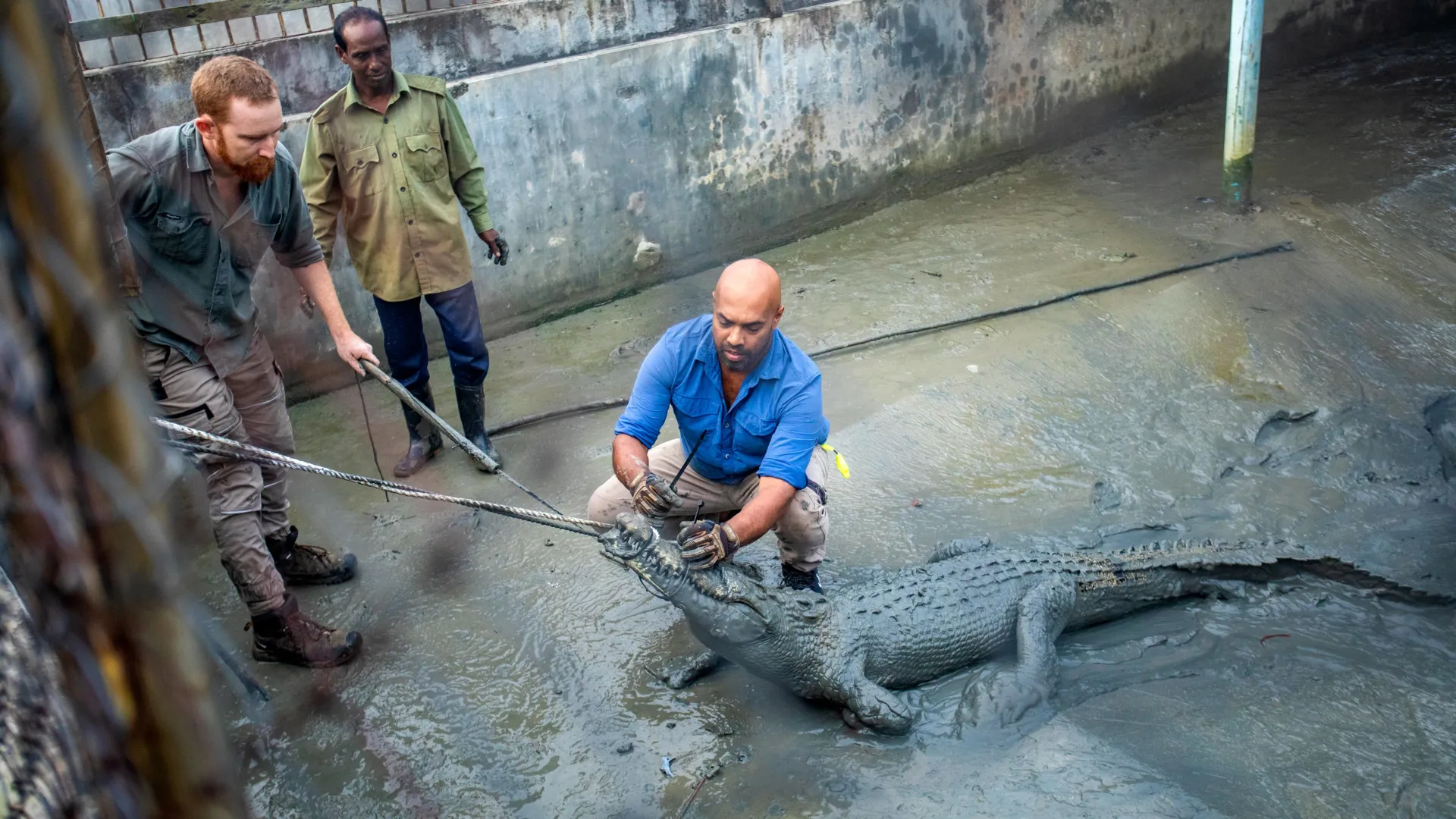
Researchers working in Bangladesh's Sundarbans mangrove forest have discovered an unexpected behavior in saltwater crocodiles that could reshape conservation strategy for the species. When scientists released twelve captive-bred adult crocodiles into the wild, the animals remained in their new habitat instead of attempting to return to their breeding facility. This finding contradicts the common assumption that crocodiles possess strong homing instincts that would drive them back to familiar breeding grounds.
The study emerged from efforts to restore saltwater crocodile populations in the Sundarbans, one of the world's largest mangrove ecosystems straddling Bangladesh and India. Once abundant across the region, the species faced dramatic population collapse from hunting and habitat loss. Conservation teams at local facilities have bred crocodiles in captivity for decades, but releases have historically focused on hatchlings and juveniles, many of which face high mortality rates in the wild.
The captive crocodiles tracked by researchers showed no strong preference to return to their facility. Instead, they established territories within the Sundarbans wetlands and adjusted to wild feeding patterns. Scientists monitored the released animals over months, documenting their movements and survival rates. The crocodiles adopted behavior consistent with wild populations, suggesting they were capable of thriving in their new environment without the psychological pull toward captivity that many assumed would exist.
This outcome carries practical implications for crocodile restoration programs. Releasing mature, larger crocodiles could prove more effective than releasing hatchlings, which face predation from birds, monitor lizards, and larger crocodiles themselves. Adult crocodiles occupy established feeding niches and can defend territory against competitors. They reach reproductive maturity faster than juveniles, accelerating population recovery. The Sundarbans population has shown signs of growth in recent years, possibly aided by past releases, but the density remains far below historical levels.
The findings also provide insight into saltwater crocodile cognition and behavior. While crocodiles exhibit remarkable navigation abilities in some contexts, their attachment to specific locations may depend on environmental factors, breeding cycles, and individual experience rather than an inflexible homing mechanism. The captive-bred animals in this study, raised in artificial conditions, may have lacked the conditioning that would anchor them to their birthplace. This behavioral flexibility in mature individuals opens new pathways for wildlife managers designing reintroduction protocols.
Challenges remain. The Sundarbans face pressure from human settlement, fishing nets that trap crocodiles, and climate change affecting mangrove ecosystems. Long-term survival of released crocodiles depends on continued habitat protection and community engagement with local fishers who share the landscape. Additionally, genetic diversity in captive breeding populations remains a concern. Scientists must ensure releases do not diminish the genetic health of wild populations.
The research demonstrates that conventional assumptions about animal behavior should be tested empirically rather than accepted as universal truths. For crocodile conservation programs across Southeast Asia and beyond, the results suggest that mature captive animals warrant inclusion in restoration efforts alongside juvenile releases. This diversified approach could accelerate the return of saltwater crocodiles to ecosystems where they once thrived.