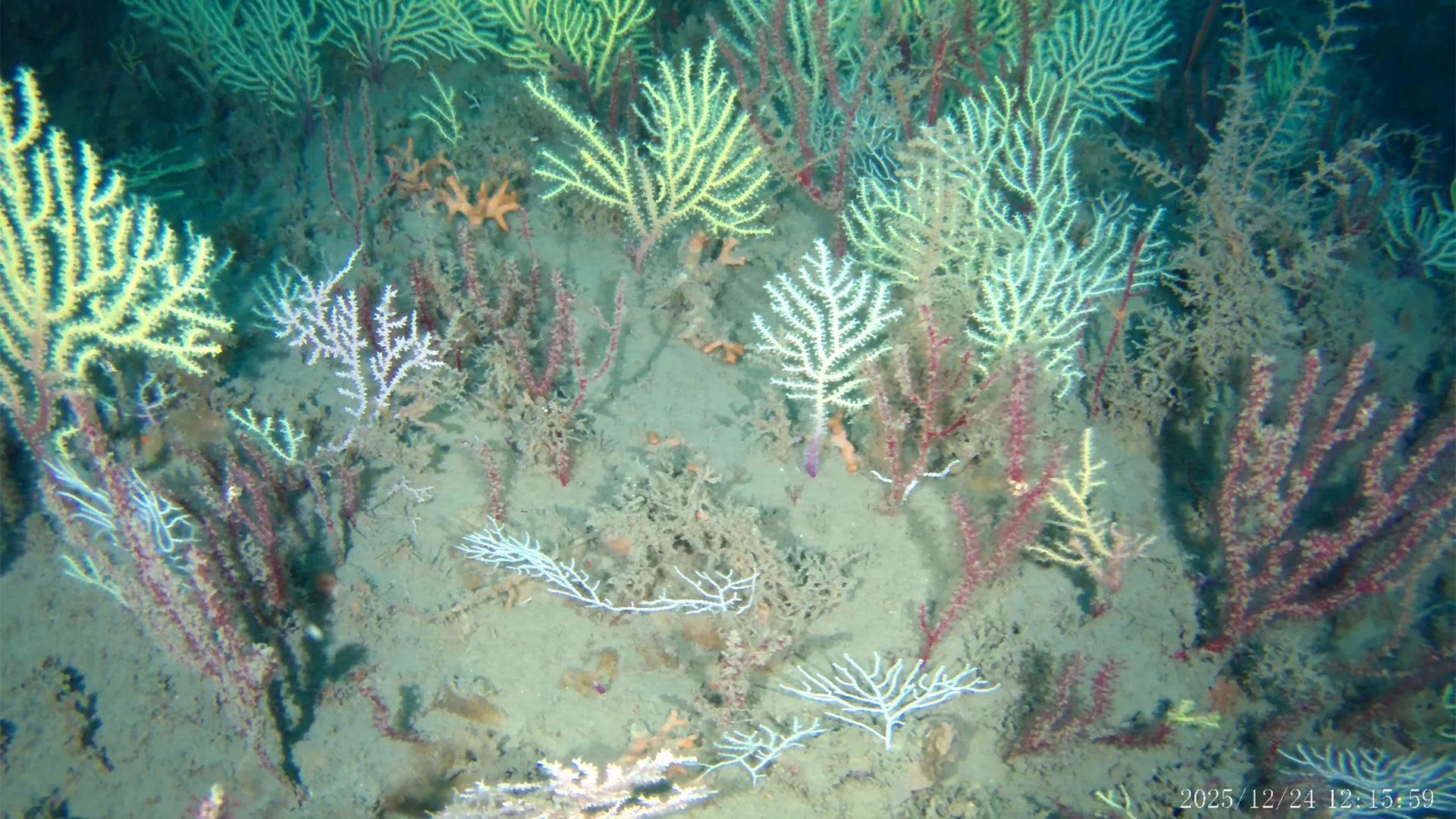
A coral reef presumed destroyed six decades ago is flourishing off the coast of Benin, according to a recent underwater survey that challenges assumptions about deep ocean ecosystems in West Africa.
Scientists deployed cameras at depths exceeding 50 meters to investigate a reef system last surveyed in the early 1960s, when data suggested the ecosystem had collapsed. Instead of barren seafloor, the team documented robust coral patches teeming with fish species. The vibrant conditions indicate the reef either recovered from historical stressors or remained intact despite unfavorable predictions.
The finding emerges from a growing recognition that deep-water ecosystems remain poorly understood. Many coastal surveys focus on shallow reefs accessible to divers, leaving depths below 30-40 meters largely unexplored. West Africa's continental shelves contain thousands of kilometers of potential habitat that scientists have barely documented.
Deep coral reefs operate differently than their shallow counterparts. They grow slowly, sometimes adding just millimeters per year, making them vulnerable to fishing pressure and trawling. Yet they also shelter unique fish communities and filter-feeding organisms that process nutrients from the water column. The Benin reef's persistence offers a window into conditions that support these resilient systems.
The discovery carries practical implications for marine conservation. If reefs presumed dead actually survived, coastal nations may need to revise protection strategies. Fisheries management around West Africa often relies on outdated surveys or anecdotal reports rather than comprehensive biological data. Updated mapping could identify zones where restrictions on bottom trawling would provide the greatest benefit.
Researchers plan further investigation to understand what allowed this ecosystem to persist when similar reefs in other regions degraded. Factors could include local oceanographic conditions, reduced fishing pressure in deep waters, or greater stress resistance in this particular coral population. Genetic analysis of coral samples might reveal whether the reef contains locally adapted lineages.
The work also highlights technological advances in deep-sea research. Camera systems mounted on remotely operated vehicles now provide high-resolution footage without the cost of manned submersibles. This democratization of deep-water exploration enables smaller research teams and institutions in developing countries to conduct their own surveys.
West African marine science faces resource constraints compared to research in Europe or North America. Many nations lack dedicated oceanographic vessels or trained personnel for deep-water work. The Benin discovery resulted from collaboration between local and international researchers, a model that could accelerate baseline surveys across the region.
Previous estimates suggest that 30 to 50 percent of the world's coral reefs have already experienced significant degradation from warming, acidification, and local stressors. Deep reefs initially seemed immune to thermal stress because cold temperatures provide insulation. Recent data shows warming penetrates even the deepest systems, though more slowly than surface waters.
The Benin reef's condition does not confirm that deep oceans remain stable. Rather, it demonstrates that absence of evidence is not evidence of absence. Many ecosystems lack any formal documentation, making it impossible to track changes over decades. Establishing baseline surveys now creates a foundation for detecting future shifts.
Future work should prioritize mapping other suspected reefs along West Africa's coast. Ghana, Cameroon, and Angola likely harbor similar systems never surveyed by modern methods. Funding for regional ocean observation networks could yield discoveries comparable to the Benin reef while providing data essential for climate adaptation planning.