# Volcanic Rocks in Colombia Reveal Earlier Collision of Central and South America
Geologists have pushed back the timeline for when Central and South America collided by millions of years, based on evidence preserved in Colombian volcanic rocks. The discovery reshapes understanding of one of the Western Hemisphere's most consequential tectonic events.
Researchers analyzed magnetic signatures in volcanic rocks from Colombia to track when major tectonic deformation occurred. Their findings indicate that intense collision between the two continents had already peaked and begun weakening by the late Miocene epoch, roughly 10 to 12 million years ago. This suggests the most violent phase of the collision happened earlier than the late Pliocene timeline that previous studies had proposed.
The study emerged from examining paleomagnetic data, a technique that reads the frozen magnetic orientation of mineral grains in rocks. These grains record Earth's magnetic field strength and direction at the moment the rock cooled from molten lava. By comparing the magnetic inclinations of rocks from different time periods, scientists can determine whether the rocks rotated or shifted after formation, revealing the history of tectonic movement.
The collision between Central and South America profoundly shaped the region's geography, climate, and biology. The event created the Isthmus of Panama and other landmasses that now connect North and South America. This land bridge altered ocean currents, influenced atmospheric circulation patterns, and enabled species migration between continents. Pinpointing when this occurred remains essential for understanding Neogene climate evolution and biogeography across the Americas.
The volcanic rocks used in this research provide a more precise clock than many older geological markers. Lava flows cool rapidly, preserving their magnetic signature with minimal alteration over millions of years. This makes them particularly reliable for dating tectonic events and measuring cumulative rotation in crustal blocks.
Previous research had suggested that the Central and South American collision was still intense during the Pliocene, roughly 3 to 5 million years ago. The Colombian evidence contradicts this timeline, instead showing that major deformation had already plateaued by the late Miocene. The research team likely compared rotation angles in rocks of known ages to establish when active collision stress began declining.
This earlier collision timeline carries implications for how geologists model tectonic activity in the tropical Americas. It also affects interpretations of when the Panama Isthmus fully closed, a process previously thought to be gradual but potentially more abrupt than models suggested. Closing of this seaway triggered reorganization of Atlantic and Pacific Ocean circulation, cooling global climate by altering heat transport between hemispheres.
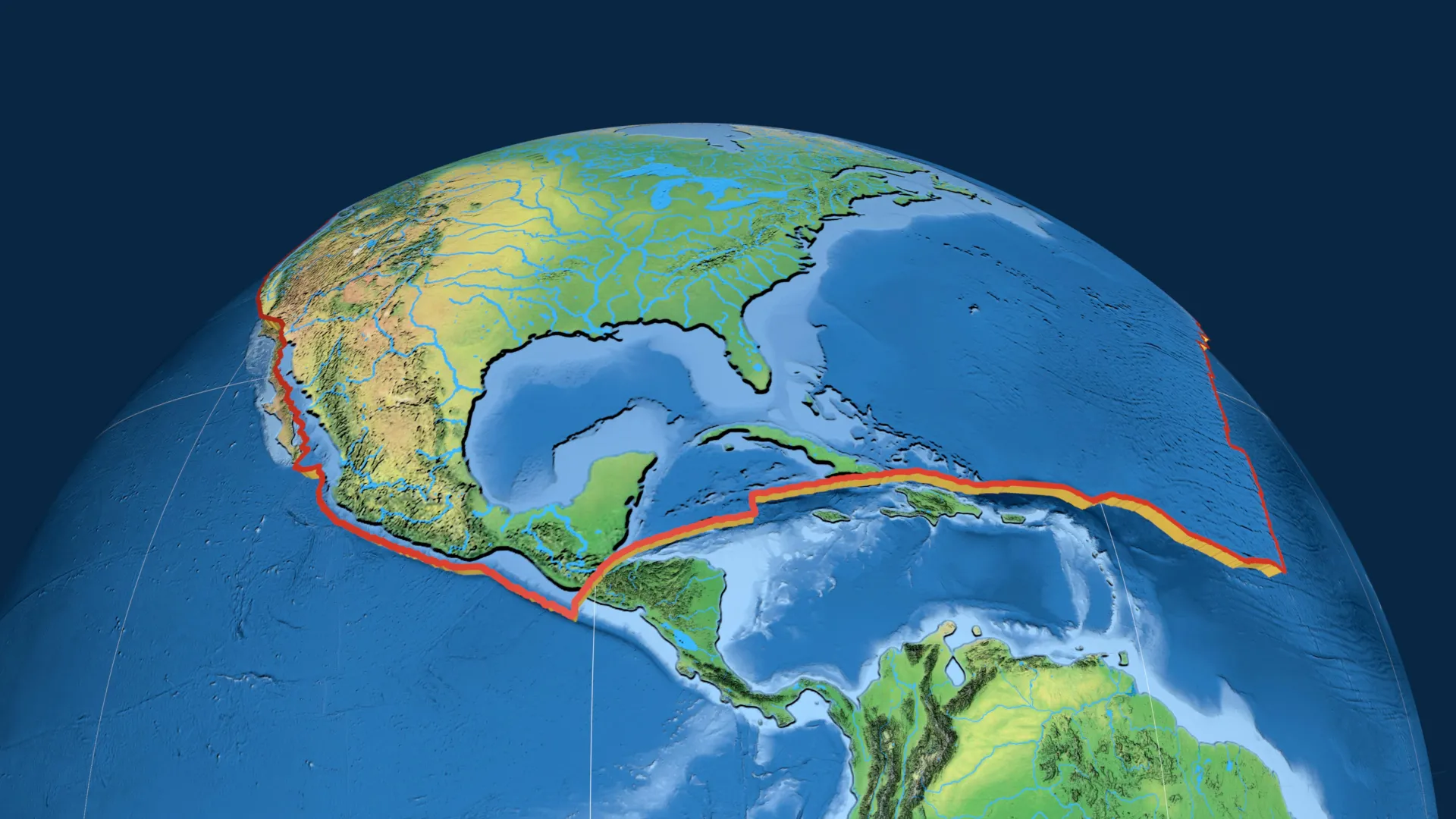
The research builds on decades of paleomagnetic studies in Central America, a region where complex plate interactions and multiple microplates make tectonic history particularly intricate. Colombia's position at the junction between the Caribbean Plate and South American Plate makes it an ideal natural laboratory for studying collision mechanics.
Future work will likely involve dating additional volcanic sequences across Colombia and neighboring regions to refine the collision timeline further. Scientists may also use paleomagnetic data to assess how rapidly the deformation weakened, providing insight into the mechanics of continental collision as strain accumulation reaches critical thresholds.