# Scientists Remain Deeply Skeptical of 2025 Alien Life Claims
Two major announcements about potential extraterrestrial life made headlines in 2025, but the scientific community has responded with overwhelming caution. A survey of hundreds of astrobiologists reveals that most experts reject the claims as evidence of actual life beyond Earth.
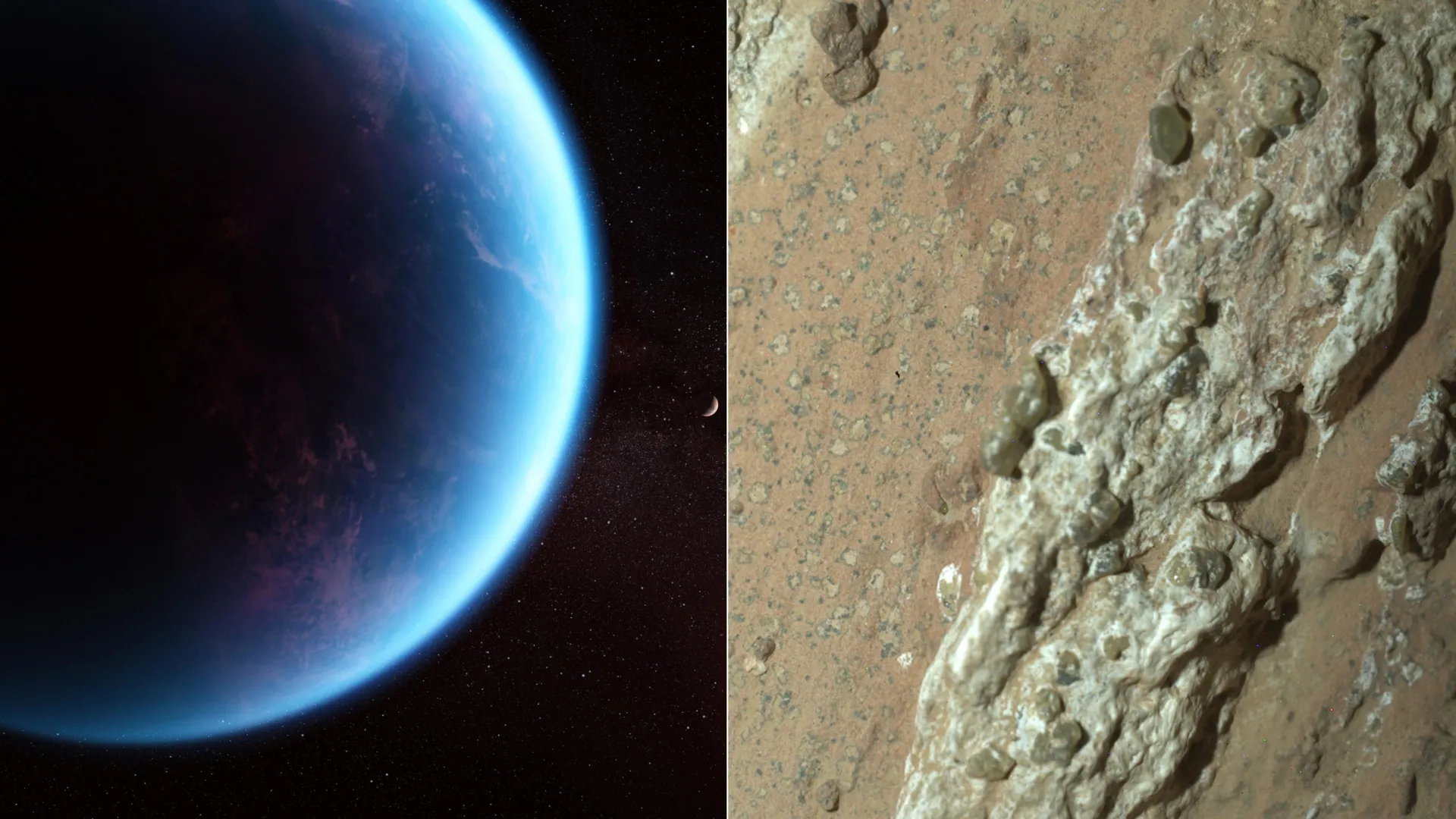
Only 6.6% of surveyed astrobiologists believed that possible biological molecules detected on K2-18b probably represent extraterrestrial life. The exoplanet K2-18b, located roughly 110 light-years away in the constellation Leo, has drawn scientific attention as a potentially habitable world. Researchers previously reported detecting potential biosignatures like dimethyl sulfide in the atmosphere of this sub-Neptune exoplanet, sparking public speculation about microbial life. Yet the survey data shows the broader expert community views these atmospheric detections with deep skepticism, citing alternative chemical explanations that do not require biology.
The second claim fared only marginally better. When asked about intriguing mineral patterns found in a Martian rock, 15.1% of experts said such features probably represented evidence of past life on Mars. This rock analysis came from data collected by rovers operating on the Martian surface. While mineral patterns can sometimes indicate biological processes, non-biological processes typically explain similar geological formations just as well or better.
The survey captures a fundamental divide between public enthusiasm and scientific rigor. Announcements about potential alien life generate massive media attention and public interest, yet astrobiologists know that extraordinary claims require extraordinary evidence. The scientific bar for declaring life discovery remains extraordinarily high. Researchers must rule out all plausible non-biological explanations before accepting a biological hypothesis.
Several factors explain the expert skepticism. First, both claims lack direct detection of living organisms or unambiguous microbial remains. Second, alternative chemical and geological processes can produce the same observations without requiring life. Third, contamination and instrument limitations complicate interpretation of remote observations from exoplanets and Mars rovers.
This pattern reflects broader lessons from astrobiology over decades. Each promising biosignature claim from the 1990s onward, from the famous Martian meteorite ALH84001 to various exoplanet atmospheric readings, has faced subsequent scrutiny that weakened initial excitement. Astrobiologists have learned that apparent biosignatures often have mundane explanations.
The survey results underscore that detecting life beyond Earth will require either much stronger evidence or direct sample return and analysis in terrestrial laboratories. Missions like NASA's Mars Sample Return campaign and future probes to ocean worlds like Europa or Enceladus aim to provide this more definitive data. Until then, astrobiologists will continue evaluating each claim with appropriate skepticism, protecting the field's credibility while remaining genuinely open to genuine discoveries when evidence becomes truly compelling.