# Endangered Roloway Monkey Births Healthy Offspring After Limb-Saving Surgery
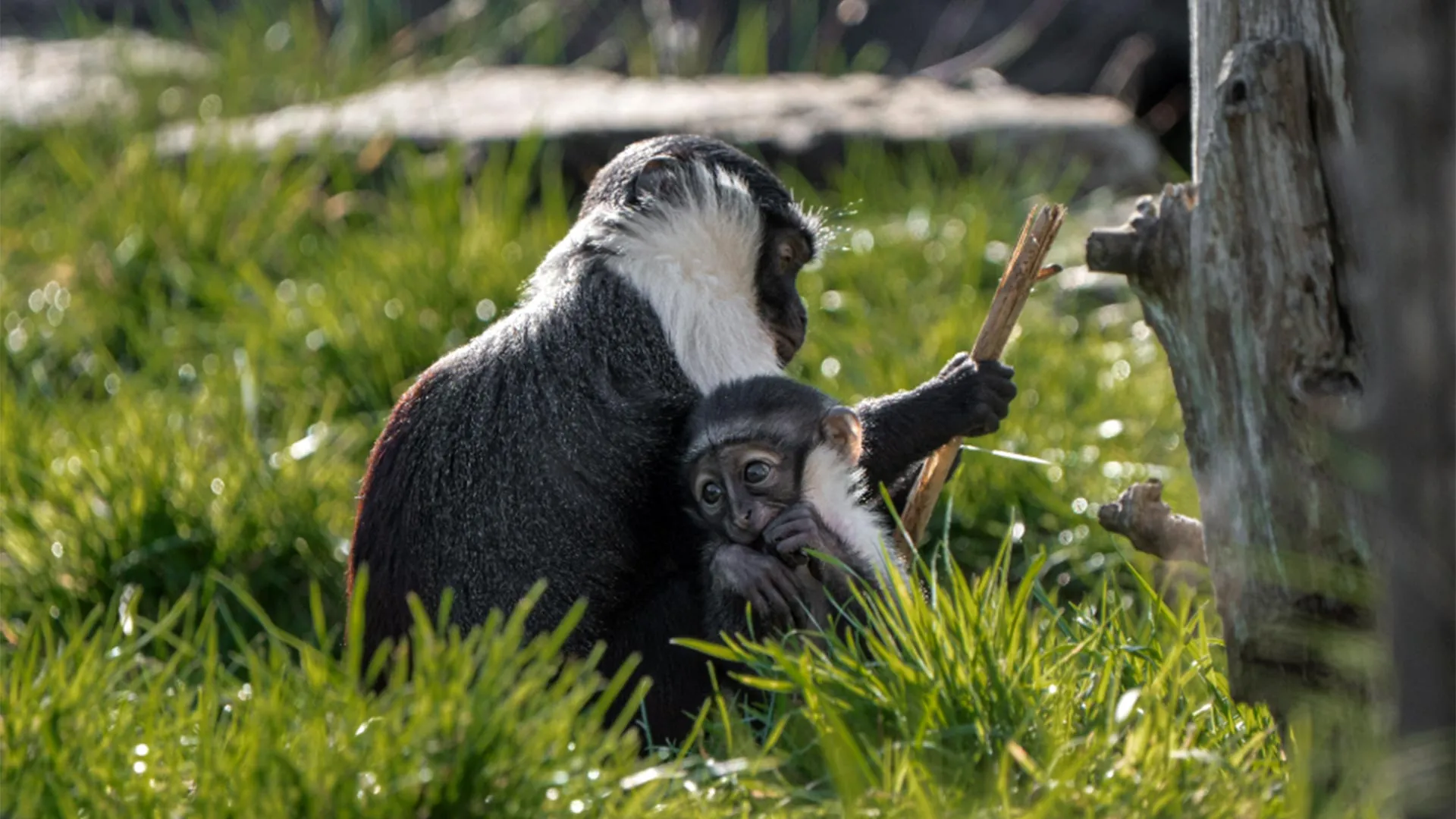
Surgeons successfully prevented amputation of a critically endangered roloway monkey's foot through an unusual surgical procedure, allowing the primate to recover and conceive. Months after the operation, the monkey gave birth to a healthy daughter named Lagertha, marking a reproductive success for one of Africa's most threatened primates.
Roloway monkeys (Cercopithecus roloway) inhabit the forests of Ghana and Ivory Coast, with fewer than 2,000 individuals remaining in wild populations. The species faces relentless habitat loss and poaching pressure that has driven it toward extinction over recent decades. Each birth in captive populations carries outsized importance for species survival and breeding programs that aim to maintain genetic diversity and prevent total collapse.
The unnamed mother underwent a complex orthopedic repair that preserved her damaged foot rather than removing it entirely. Details about the exact nature of her injury remain limited, but the surgical team's decision to attempt reconstruction rather than proceed with amputation reflects both advancing veterinary medicine and the conservation stakes surrounding the species.
Veterinarians at facilities caring for roloway monkeys have increasingly employed sophisticated surgical techniques borrowed from human orthopedic practice. These procedures require highly specialized expertise, as primates present unique physiological challenges during anesthesia and recovery. The surgical team's success demonstrates that complex interventions can succeed even in compromised individuals within captive populations.
The birth of Lagertha represents a concrete outcome of the mother's recovery and return to normal reproductive function. For a species numbering in the low thousands globally, each healthy offspring contributes measurably to genetic management and population viability. Breeding programs coordinated across zoological institutions track family histories meticulously, pairing individuals to maximize genetic diversity and minimize inbreeding depression.
Roloway monkeys share habitat with other West African primates now facing similar extinction pressures. Forest conversion for agriculture, logging, and human settlement has fragmented populations into isolated groups lacking natural gene flow. Bushmeat hunting removes reproductive adults from remaining wild populations, skewing sex ratios and reducing breeding capacity further.
The species' perilous status reflects broader conservation challenges across African primates. Larger charismatic apes attract international funding and attention, while smaller monkeys like roloways receive far fewer conservation resources despite equally dire circumstances. Their smaller body size and lower social profile in global awareness means fewer zoos maintain populations and fewer funding streams support field research or habitat protection.
This successful case illustrates how veterinary innovation can remove barriers to reproduction within managed populations. By extending the healthy lifespan and reproductive window of individual animals, surgical intervention indirectly bolsters conservation efforts that rely on steady population growth behind institutional walls.
The immediate future depends on continued intensive management and potential field conservation in Ghana and Ivory Coast. International cooperation between African governments and conservation organizations remains essential for protecting remaining forest patches and establishing protected areas where roloway monkeys might eventually recover. Captive breeding serves as an insurance policy, but only habitat protection and reduced hunting pressure can address underlying extinction drivers.