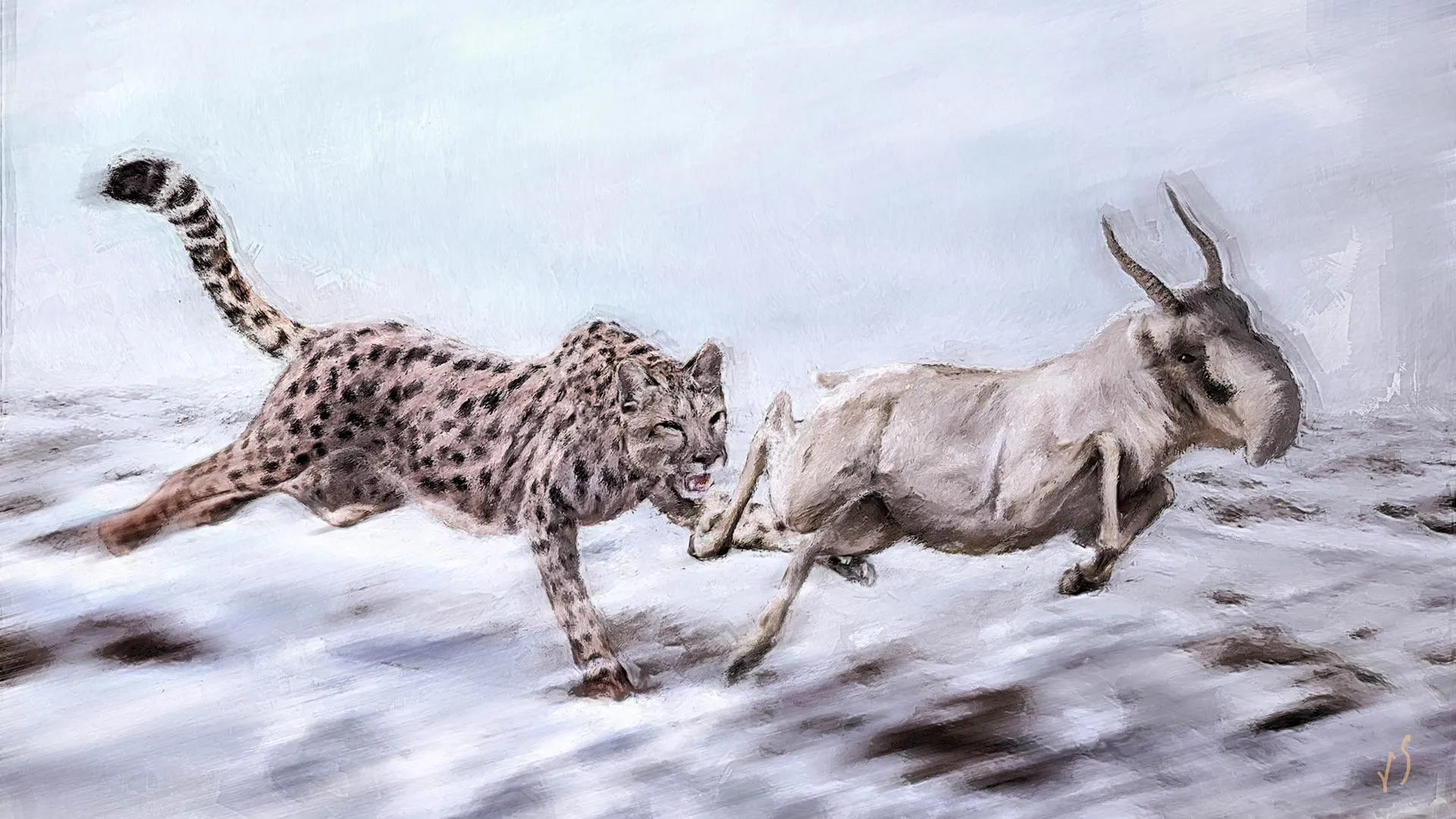
Researchers have overturned a century-old assumption about one of North America's most famous extinct carnivores. The so-called "American cheetah" was never actually a cheetah, but rather a distinct puma relative that adapted to radically different environments across the continent.
The discovery emerges from fossil analysis of northern populations found in the Yukon, revealing an animal far more behaviorally flexible than scientists previously believed. While southern populations hunted terrestrial prey on land, their northern cousins developed an unexpected survival strategy. Yukon specimens show clear evidence these cats actively hunted and consumed fish, possibly including salmon, supplementing their diet in ways that defied the traditional predator profile.
The American cheetah, scientifically known as Acinonyx trumani, lived during the Pleistocene and vanished roughly 10,000 years ago alongside other megafauna at the end of the last ice age. For decades, paleontologists classified it within the cheetah genus based on skeletal similarities, particularly the animal's long legs and lightweight build. These features appeared perfectly adapted for pursuit hunting of fleet-footed prey across open terrain, much like modern African cheetahs. The classification seemed logical and persisted across textbooks and museum displays.
Fossil evidence from Yukon deposits fundamentally changes this picture. The bones and teeth of northern American cheetahs show wear patterns and chemical signatures consistent with regular aquatic foraging. This dietary flexibility contradicts the strict specialization researchers attributed to true cheetahs, which hunt exclusively on land and possess anatomical features unsuited to water interaction. The Yukon findings demonstrate that American cheetahs possessed the anatomical and behavioral plasticity to thrive in diverse ecological niches.
The difference matters beyond taxonomy. Modern African cheetahs represent evolutionary specialists. Their extreme adaptations for terrestrial pursuit hunting make them vulnerable to habitat loss and prey depletion. The American cheetah operated under a different survival model. Populations adjusted their hunting strategies based on available resources. Northern cats with access to salmon rivers and fish-rich waterways incorporated aquatic prey into their diets. Southern populations maintained more conventional carnivore hunting patterns. This behavioral flexibility likely extended their range and helped various populations persist through climate fluctuations.
The reclassification pushes the American cheetah outside the Acinonyx genus and closer to the puma lineage. This revision reflects a broader pattern in Pleistocene paleontology. Many extinct North American carnivores occupied ecological roles that don't map neatly onto modern species. They were not simply larger or smaller versions of existing predators, but animals with unique adaptations suited to the vanished world they inhabited.
The extinction of the American cheetah remains tied to broader megafaunal collapse. Climate change, human hunting pressure, and loss of prey species all contributed to the disappearance of these cats. Yet understanding their true dietary and behavioral flexibility adds context to their vulnerability. An adaptable predator still could not survive the rapid environmental and ecological disruptions that marked the Pleistocene's end.