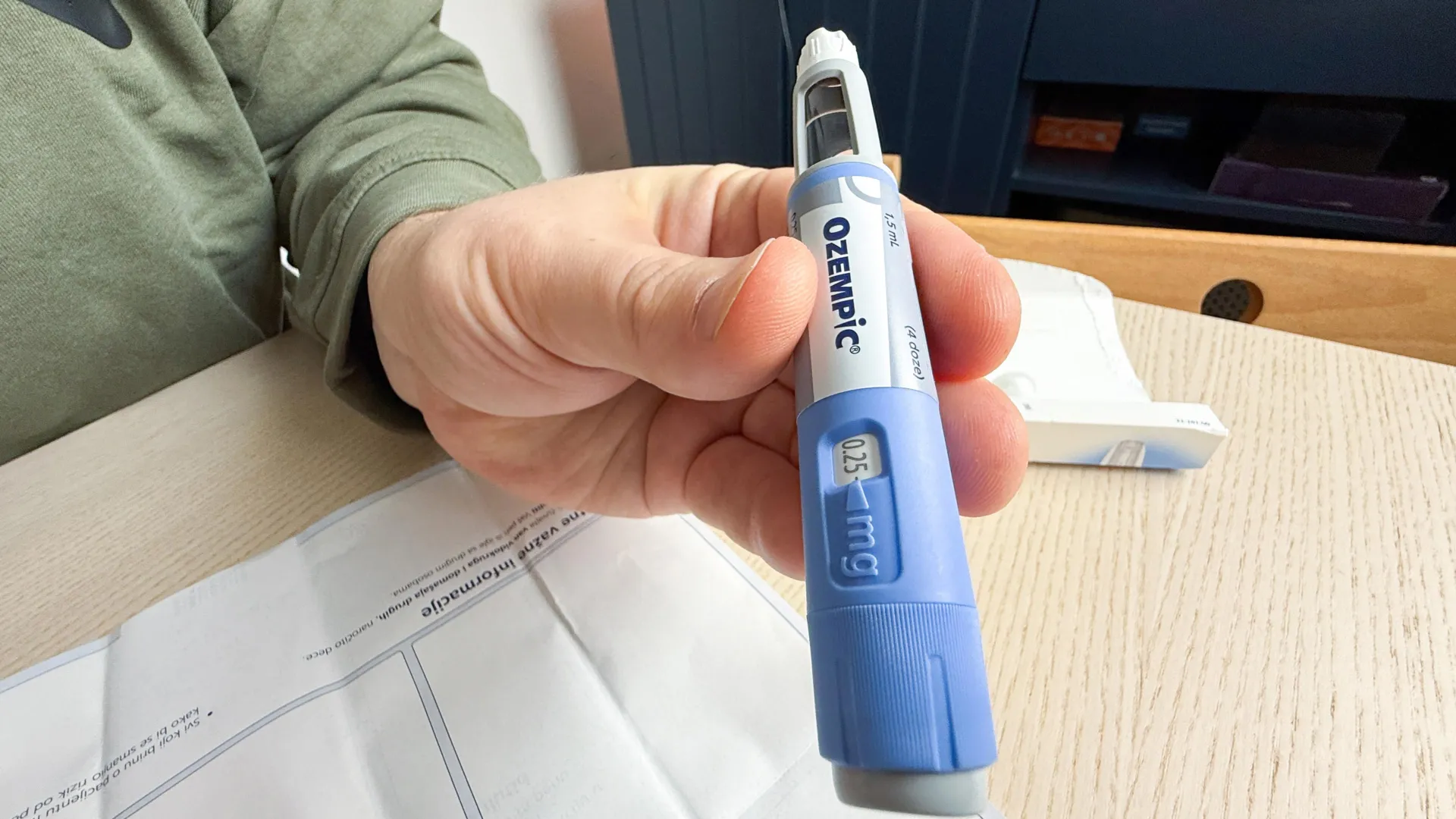
Semaglutide, the drug sold as Ozempic for diabetes and Wegovy for weight loss, shows a striking association with reduced psychiatric hospitalizations in people with bipolar disorder, according to a large Swedish study published in a peer-reviewed journal. Researchers tracked nearly 15,000 patients with bipolar disorder and found that semaglutide users faced a 21% lower risk of requiring psychiatric hospitalization compared to non-users.
The finding emerges from data analysis by Swedish researchers examining real-world outcomes in patients with bipolar disorder. The team observed the protective effect specifically with semaglutide, not with other glucagon-like peptide-1 (GLP-1) drugs, suggesting the benefit does not apply broadly across the drug class but rather relates to semaglutide's particular mechanism.
Researchers propose two biological explanations for the association. First, semaglutide may reduce inflammation, a pathway increasingly linked to mood disorders and psychiatric symptoms. Second, the drug appears to influence brain-related biological processes that help stabilize mood regulation. These theories remain speculative and require laboratory validation, but they offer plausible mechanistic ground for the observed clinical pattern.
The study's scope lends credibility to its findings. With nearly 15,000 participants and Sweden's comprehensive health registry data, researchers could track real hospitalizations and actual medication use across a large population rather than relying on self-reported outcomes. This real-world evidence differs from controlled trials, which often involve smaller, more homogeneous groups.
However, the finding comes with important limitations. Correlation does not establish causation. Patients prescribed semaglutide may differ systematically from those not prescribed it in ways that independently reduce hospitalization risk. Socioeconomic factors, adherence to other psychiatric medications, or access to healthcare could confound results. The association was observed in a Swedish population, raising questions about whether findings generalize to other countries with different healthcare systems and patient demographics.
Bipolar disorder affects approximately 1% of the global population and ranks among the top causes of disability worldwide. Current treatments center on mood stabilizers like lithium and anticonvulsants, plus antipsychotics for acute episodes. The condition generates enormous healthcare costs through hospitalizations, emergency department visits, and lost productivity. Any intervention reducing psychiatric crises would hold substantial clinical value.
The finding does not justify prescribing semaglutide solely for bipolar disorder. Current evidence does not support such use, and semaglutide carries its own risks including gastrointestinal side effects and rare cases of medullary thyroid cancer in animal models. Patients should not start or stop psychiatric medications without consulting their psychiatrist.
The next logical step involves prospective randomized controlled trials examining semaglutide's effects on bipolar disorder symptoms and hospitalization rates in carefully selected patient populations. Researchers should measure inflammatory markers and neuroimaging data to test the proposed biological mechanisms. If confirmed in rigorous trials, semaglutide could potentially become an adjunctive treatment for bipolar patients, particularly those with comorbid metabolic conditions where the drug's weight loss benefits would also apply.
This observation underscores how drugs developed for one condition sometimes reveal unexpected benefits in others. Many psychiatric medications were initially discovered for different purposes before their mental health applications emerged.