# Prenatal Joint Architecture May Predetermine Rheumatoid Arthritis Risk
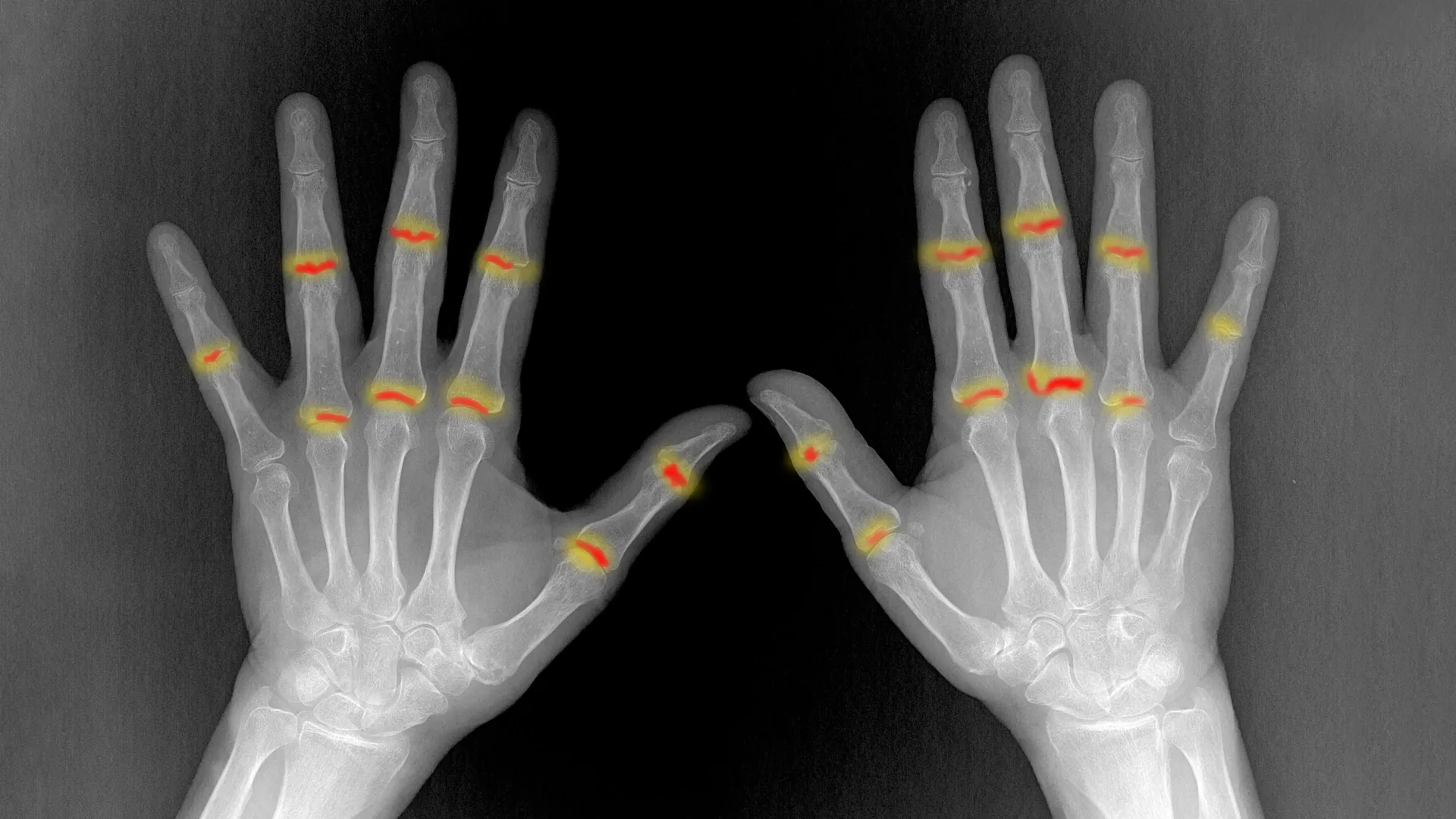
Scientists have identified a surprising mechanism that may explain why rheumatoid arthritis attacks certain joints while sparing others. The vulnerability to disease originates before birth, encoded into the physical structure and cellular composition of joints themselves.
Researchers found that finger joints commonly damaged by rheumatoid arthritis develop with fundamentally different tissue architecture and larger populations of specialized cells called fibroblasts compared to joints that remain protected from the disease. These cellular populations respond differently to inflammatory signals, suggesting that prenatal joint design acts as a blueprint determining which areas become targets for arthritis later in life.
The research centers on fibroblasts, cells that produce and maintain connective tissue and collagen within joints. In joints vulnerable to rheumatoid arthritis, these fibroblasts exist in greater numbers and possess distinct characteristics that make them more reactive to inflammatory conditions. The evidence indicates that this cellular programming happens during fetal development, long before the immune system begins its attack.
Rheumatoid arthritis affects approximately 1.3 million Americans, according to the Arthritis Foundation. The disease typically strikes fingers, hands, wrists, knees, and feet while leaving other joints relatively untouched. This selective targeting has puzzled researchers for decades. Why do certain joints show consistent vulnerability while neighbors remain largely unaffected?
The new findings suggest the answer lies in developmental biology. During gestation, different joints receive different developmental signals that shape their structural composition. Joints destined to become arthritic hotspots develop with architectural features that make them particularly susceptible to inflammatory assault. This prenatal "priming" creates an environment where fibroblasts behave differently when the immune system eventually mounts its attack.
Understanding this mechanism opens new therapeutic possibilities. Rather than treating only symptoms after arthritis develops, researchers might develop interventions targeting the fibroblast populations in vulnerable joints. Drugs could potentially modify how these cells respond to inflammation or reduce their reactive capacity before disease onset.
The findings also help explain why rheumatoid arthritis shows variable presentation between patients. While genetic and environmental factors clearly contribute to disease development, the inherent structural properties of each joint create a local vulnerability signature. Some people's joint architecture may require a much larger inflammatory trigger to initiate arthritis, while others face higher baseline risk from identical immune challenges.
This research aligns with the emerging view that many chronic diseases result from interactions between prenatal developmental programs and later environmental exposures. Researchers increasingly recognize that in utero conditions and genetic programming set vulnerability patterns that shape disease risk decades later.
The work has implications for early detection strategies. Identifying individuals with higher-risk joint architectures through imaging or biomarkers might enable preventive approaches targeting specific at-risk joints before arthritis symptoms appear. This represents a shift from reactive treatment toward anticipatory medicine based on developmental biology.
Scientists continue investigating whether modifying fibroblast behavior or joint architecture could prevent or delay disease onset. The discovery that rheumatoid arthritis vulnerability begins before birth challenges the conventional view of disease as something acquired purely through immune dysfunction. Instead, the disease emerges from a complex interplay between how joints develop and how the immune system responds.