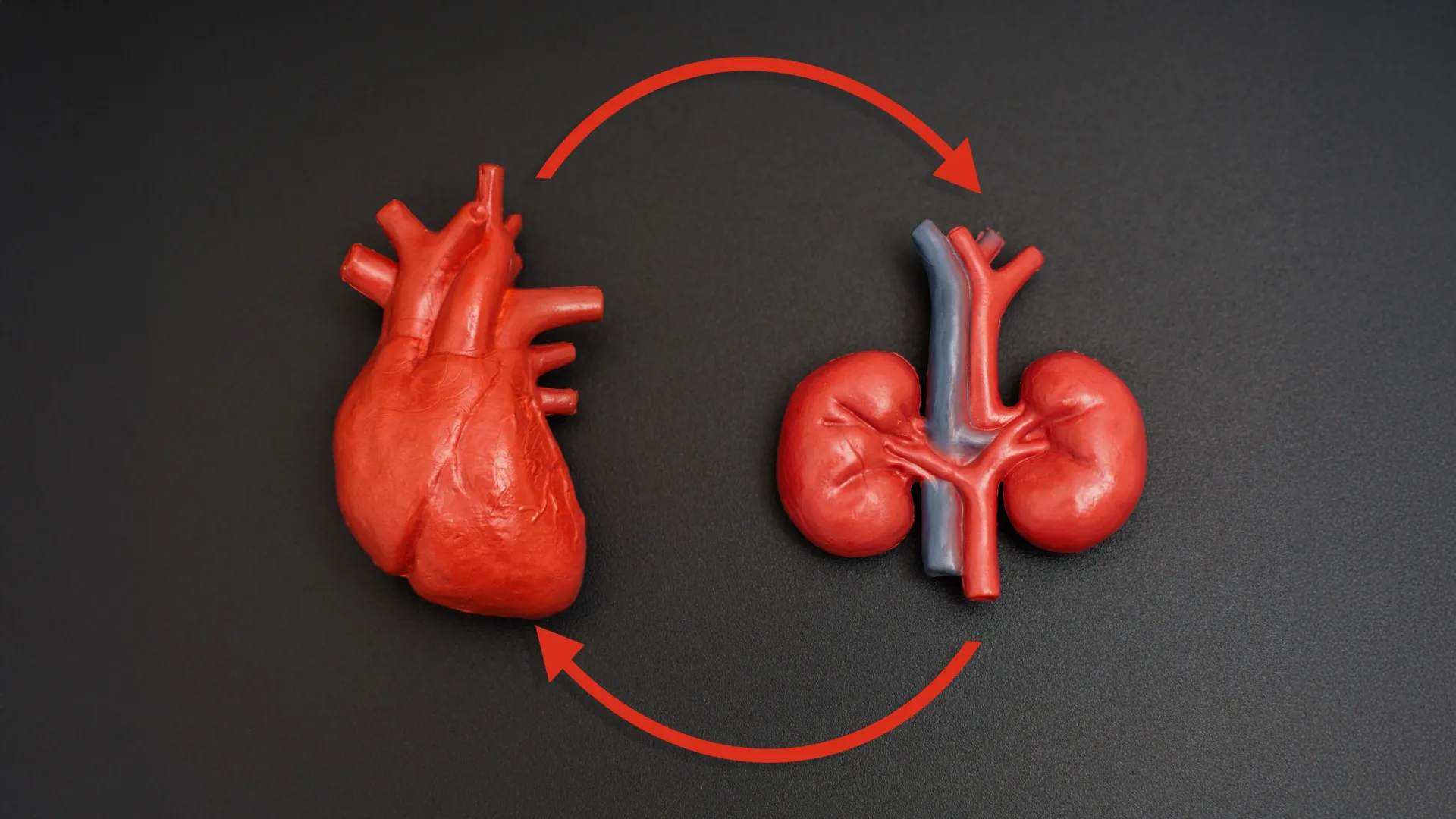
# Heart and Kidney Disease Form a Dangerous Cycle. New Guidelines Promise a Way to Break It
Cardiologists and nephrologists have long observed that heart disease and chronic kidney disease (CKD) travel together, each worsening the other. New clinical guidelines released this year offer the first coordinated strategy to interrupt this vicious cycle through early detection and aggressive treatment.
The connection runs deep. When the heart fails to pump efficiently, reduced blood flow damages the kidneys' ability to filter waste. Conversely, damaged kidneys cannot regulate blood pressure or manage fluid balance, straining the heart. This bidirectional damage accelerates both conditions, driving patients toward dialysis, transplant, or death.
The updated guidelines emphasize a straightforward intervention: routine blood and urine screening in at-risk populations. Simple tests measure creatinine levels and proteinuria, revealing kidney function before symptoms appear. Blood pressure checks and electrocardiograms catch early cardiac stress. This approach works because both diseases progress silently for years before patients feel symptoms.
Once detected, proven therapies intercept the cycle. ACE inhibitors and angiotensin receptor blockers (ARBs) protect both organs simultaneously. SGLT2 inhibitors, originally developed for diabetes, now show dual benefits for heart and kidney function. Diuretics manage fluid overload. Beta-blockers reduce cardiac workload. For many patients, these medications prevent the need for dialysis or transplant.
The guidelines target patients with multiple risk factors: diabetes, hypertension, obesity, and smoking history. African Americans and Hispanics face disproportionately higher rates of both diseases, making screening in these communities a priority. Adults over 60 with hypertension require particularly close monitoring.
Health systems implementing these guidelines face practical challenges. Coordinated care between cardiologists and nephrologists remains uncommon in many hospitals. Insurance coverage varies for preventive screening in asymptomatic patients. Primary care physicians often lack training in interpreting subtle kidney function changes.
Yet the potential payoff justifies systematic change. Studies show that detecting CKD at stage 3 (when kidney function is 30-59 percent of normal) and immediately starting appropriate medications reduces progression to stage 5 (kidney failure) by up to 30 percent. Each year of delayed progression prevents years of dialysis suffering and prolongs life expectancy by an average of two years.
The guidelines emerged from collaboration between the American Heart Association, American College of Cardiology, and National Kidney Foundation after reviewing decades of clinical evidence. Their consensus reflects growing recognition that siloed specialty care fails these patients.
Implementation requires training primary care providers to recognize CKD earlier, establishing shared electronic health records between cardiology and nephrology departments, and securing insurance coverage for screening in high-risk populations without established disease. Some integrated health systems have already restructured workflows around this two-organ approach.
Breaking the heart-kidney disease cycle represents a rare opportunity where simple, inexpensive interventions prevent expensive end-stage complications. The barrier now lies not in medicine but in delivery: getting screening into clinics and ensuring coordinated treatment across specialties.