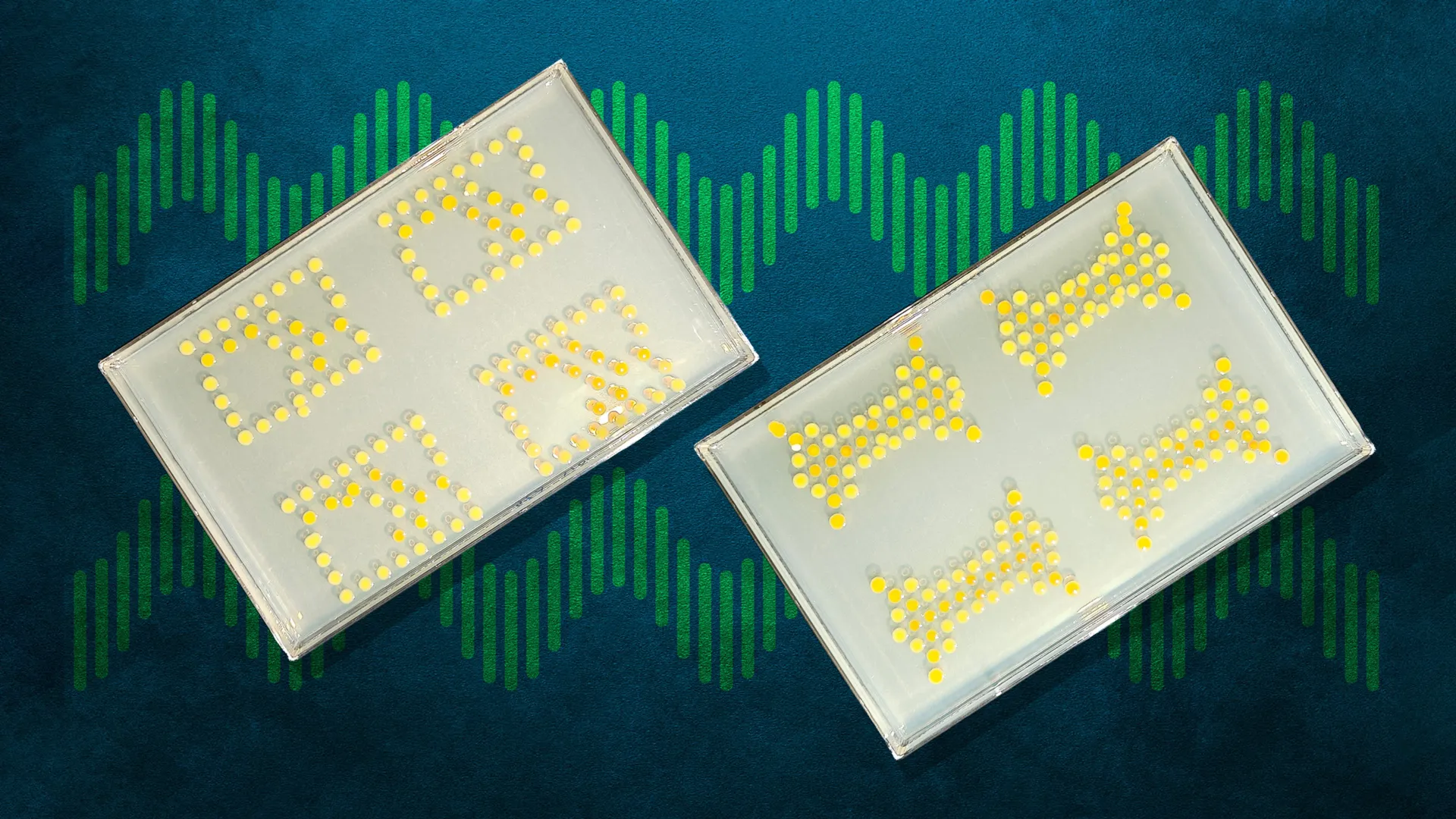
MIT researchers have engineered bacteria into functional transistors that operate as biological logic gates, capable of performing computational tasks within living systems. The team wired these bacterial cells together to form circuits that process information and generate chemical responses, opening pathways toward programmable biological computers embedded directly in plants.
The research builds on synthetic biology, a field focused on redesigning organisms for specific functions. Rather than relying on silicon chips, this approach harnesses bacteria's natural ability to sense their environment and communicate through chemical signals. Researchers genetically modified bacterial cells to respond to specific inputs and produce predictable outputs, effectively mimicking the behavior of electronic transistors that switch between on and off states.
The bacterial transistors operate through a combination of genetic circuits. Researchers inserted DNA sequences that encode proteins capable of detecting chemical or environmental signals. When these signals activate specific genes, the bacteria produce compounds that trigger downstream responses in neighboring cells. By stacking these biological switches in series and parallel configurations, the team created AND, OR, and NOT gates. These fundamental logic operations allow the bacterial circuits to evaluate multiple inputs and make decisions about what chemical signals to produce.
The implications for agriculture represent the most immediate application. Bacteria-coated plant roots or leaves could continuously monitor soil moisture, nutrient levels, pH, disease presence, or pest activity. Upon detecting threats, the engineered microbes could automatically synthesize and release compounds that strengthen plant immunity, accelerate growth, or trigger alarm signals throughout the plant. This approach eliminates the need for external intervention, pesticides, or chemical treatments while reducing environmental contamination.
Beyond agriculture, living transistors could function as biological sensors in medicine. Engineered bacteria might colonize the human gut, detecting signs of disease or nutrient deficiency and responding with targeted therapeutic compounds. They could serve as diagnostic tools, accumulating in tumors and producing fluorescent signals that enable early cancer detection. In bioremediation, modified bacteria could monitor contaminated water or soil and neutralize pollutants autonomously.
However, significant challenges remain. Controlling bacterial behavior in unpredictable natural environments proves difficult. Environmental variables like temperature fluctuations, competing microorganisms, nutrient availability, and water stress can disrupt the precise timing and reliability of genetic circuits. Scaling laboratory results to field deployment requires robust containment strategies to prevent unintended ecological spread or horizontal gene transfer to wild bacterial populations.
Safety and regulatory frameworks for releasing genetically modified organisms remain underdeveloped. Researchers must demonstrate that engineered bacteria cannot survive long-term in the environment or transfer engineered traits to native species. Ethical questions persist about consent from organisms and ecosystem impacts.
The work represents a fundamental shift toward computing with living cells rather than semiconductors. As the field matures, bacterial transistors could become routine tools in agriculture, medicine, and environmental remediation. The research demonstrates that biological systems offer untapped computational power, provided scientists can overcome reliability and containment obstacles.