# Scientists Expand Genetic Alphabet to Eight Letters, Doubling Life's Code
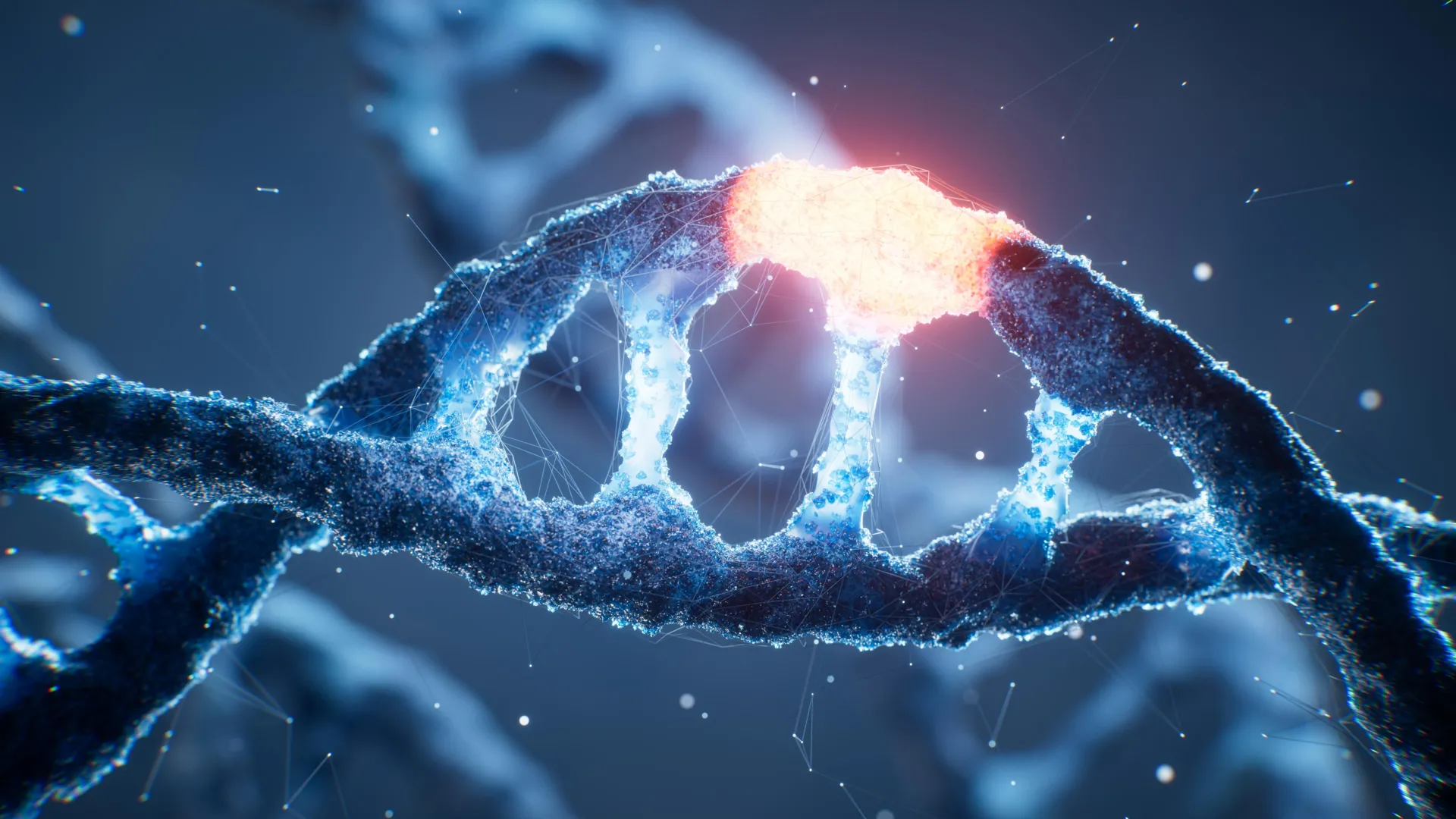
Researchers at UC San Diego have successfully demonstrated that RNA polymerase, a central enzyme in all cells, can accurately read and process an eight-letter genetic alphabet. The achievement doubles the four nucleotide bases (adenine, thymine, guanine, and cytosine) that comprise DNA in all known life forms and represents a major step toward creating organisms with expanded genetic capabilities.
The team used high-resolution structural imaging to observe how RNA polymerase interacts with synthetic DNA letters designed to supplement the natural four-letter alphabet. The enzyme handled the artificial nucleotides with remarkable accuracy, processing them through transcription with fidelity comparable to its work with natural DNA. This finding addresses a persistent question in synthetic biology: whether cellular machinery evolved to function exclusively with natural bases, or whether it possesses inherent flexibility to tolerate chemically engineered alternatives.
The natural DNA alphabet consists of purine bases adenine and guanine, and pyrimidine bases cytosine and thymine. These four letters encode all genetic information in bacteria, plants, animals, and viruses. Expanding this alphabet could theoretically enable storage of substantially more information in the same DNA molecule. A two-letter expansion to six or eight letters would increase informational density significantly.
The UC San Diego team's imaging work revealed structural details about how RNA polymerase accommodates the new synthetic letters. Rather than requiring the enzyme to undergo major conformational changes, the synthetic bases fit within the existing geometry of the enzyme's active site. This compatibility suggests that RNA polymerase evolved with sufficient structural plasticity to handle molecular variations beyond those found in nature.
The research builds on over a decade of work in expanded genetic alphabets. Floyd Romesberg and colleagues at UC San Diego pioneered semi-synthetic organisms containing two additional nucleotide pairs beyond the natural four. Those early experiments created bacteria that could replicate with six bases in their DNA. The new work extends this capability to RNA polymerase, closing a critical gap. If an expanded alphabet is to function biologically, not just in test tubes, the enzyme must transcribe the synthetic bases into RNA with fidelity.
Practical applications remain years away. Researchers must still overcome multiple hurdles. They need to engineer other cellular enzymes to process the expanded alphabet. They must ensure cells can replicate their eight-letter DNA accurately through multiple generations. They need ribosomal machinery to translate the expanded genetic code into functional proteins. Each step presents distinct technical challenges.
The potential payoffs justify the complexity. An eight-letter genetic system could encode new amino acids beyond the standard 20 found in natural proteins. These novel amino acids might provide properties useful for medicine or biotechnology. Cells could produce proteins with enhanced durability, fluorescent tags, or pharmaceutical activity. Biosynthetic organisms might manufacture compounds that natural evolution never produced.
The UC San Diego work appears positioned to accelerate this timeline. Demonstrating that a core cellular enzyme already possesses the structural flexibility to handle synthetic bases removes one major uncertainty from the research roadmap. Scientists can now focus engineering efforts on other essential components of cellular machinery rather than redesigning the transcriptional apparatus from scratch.
This line of research also illuminates fundamental questions about molecular evolution and protein engineering. The findings suggest that enzymes possess functional margins beyond immediate evolutionary necessity, a buffering capacity that enables adaptation to radically new chemical environments.