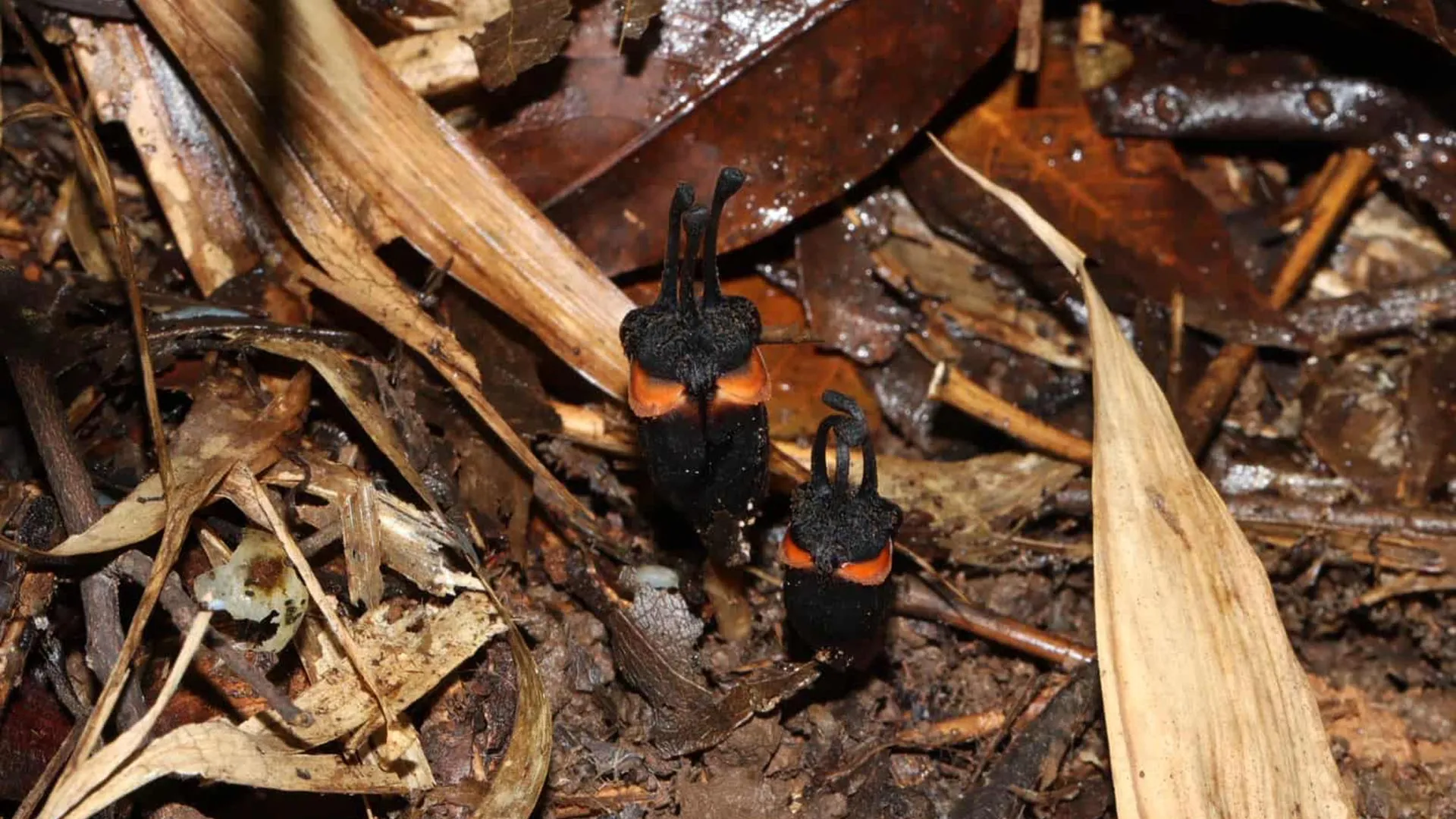
# Scientists Discover Bizarre Underground Flower in Thailand That Steals from Fungi
Botanists working in Thailand have identified an extraordinarily rare flowering plant with a morphology so unusual it challenges conventional understanding of plant structure. The species, formally named Thismia daemona, exists almost entirely below ground and survives by parasitizing fungi rather than photosynthesizing like most plants.
The discovery represents only the second known species in the genus Thismia documented in Thailand. Researchers estimate fewer than 50 individual plants remain in existence, placing the organism in immediate danger of extinction. The species' scientific name deliberately references its unusual appearance and lifestyle. The common name "devil flower" stems from its striking dark coloration and otherworldly form.
Thismia daemona belongs to the family Burmanniaceae, a group of mysterious plants that challenge botanical convention. Unlike the vast majority of flowering plants, Thismia species have abandoned photosynthesis entirely. Instead, they form obligate relationships with fungi in forest soil. The plant receives carbohydrates and nutrients from fungal partners while remaining permanently subterranean, only extending its flower above ground briefly for reproduction.
The discovery emerges from ongoing tropical biodiversity surveys in Southeast Asia. Researchers working in forested regions of Thailand identified the plant in conditions typical for Thismia species: dense, undisturbed leaf litter with high organic matter content in tropical forests. The organism's subterranean lifestyle and dependence on specific fungal partners explain its extreme rarity.
Several factors place Thismia daemona at immediate conservation risk. The species apparently occupies an extremely limited geographic range. It depends on intact forest ecosystems and its specific fungal partners. Habitat loss from logging, agricultural conversion, and human settlement throughout Southeast Asia destroys the conditions necessary for survival. The small population size leaves the species vulnerable to random environmental fluctuations.
Thismia species generally exhibit cryptic lifestyles that complicate population monitoring. Even botanists conducting intensive fieldwork rarely encounter them. The difficulty in detecting these organisms means actual population numbers may differ substantially from visible counts. Some individuals likely remain undiscovered in remote forest areas. Conversely, populations may have declined more steeply than currently estimated.
The botanical community recognizes Burmanniaceae species as indicators of forest health and fungal diversity. These plants cannot survive in degraded habitats. Their presence signals intact mycological networks and soil communities. The discovery of Thismia daemona therefore carries implications extending beyond a single species. Its rarity reflects broader ecosystem deterioration across tropical Southeast Asia.
Researchers acknowledge that protective measures require immediate action. The specific location of populations remains deliberately withheld from public disclosure to prevent collection and further disturbance. Conservation authorities in Thailand have been notified of the discovery. Future research must focus on understanding the plant's specific fungal requirements and identifying additional populations that may persist in unexplored forest remnants.
The existence of Thismia daemona demonstrates that significant botanical diversity remains undocumented in tropical regions. Each year scientists describe hundreds of new plant species, yet thousands likely face extinction before discovery. This "dark diversity" problem means conservation efforts must accelerate efforts to survey and protect remaining tropical forests before irreplaceable species vanish forever.