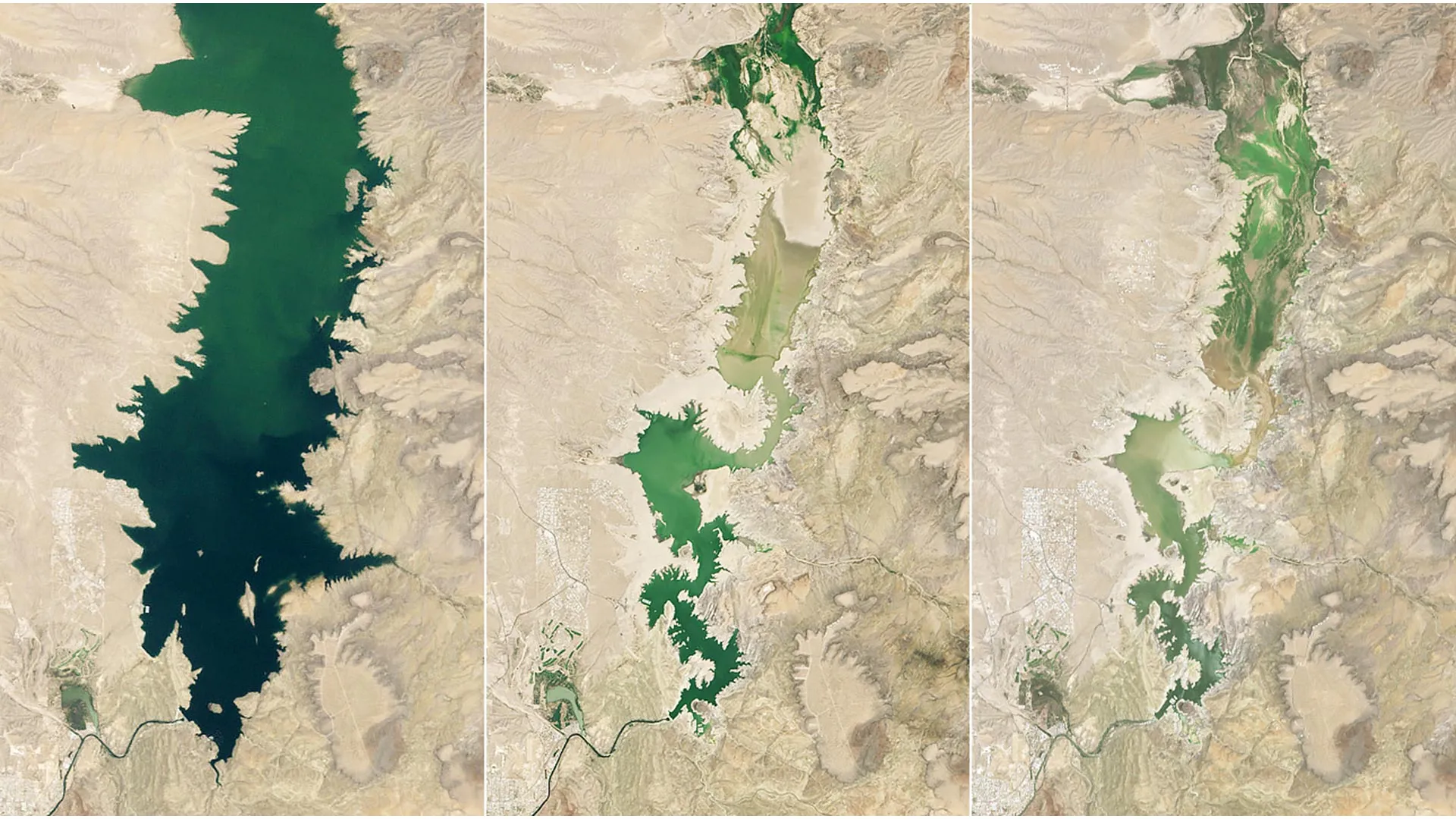
Elephant Butte Reservoir, New Mexico's largest water storage facility, dropped to a historic low of 1.4 percent capacity in July 2026, marking the culmination of years of relentless drought and unseasonably rapid snowmelt across the Southwest. The collapse of water levels exposed debris that had remained submerged for decades, creating a stark visual record of the region's water crisis.
The reservoir, located in Sierra County in south-central New Mexico, supplies irrigation water to agricultural operations across New Mexico and Texas along the Rio Grande. When full, Elephant Butte holds enough water to cover roughly 36,000 acres at a depth of 150 feet. At 1.4 percent capacity, the facility became essentially a shell of its historical function, raising immediate questions about agricultural viability in downstream communities that depend on Rio Grande flows for survival.
The collapse stems from a combination of factors. Extreme drought conditions persisted across the Colorado River Basin and its tributaries, including the Rio Grande watershed, for multiple consecutive years. Climate data shows the Southwest has experienced its driest two decades in 1,200 years. Record early snowmelt in spring 2026 accelerated runoff into reservoirs before irrigation season, allowing less water to accumulate and be stored for summer and fall use when demand peaks.
Agricultural water demand remains substantial. Farmers in southern New Mexico and west Texas rely on Rio Grande irrigation for cotton, alfalfa, pecans, and other crops. The Rio Grande Compact, a 1938 interstate water-sharing agreement between New Mexico, Colorado, and Texas, obligates New Mexico to deliver specific water volumes downstream to Texas, even as upstream supplies evaporate and shrink.
The exposure of submerged structures and debris serves as a physical reminder of how far water levels have fallen. Abandoned vehicles, old structures, and archaeological artifacts emerged from the reservoir floor as water vanished. This visibility amplifies public awareness of water scarcity, though it also creates safety concerns as exposed debris destabilizes shorelines and complicates access to the reservoir for recreation or water management operations.
Hydroelectric power generation at Elephant Butte also ceased when water levels dropped too low to turn turbines. The facility generates a small fraction of New Mexico's power supply, but loss of that renewable source forces reliance on other generation methods and increases operating costs for regional utilities.
Water managers faced difficult decisions. Reducing agricultural allocations would devastate rural economies already stressed by declining commodity prices and shifting global markets. Importing water from other basins proved prohibitively expensive and politically contentious. Desalination of brackish groundwater offered potential but requires substantial infrastructure investment and energy costs.
The Elephant Butte crisis reflects broader transformation of western water systems under climate change. Warmer temperatures reduce snowpack, accelerate evaporation from reservoirs, and shift precipitation timing. Ongoing megadrought conditions across the Colorado River Basin prompted cuts to Arizona, Nevada, and California water allocations starting in 2022. Similar reductions now threaten New Mexico and Texas.
Long-term solutions demand aggressive conservation, agricultural efficiency improvements, technological innovation in water recycling and desalination, and potentially difficult interstate negotiations to revise century-old water compacts that may no longer reflect hydrological reality.