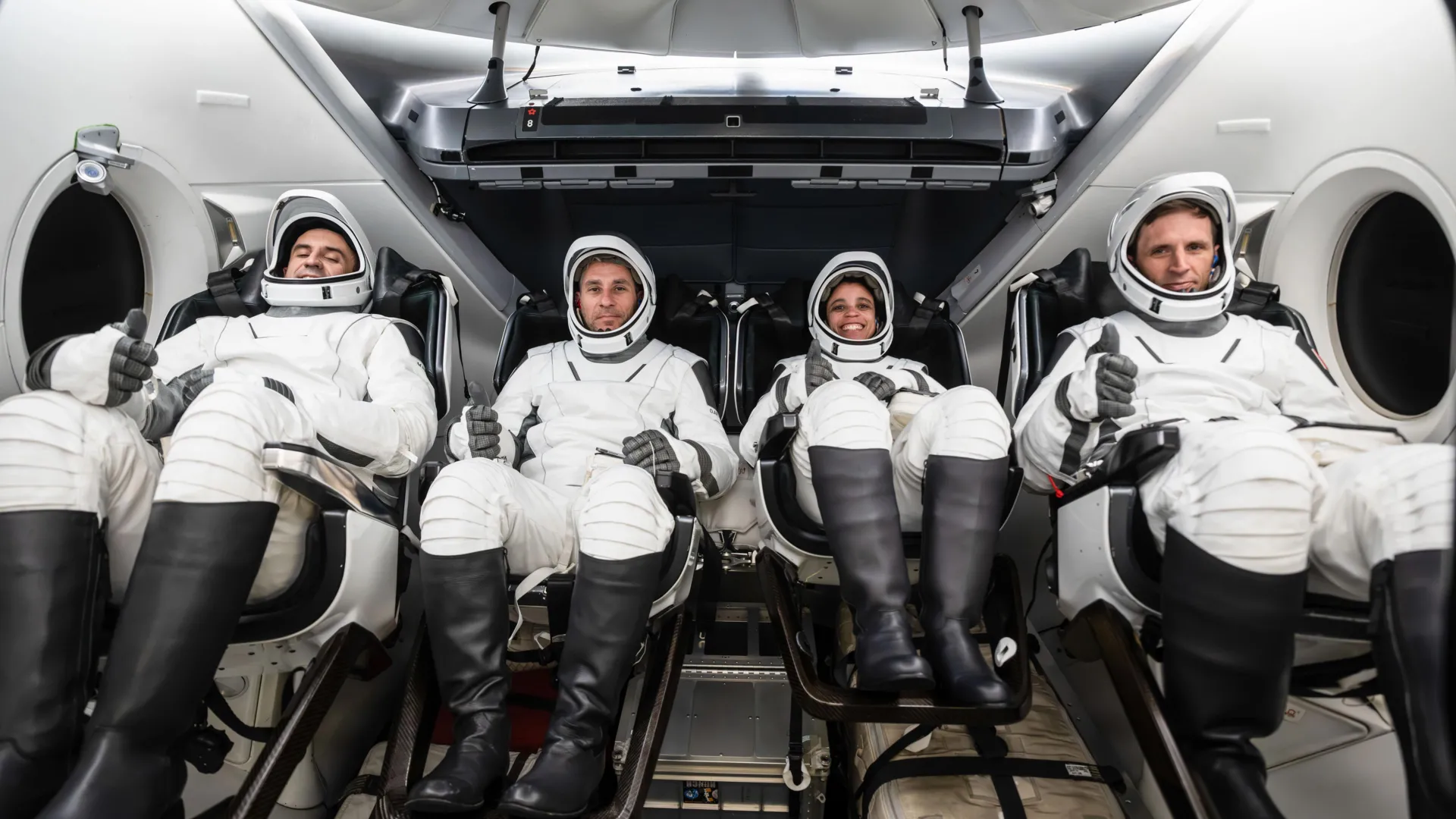
NASA and SpaceX postponed the Crew-13 mission after technicians discovered an oxidizer leak in the Dragon spacecraft's propulsion system during final preparation checks. The delay halts plans for four astronauts to launch toward the International Space Station, marking another setback in the commercial crew program's execution schedule.
The leak was identified in Dragon's Supermanovic propulsion system, which uses hypergolic propellants to maneuver the spacecraft during orbital operations and docking procedures. Hypergolic propellants ignite spontaneously when mixed, making them reliable for space missions but also hazardous. The oxidizer component, typically nitrogen tetroxide, represents a critical element of Dragon's ability to adjust its trajectory and dock with the station's Harmony module.
Engineers at NASA's Johnson Space Center in Houston and SpaceX headquarters in Hawthorne, California, initiated a comprehensive investigation into the leak's source and extent. The investigation involves inspecting propellant lines, check valves, and tank seals to identify whether the problem stems from manufacturing defects, thermal cycling damage, or component failure. This methodical approach reflects protocols established after previous Dragon anomalies during cargo missions.
The Crew-13 delay continues a pattern of schedule adjustments affecting NASA's Commercial Crew Program. SpaceX's Dragon and Boeing's Starliner have both experienced launch postponements as engineers addressed technical issues. These delays, while frustrating for mission planners and the assigned crew, underscore the safety-first approach governing crewed spaceflight operations.
Crew-13's four-person team, including commander and pilot positions plus two mission specialists, prepared for a six-month stay aboard the International Space Station. Their mission would have contributed to critical research operations, maintenance activities, and technology demonstrations supporting long-duration spaceflight. The delay extends their pre-launch quarantine protocols and training cycles.
SpaceX has successfully completed twelve crewed missions to the station since 2020, when Commercial Crew Program operations began. Dragon's reliable track record across cargo and crewed operations contrasts with this isolated propulsion system issue, suggesting problems with specific components rather than fundamental design flaws. NASA and SpaceX's response prioritizes understanding root causes before proceeding.
The investigation process typically involves ground testing of identical propulsion system components, thermal vacuum chamber simulations, and detailed engineering analysis. Once engineers identify the leak source, they determine whether replacement, repair, or design modifications are necessary. NASA maintains authority over final launch clearance, requiring confidence in system performance before committing crew members to flight.
Previous Dragon missions generated extensive telemetry and operational data supporting current troubleshooting efforts. Engineers access real-time performance records from previous flights, enabling comparative analysis that helps pinpoint anomalies. This data-driven approach accelerates investigation timelines compared to early program phases.
The delay affects scheduling for International Space Station crew rotations and expedition planning. Each Crew-Dragon mission typically overlaps with predecessor crews for knowledge transfer and equipment handover. Timeline adjustments propagate through the station's operational calendar, affecting cargo resupply missions, visiting vehicle schedules, and research experiment timelines.
NASA and SpaceX provided no specific timeline for mission re-scheduling at the announcement. Previous propulsion system investigations required days to weeks depending on complexity and component availability. The agencies will release updated launch targets once the oxidizer leak receives complete characterization and corrective actions achieve verification testing.