# Climbing Apes Reshape Understanding of Human Evolution
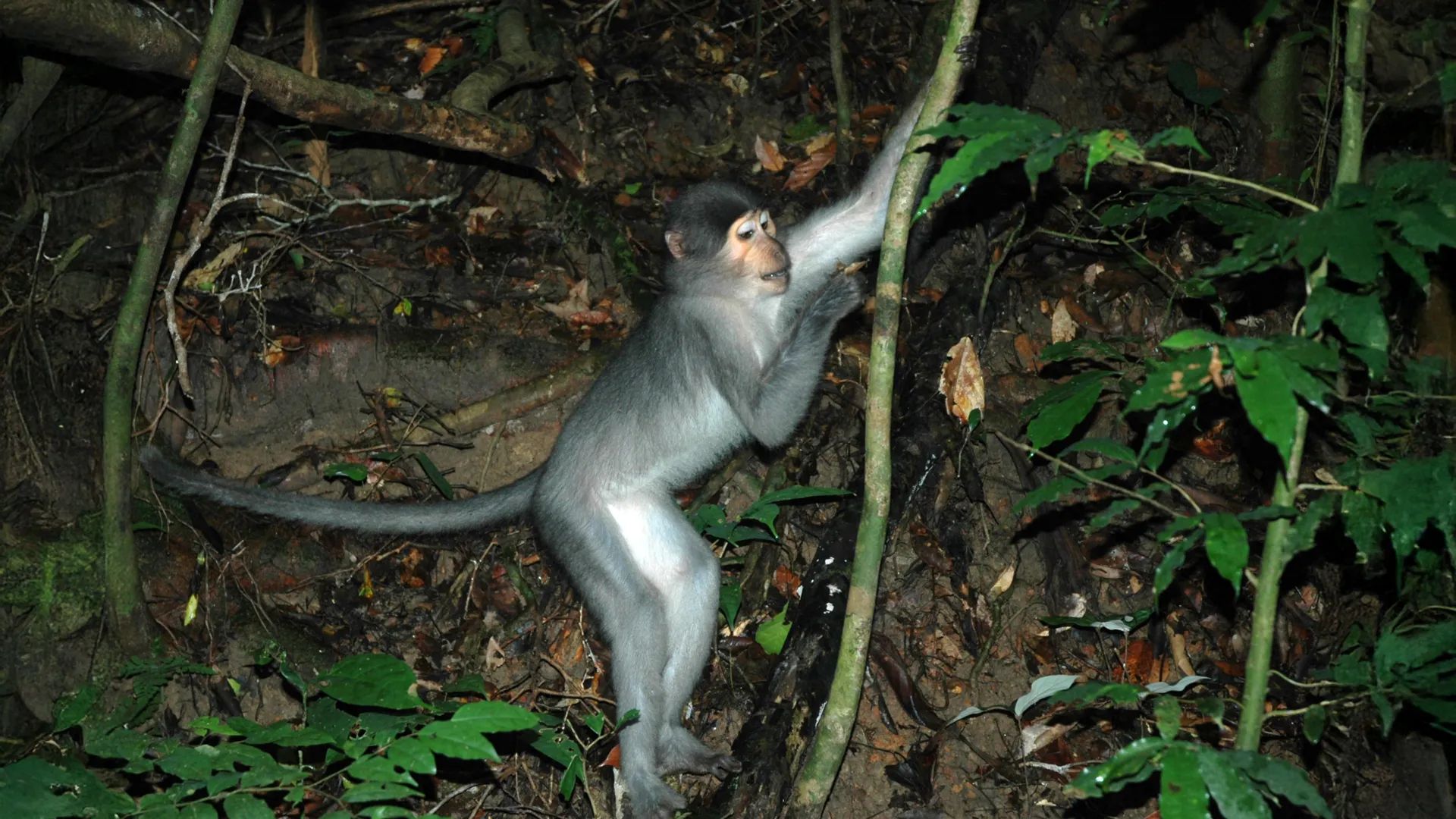
West African monkeys demonstrate a biomechanical capability that overturns a fundamental assumption in paleoanthropology. These primates can climb vertical tree trunks using foot flexibility that scientists previously thought impossible for their species, according to research that upends current models of how human ancestors moved.
The finding challenges decades of interpretation surrounding hominin fossils. Paleoanthropologists have long used modern chimpanzee and monkey anatomy as a reference point for reconstructing the locomotion and morphology of the last common ancestor shared by humans and apes. This comparative approach assumes that living primates represent stable baselines for understanding extinct species. The West African monkeys disrupt that assumption entirely.
When researchers observed these monkeys ascending near-vertical tree trunks, they documented foot positions and muscular engagement that contradicted established understanding of primate foot mechanics. The animals contorted their feet in ways that biomechanical models suggested should be impossible given their skeletal structure and joint constraints. This flexibility appears to come from adaptive behaviors that don't fossilize. Bones alone cannot reveal the full range of motion that soft tissue, tendons, and ligaments enable.
The implications ripple backward through human evolutionary history. If living primates possess locomotor abilities that leave no trace in skeletal remains, then fossil feet from our ancestors may tell an incomplete story. A hominin foot preserved in rock for millions of years shows bone structure and joint surfaces, but it reveals nothing about the flexibility or muscular control an animal actually possessed during life. Scientists have been interpreting fossil feet as rigid records of capability when they actually represent only the structural scaffolding.
This matters because researchers rely on foot anatomy to determine whether extinct hominins were primarily tree-dwellers, ground-walkers, or some combination of both. The structure of bones in the ankle, midfoot, and toes provides clues to lifestyle. A foot adapted for grasping suggests climbing. An arch-supported foot suggests bipedal walking. But if West African monkeys can achieve surprising foot flexibility despite skeletal anatomy that should constrain them, then fossil interpretations built on those assumptions require reevaluation.
The discovery also highlights a broader problem in paleoanthropology. The field depends on "phylogenetic bracketing," a method that uses living species to constrain interpretations of extinct ones. Researchers assume that if modern chimps and humans differ in anatomy, the ancestor fell somewhere between them. But if living species maintain hidden behavioral and biomechanical versatility, that bracketing strategy becomes less reliable.
Future work will likely focus on whether other primate species possess undocumented flexibility in their locomotion. Researchers may need to conduct more detailed biomechanical studies on living animals before confidently reconstructing extinct ones. Museums holding fossil collections may face requests to reanalyze specimens with fresh perspectives on what their anatomy actually constrains versus what interpretive assumptions have imposed.
The West African monkey study exemplifies how careful observation of living animals can upend established frameworks. Evolution research progresses not just through finding new fossils, but through recognizing that the living reference library scientists use has been incompletely read.