# Seven New Frog Species Found Hidden in Madagascar's Soil
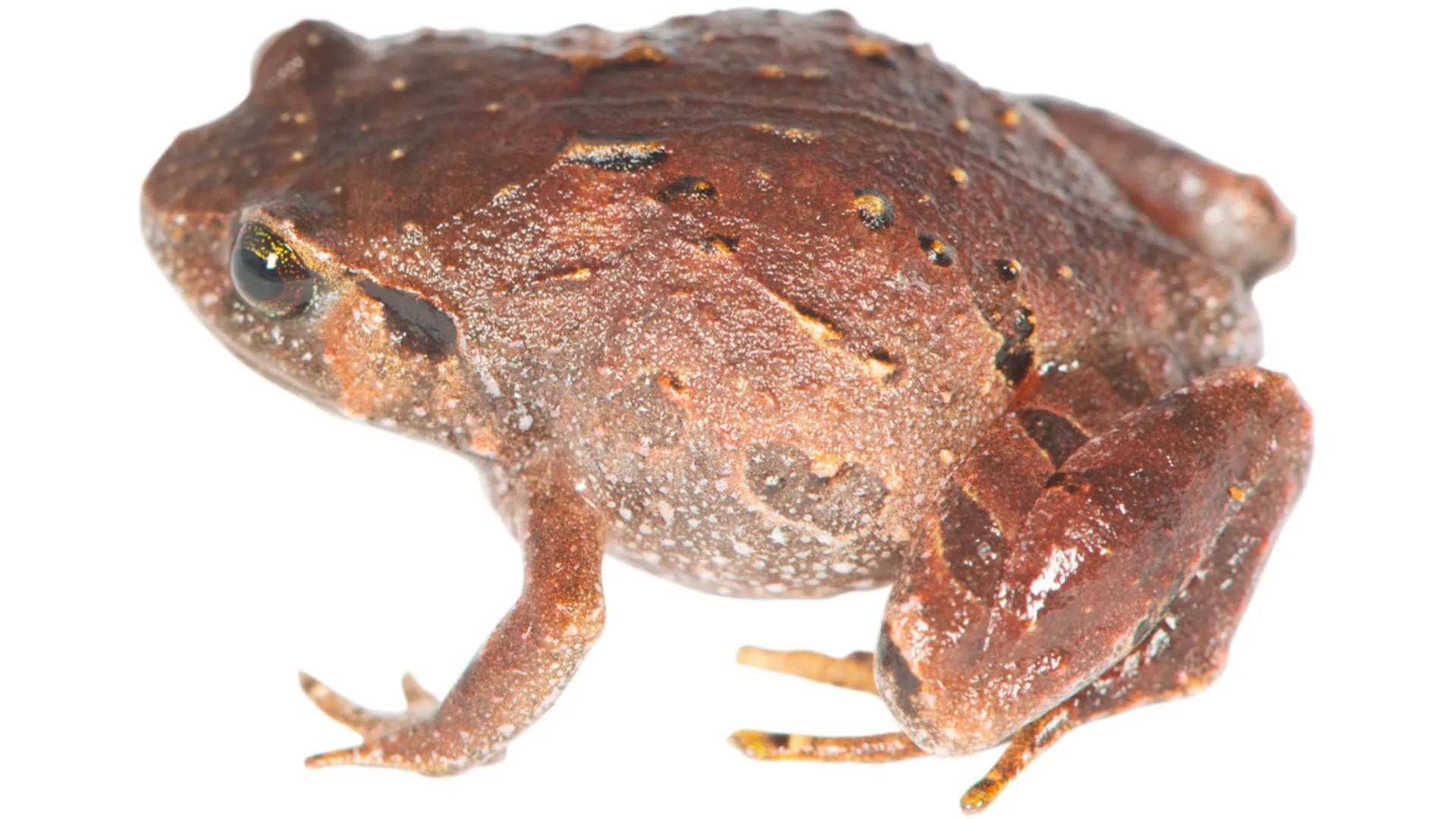
Scientists using genetic analysis of both modern specimens and century-old museum collections have discovered seven new species of diamond frogs living beneath Madagascar's forest floor. The research solves a decades-long puzzle about the true diversity of these elusive amphibians and underscores how much remains unknown about the island's fauna even as habitat destruction accelerates.
Diamond frogs, genus Rhombophryne, are small, burrowing amphibians endemic to Madagascar. Their cryptic lifestyle and superficial similarities made species identification difficult for researchers working with traditional morphological methods. The team extracted DNA from preserved specimens housed in museum collections alongside tissue samples from recently captured frogs, creating a genetic roadmap that revealed the hidden diversity.
The research combined modern molecular techniques with archival material spanning over a century, allowing scientists to trace evolutionary relationships invisible to the naked eye. This approach proved essential for organisms that spend most of their lives underground, rarely encountered in the field and easily confused with close relatives based on physical features alone.
Madagascar hosts over 300 frog species, with new discoveries announced regularly as researchers explore remote forest regions. The island's exceptional amphibian diversity stems from millions of years of isolation following its separation from Africa, creating an evolutionary laboratory where species diverged into countless distinct lineages. Yet this same isolation makes the island's wildlife fragile. Habitat loss from deforestation and agriculture destroys the specific forest microhabitats these frogs require to survive.
The seven newly identified species inhabit different forest regions across Madagascar, each occupying specialized ecological niches within the leaf litter and soil layers. Some species show narrow geographic ranges, suggesting they face heightened extinction risk if their limited forest patches disappear. The research team documented which species occur in protected areas and which remain vulnerable to unregulated habitat conversion.
Understanding true species numbers serves practical conservation purposes. Conservation priorities shift when a single recognized species actually represents multiple genetically distinct populations with separate evolutionary histories. Each species requires tailored protection strategies matched to its specific habitat requirements and geographic distribution.
The discovery adds to mounting evidence that tropical biodiversity inventories remain drastically incomplete. Museum specimens, often collected decades or centuries ago, provide invaluable genetic resources for modern taxonomic work. These collections represent baseline data on species that may vanish before scientists ever formally describe them.
Future work will likely expand knowledge of Madagascar's amphibian diversity further. Cryptic, burrowing, and nocturnal species remain undersampled compared to conspicuous vertebrates. The combination of fieldwork, museum analysis, and genetic techniques proved powerful here and should accelerate discoveries across other animal groups.
The research highlights biodiversity hotspots where conservation action carries outsized impact. Madagascar ranks among Earth's most threatened ecosystems, with less than 10 percent of original forest cover remaining. Protecting remaining forest patches preserves not only known species but also undiscovered lineages researchers have yet to formally identify.