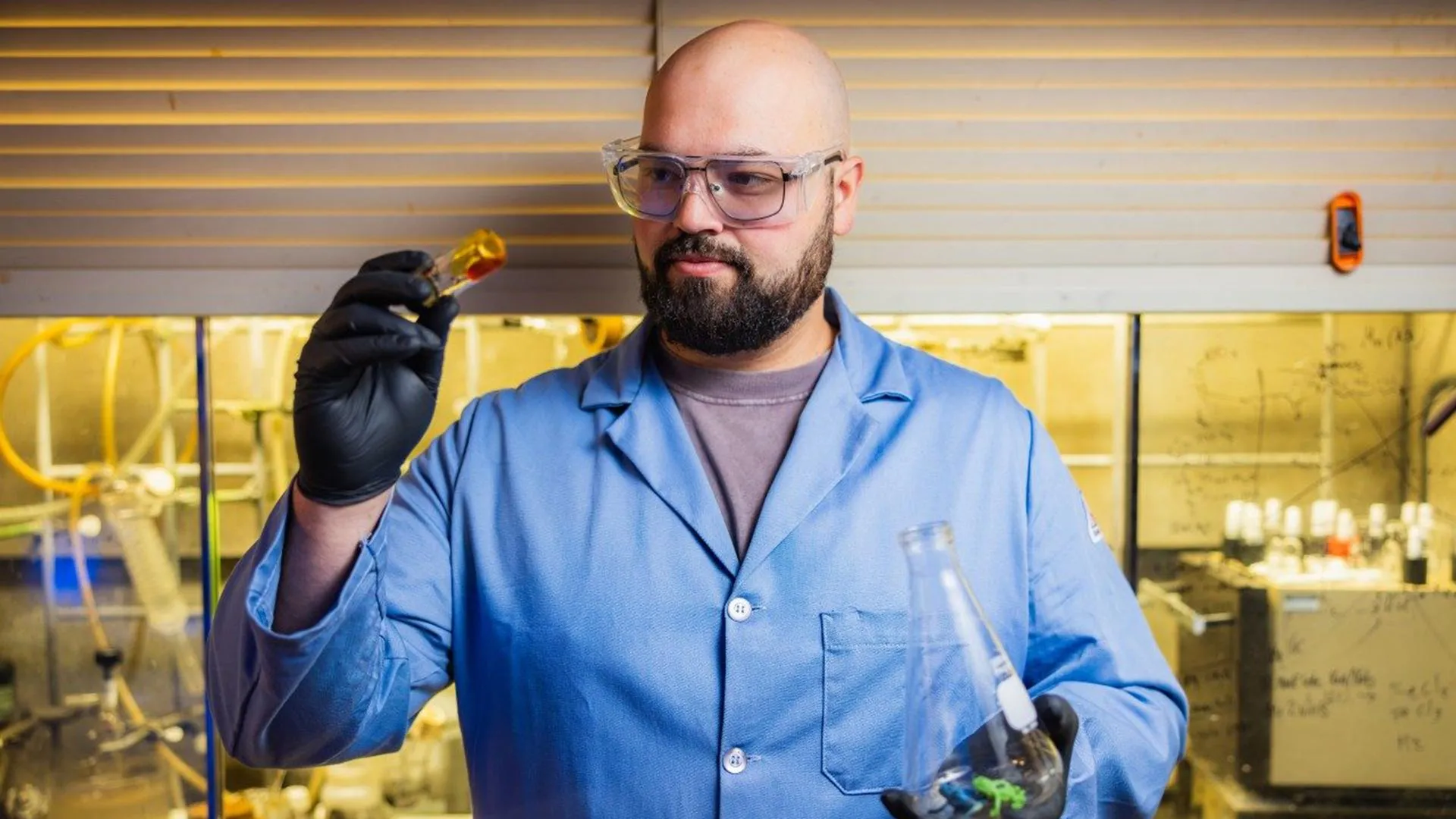
Researchers at Xiamen University in China have developed a chemical process that converts polyvinyl chloride, commonly known as PVC, into useful lubricant base stocks. PVC ranks among the most problematic plastics to recycle due to its chlorine content and chemical stability, which makes traditional recycling methods economically unviable and environmentally risky.
The team, led by chemists working in polymer materials, discovered that heating PVC waste under specific conditions causes the polymer chains to break down into smaller hydrocarbon molecules. These molecules possess properties nearly identical to Group I mineral oil base stocks, the fundamental component in conventional engine lubricants. The process avoids the toxic chlorine release that has historically blocked PVC recycling efforts.
The research, published in a peer-reviewed materials science journal, details how the team subjected PVC samples to thermal decomposition in an oxygen-free environment. The resulting liquid product showed viscosity indices and thermal stability comparable to petroleum-derived lubricant bases currently used in automotive and industrial applications. Laboratory testing confirmed that oil formulated from the recycled PVC performed within acceptable specifications for engine protection and heat dissipation.
PVC waste accumulates rapidly worldwide. Construction materials, vinyl records, packaging, and medical devices all rely on this plastic. Landfills contain estimated billions of tons of PVC waste that degrades extremely slowly. Incineration releases hydrogen chloride gas, a corrosive air pollutant. Chemical recycling remains uncommon because separating chlorine from the polymer backbone typically demands extreme temperatures or hazardous reagents.
This approach sidesteps those obstacles. The thermal decomposition method operates at moderate temperatures and doesn't require expensive catalysts or dangerous chemicals. The chlorine content separates naturally during the heating process, either volatilizing as a gas or settling as an inert residue that factories can manage safely. Early cost analyses suggest the process could compete economically with virgin lubricant production if scaled to industrial capacity.
The implications extend beyond waste management. Lubricant manufacturers currently depend on petroleum distillation for base oil production, tying their supply chains to crude oil extraction and refining infrastructure. Substituting recycled PVC feedstock reduces that dependence while lowering carbon emissions associated with oil drilling and processing. A single ton of converted PVC plastic displaces approximately one ton of crude oil demand.
Scaling remains the primary challenge. The research used laboratory quantities of PVC. Translating the process to industrial-scale reactors that handle thousands of tons annually requires optimization of temperature control, chlorine capture systems, and product separation techniques. Equipment manufacturers and lubricant companies have not yet committed to pilot plant construction.
The team plans next-phase experiments examining PVC mixtures that contain flame retardants and other additives common in real-world waste streams. Understanding how these contaminants affect the decomposition process and final lubricant quality will determine whether the method works with collected plastic waste rather than virgin PVC feedstock only.