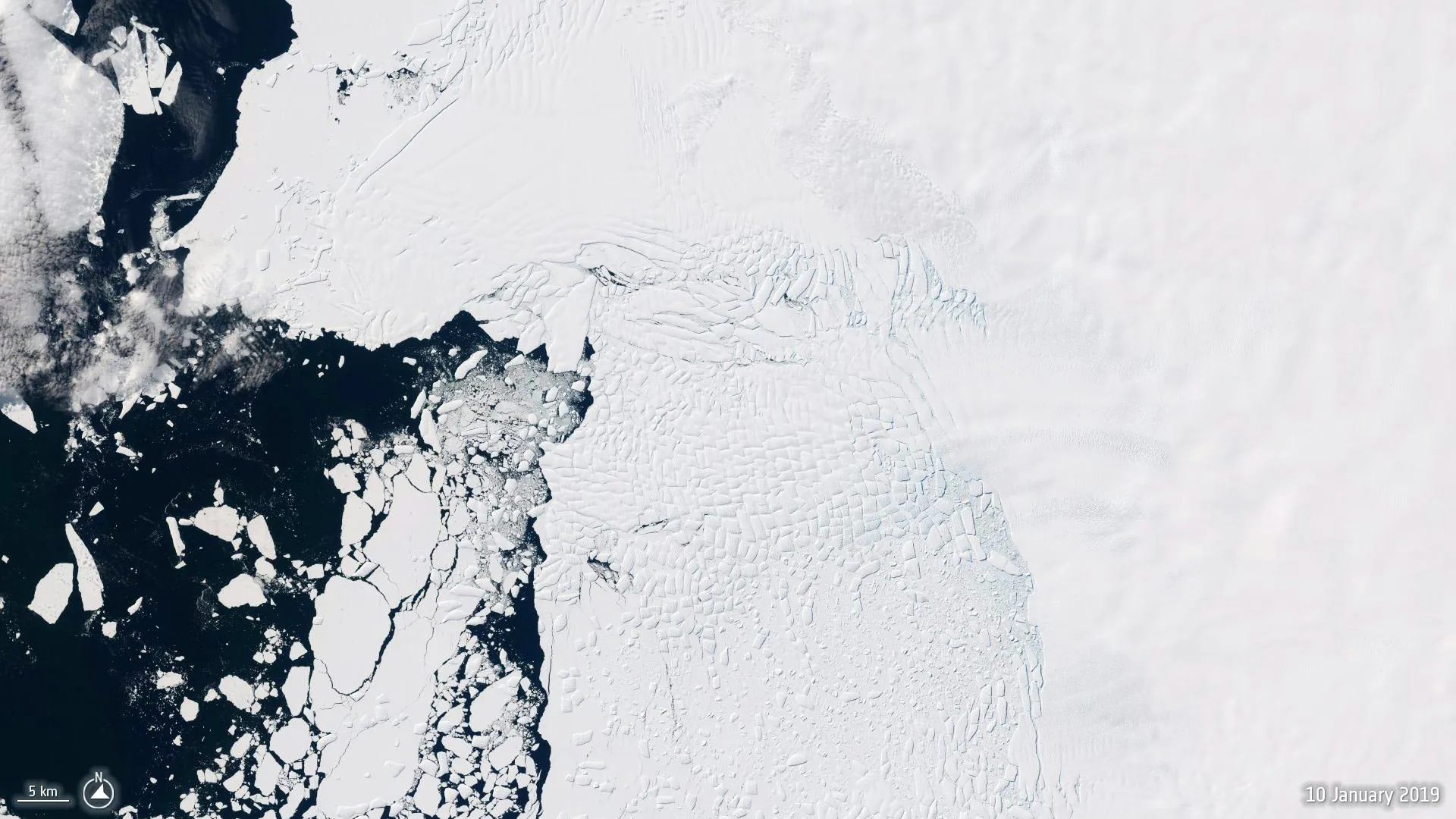
Researchers have discovered hundreds of previously undetected earthquakes beneath Antarctica's Thwaites Glacier, revealing a dramatically different picture of seismic activity in one of the world's most vulnerable ice masses.
A team detected 245 seismic events near the marine edge of Thwaites Glacier, with many originating from glacial earthquakes triggered when massive icebergs fracture, flip, and collide with the glacier itself. The findings emerge from analysis of seismic data collected at the glacier, which scientists call the "Doomsday Glacier" because its collapse could raise global sea levels by several feet.
The timing of these earthquakes carries particular weight. The surge in seismic activity occurred during a period when Thwaites was accelerating its flow toward the ocean, suggesting a direct link between changing ocean conditions and ice destabilization. Warmer water reaching the glacier's base can lubricate and weaken the ice-ocean interface, potentially triggering both faster ice movement and more frequent calving events that produce these detectable earthquakes.
Thwaites has become a focal point for climate research in recent years. The glacier spans an area roughly the size of Florida and currently discharges roughly 50 billion tons of ice annually into the Southern Ocean, making it responsible for about 4 percent of global sea level rise. Its grounding line, where the glacier transitions from resting on bedrock to floating on water, has retreated dramatically over the past three decades. Once Thwaites loses contact with the seafloor entirely, models suggest a cascade of destabilization could follow, potentially destabilizing neighboring glaciers and accelerating overall Antarctic ice loss.
The newly detected earthquakes offer a window into processes that operate at scales difficult to observe directly. Seismic monitoring networks deployed on and near the glacier can pick up the acoustic energy released when icebergs snap free and collide with adjacent ice. These events often escape detection in conventional analyses because they are smaller than typical tectonic earthquakes and generate different seismic signatures. Improved algorithms and sustained monitoring campaigns have made identifying these glacial earthquakes increasingly possible.
The correlation between accelerated ice flow and increased seismic activity suggests ocean-driven melting as a primary driver. When warm water intrudes beneath the glacier, it erodes the ice from below and reduces friction between ice and bedrock. This reduced resistance allows ice to flow faster toward the sea while simultaneously increasing stress on surrounding ice, leading to more frequent fracturing events. The relationship demonstrates how oceanographic changes in Antarctica's coastal waters directly translate into measurable geophysical responses.
Understanding these hidden earthquakes matters because they serve as a natural alarm system. Seismic activity can alert scientists to changes in glacier behavior before they become catastrophic. The Thwaites region remains one of the least accessible and most poorly monitored parts of Antarctica, making remote seismic networks critical for tracking its evolution.
Future research will focus on expanding seismic monitoring networks and linking earthquake patterns more precisely to ocean temperature variations. Scientists are also examining whether similar hidden earthquake activity occurs at other vulnerable Antarctic glaciers. As global temperatures continue rising and ocean warming accelerates, these detection methods provide an essential tool for monitoring ice sheet stability and improving predictions of sea level rise in the coming decades.